
Best car cover for outdoor snow and rain protection usually comes down to three things you can’t “wish” into place: a truly waterproof top layer, a breathable design that won’t trap moisture, and a fit that stays put when wind and wet snow start tugging at the fabric. If any one of those is weak, you get the classic headaches: soaked seams, paint haze from trapped condensation, or a cover that turns into a sail.
Outdoor winter weather is hard on a parked car in ways that aren’t always obvious. Snow melt can creep into seams, rain can sit and pool, and freeze-thaw cycles can turn small fit problems into torn mirror pockets or ripped tie-downs. The goal isn’t just “keep it dry,” it’s reduce water contact time and avoid abrasion while your car sits.
This guide helps you choose a cover based on your parking situation, your local climate, and your tolerance for daily hassle. I’ll also call out common marketing claims that sound good but tend to disappoint once you actually use the cover for a few storms.
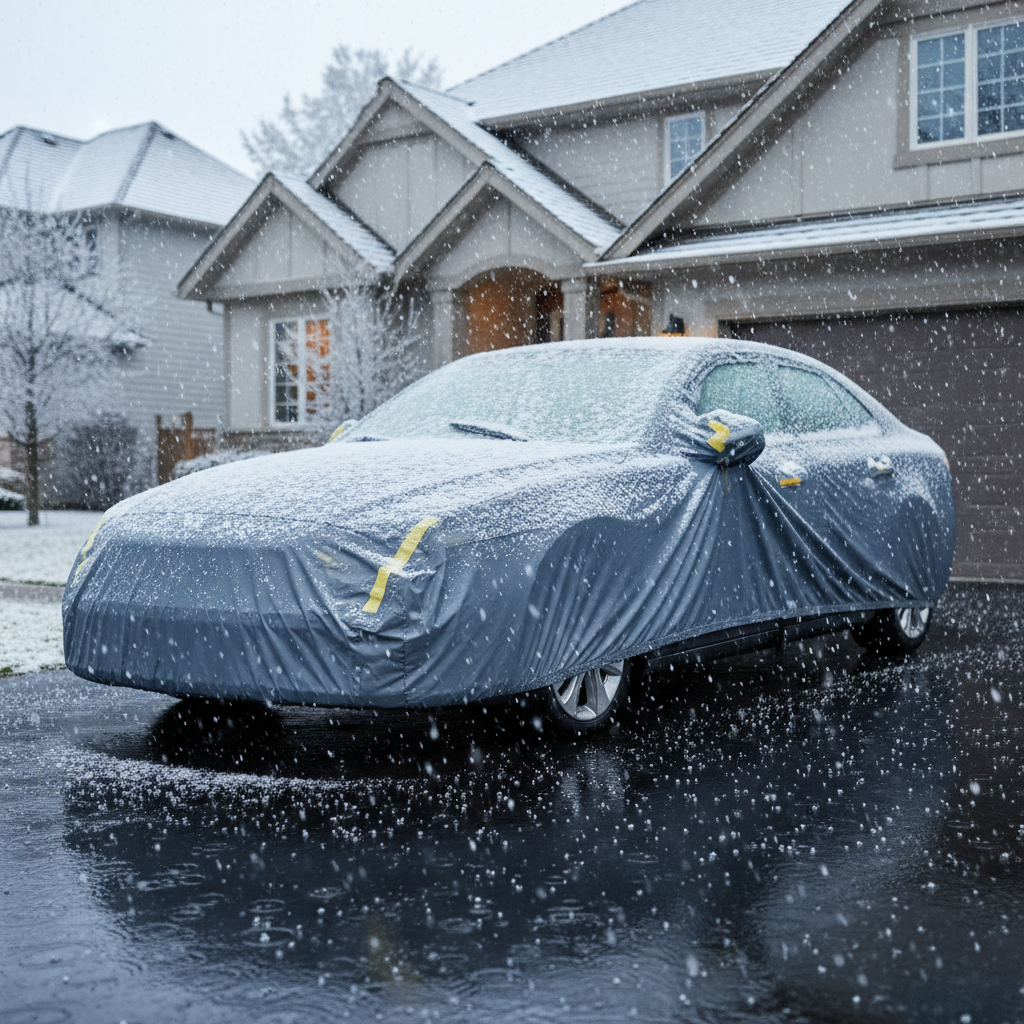
What “snow & rain protection” really means for a car cover
For winter exposure, you’re balancing water resistance and moisture escape. A cover that blocks rain but can’t breathe often leaves you with condensation under the fabric, especially when daytime temps rise and drop again at night.
- Waterproof shell (top layer): Helps stop rain and melting snow from soaking through.
- Breathability: Lets water vapor out so the cover doesn’t become a damp tent.
- Seam strategy: Seams are frequent failure points, look for reinforced or sealed seams where possible.
- Wind management: A winter cover that flaps will scuff paint over time, even if the fabric feels “soft.”
According to NOAA (National Weather Service), winter precipitation can shift between snow, sleet, and freezing rain as temperatures hover near freezing, which is exactly when pooling, refreezing, and wind-driven moisture become more likely.
Materials that tend to work best (and what to avoid)
Fabric names get confusing fast because brands use proprietary labels, but you can still shop by behavior.
Good signs for wet winter climates
- Multi-layer synthetic covers (often 3–5 layers): Usually better at blocking water while staying somewhat breathable.
- Solution-dyed or UV-treated outer layers: Helpful if your car sits outside year-round, not just in winter.
- Soft inner liner: Reduces micro-scratching, especially on darker paint.
Materials and claims to be cautious with
- “100% waterproof” without breathability language: In practice, many fully impermeable covers trap moisture unless venting is built in.
- Thin single-layer “rain covers”: They can work short-term, but wind + grit is where they struggle.
- Plastic-tarp feel: Often noisy, prone to flapping, and can abrade when it shifts.
If you’re searching for the best car cover for outdoor snow and rain protection, material choice matters as much as fit, but the “best fabric” still fails if it isn’t secured well.
Fit and anchoring: the part most people underestimate
A cover can be expensive and still cause problems if it moves. Winter wind finds slack, then the cover rubs on corners, mirrors, and body lines. That’s why fit and tie-down design deserve as much attention as water resistance.
- Vehicle-specific or semi-custom fit: Less extra fabric means less flapping and fewer water pockets.
- Elastic hems front and rear: Helps the cover hug the bumper contours.
- Grommets or reinforced tie points: Useful for gusty areas, but only if they’re reinforced.
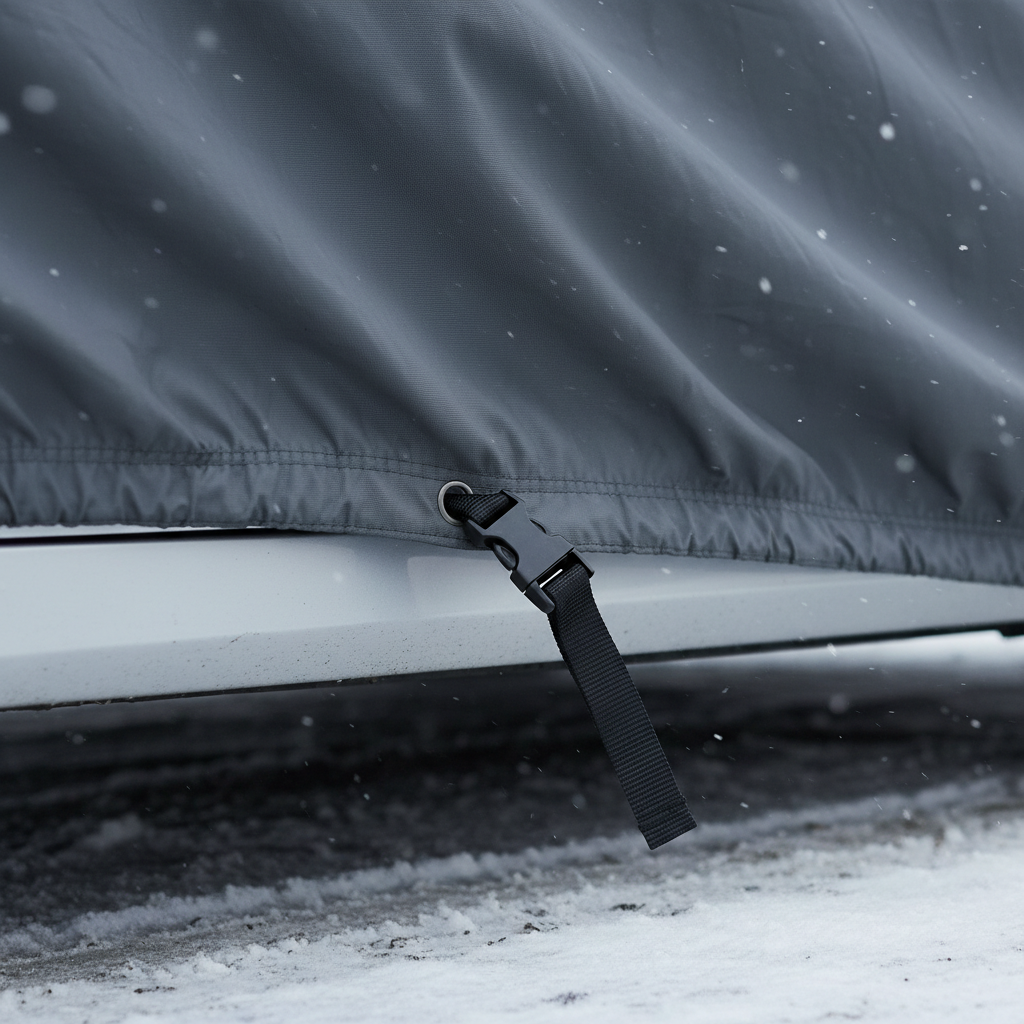
- Underbody straps: Ideally two straps with quick-release buckles, positioned to avoid exhaust heat and sharp edges.
In heavy snow regions, a slightly tighter fit also makes snow shedding easier. Loose covers can hold snow like a hammock, which adds weight and stress at seams.
A quick self-check: which cover type fits your situation?
If you pick based only on “winter” labels, you’ll overpay or end up with the wrong compromises. Use this checklist to narrow it down.
- High precipitation + mild temps (Pacific Northwest style): prioritize breathability and seam quality, avoid fully non-breathable shells.
- Heavy snow + wind (mountain or plains): prioritize tight fit, strong straps, abrasion resistance, and reinforced seams.
- Freezing rain and ice storms: prioritize water resistance plus a cover that’s easy to remove when stiff, thicker fabrics can be harder to handle.
- Street parking: prioritize durability and security features (lockable cable compatible), lighter covers rip more easily.
- Long-term storage outdoors: prioritize UV resistance and mildew resistance, since moisture sits longer.
If you’re in the “rain most days, occasional snow” category, the best car cover for outdoor snow and rain protection is usually a breathable multi-layer cover with vents, not the thickest, most rubbery option.
Feature comparison table (what to look for, not brand names)
Use this as a shopping filter when product pages start to look identical.
| Feature | Why it matters in snow/rain | What “good” often looks like | Common red flag |
|---|---|---|---|
| Breathable vents | Reduces condensation under the cover | Two+ vents placed high on the sides | No vents and “waterproof” hype only |
| Seam construction | Seams leak first when snow melts and sits | Reinforced stitching, taped/sealed seams (if offered) | Thin thread, puckered seams, weak corners |
| Inner liner | Helps prevent scuffs when cover shifts | Soft fleece-like touch points or full soft liner | Rough interior texture |
| Straps & buckles | Stops flapping and wind lift | Two straps, reinforced anchors, quick-release | Single thin strap or flimsy clips |
| Water shedding shape | Reduces pooling that can refreeze | Taut fit over roof and hood, less slack | Baggy cover creating “basins” |
How to use a winter car cover without creating new problems
This is the “real life” part. Even the right cover can scratch or trap grime if you treat it like a tarp.
Practical steps that make a difference
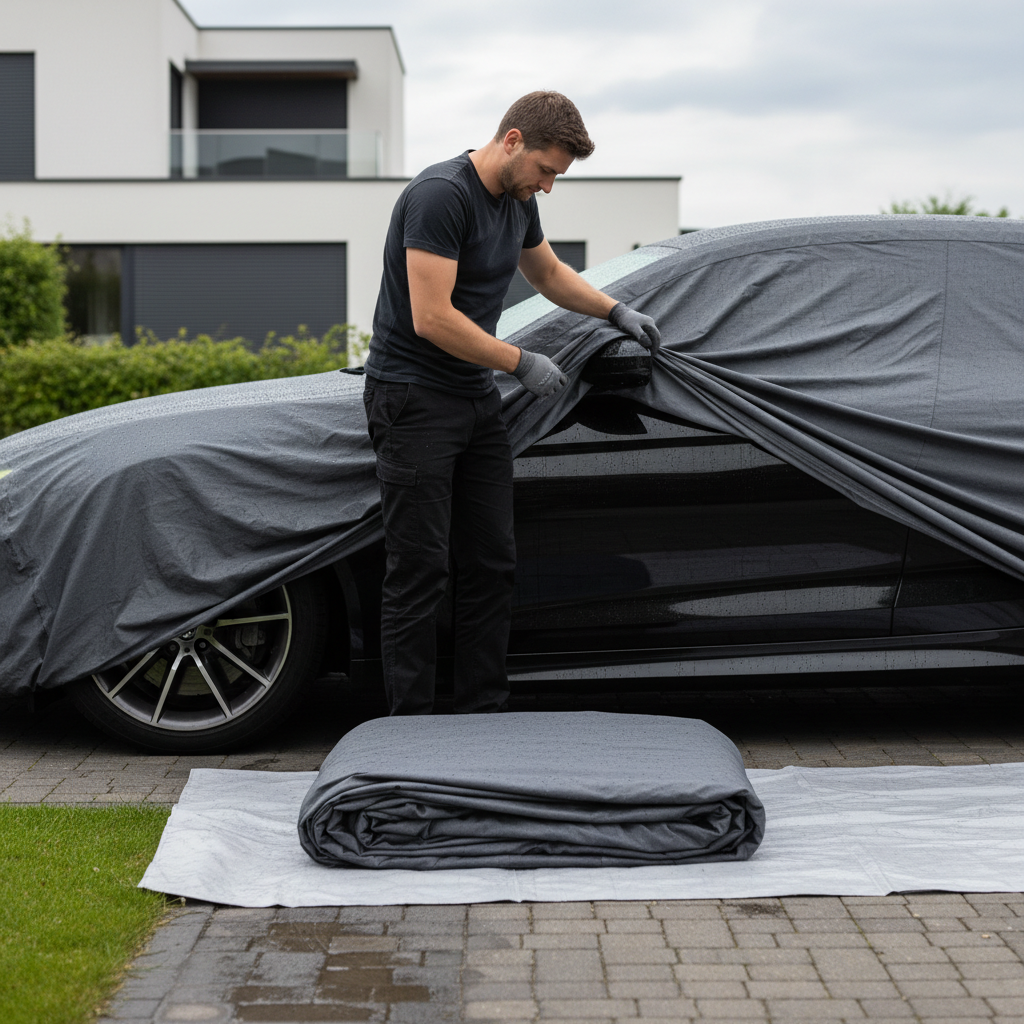
- Start with a reasonably clean car: If the surface is gritty, the cover can turn that grit into sandpaper in the wind.
- Dry the roofline when possible: Not always realistic, but wiping pooled water reduces trapped moisture.
- Secure the straps every time: If you skip this on a windy night, you’ll notice in the morning.
- Brush heavy snow off the cover: Less load on seams, easier removal, and fewer tears.
- Store it dry: If you ball up a wet cover in the trunk, mildew smell is a common next step.
According to FEMA, winter storms can include strong winds and heavy precipitation, so treating “wind resistance” as optional usually backfires when the weather turns.
Common mistakes to avoid (they’re more common than you’d think)
- Putting a cover on a dirty car: You may not see the grit, but wind movement does the damage.
- Buying oversized “universal” covers for convenience: Extra fabric collects water and flaps more.
- Ignoring mirror and antenna fit: Stress concentrates there, then small tears spread.
- Assuming thicker is always better: Some thick covers handle water well but can be stiff, harder to secure, and more likely to trap moisture if not vented.
- Using a cover as a theft deterrent only: If you need security, look for cable lock compatibility, but don’t sacrifice weather performance.
If you’re shopping for the best car cover for outdoor snow and rain protection, avoid “easy” shortcuts that increase movement and moisture trapping, those are the two patterns behind most complaints.
When it’s worth getting professional advice or changing your plan
If your paint already has clear coat issues, or you’re dealing with rust-prone areas and frequent moisture, a cover can help but might also trap dampness if used incorrectly. In those cases, it may be worth talking with a reputable detailer about your storage plan, especially if you’re seeing recurring mildew smell or haze after covering.
Also consider alternatives when the environment is extreme: a portable carport, a dedicated outdoor shelter, or even changing parking orientation can sometimes reduce snow load and wind exposure more than a “better” cover does.
Key takeaways (so you can buy with confidence)
- Waterproof + breathable beats “waterproof only” for most outdoor winter parking.
- Fit and straps matter as much as fabric, because flapping causes wear and leaks.
- Seams and vents are where real-world performance shows up after a few storms.
- Routine use (clean car, secure straps, dry storage) determines whether a cover helps or harms.
Pick a cover that matches your climate and daily habits, then commit to using it the right way. If you do that, winter protection becomes predictable instead of a weekly frustration.
FAQ
What is the best car cover for outdoor snow and rain protection if I park on the street?
Look for a durable multi-layer cover with strong straps and reinforced tie points, plus cable-lock compatibility. Street parking adds abrasion risk and tampering risk, so ultra-light covers often wear out faster.
Will a waterproof car cover trap moisture and cause mildew?
It can, especially if the cover is non-breathable or you put it on over a wet, dirty surface. Vents, breathable layers, and storing the cover dry reduce that risk.
Is a thicker cover always better for snow?
Not always. Thicker fabrics may resist punctures, but stiffness can make fit worse and increase gaps or pooling. A well-fitted, well-anchored cover typically outperforms a bulky one that shifts.
How do I stop my car cover from blowing off in winter wind?
Prioritize a snug hem, two underbody straps, and correct sizing. In very windy areas, using additional tie-down points (when supported by the cover design) helps more than overtightening one strap.
Can a car cover scratch my paint?
Yes, usually from movement over dirt or grit. A soft inner liner helps, but the bigger fix is covering only when the car is reasonably clean and keeping the cover tight so it doesn’t flap.
Should I cover a car that’s icy or covered in snow?
In many cases, it’s better to remove loose snow first. Covering over heavy snow can strain seams, and covering over ice can increase trapped moisture. If safety is a concern, take it slow and consider gloves with grip.
How often should I replace an outdoor winter car cover?
It depends on sun exposure, wind, and how often you use it. If you see seam splitting, thinning at corners, or water soaking through where it previously beaded, it’s usually time to upgrade.
If you’re trying to narrow down options fast, focus on your climate pattern and parking exposure, then shortlist covers that clearly state breathable construction, reinforced seams, and reliable anchoring. That’s usually where the “winter-ready” claims either hold up or fall apart.