
Best car rear seat kick mat for kids usually comes down to one thing: how well it blocks scuffs and crumbs without becoming another annoying “thing” you have to fix every ride.
If you drive with toddlers, boosters, or car seats, you already know the pattern, little shoes find the seatback, muddy prints spread, and then snacks finish the job. A kick mat won’t make the back seat spotless, but it can keep your upholstery from taking the hit and make cleanup feel less like a project.
This guide stays practical, what features matter, how to tell if a product will actually fit your setup, and what to watch for so you don’t accidentally interfere with child-seat installation.
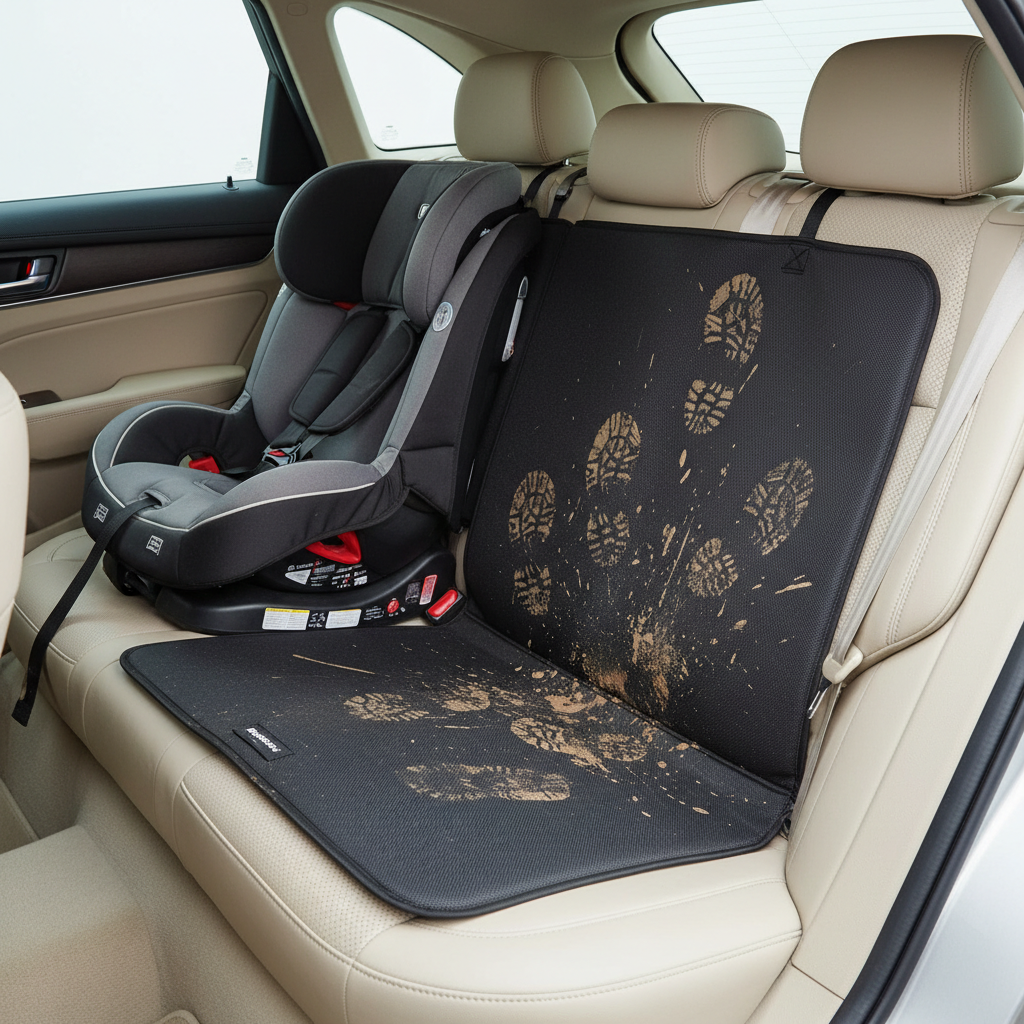
What a rear seat kick mat really does (and what it won’t)
A kick mat is a protective panel that covers the back of the front seat, right where kids’ feet land. In real life it helps with three main messes: scuffs, salt stains, and snack crumbs that get ground into fabric or leather.
What it won’t do is “seal” your car. If your kid drops a juice box, that’s still your problem. And if the mat is loose or too short, it can funnel dirt into seams instead of stopping it.
According to NHTSA, child seats should be installed and used following the manufacturer’s instructions. That matters here because some kick mats route straps around headrests or seatbacks, and you want to avoid anything that could change how a child restraint fits or tightens.
Quick comparison table: choosing the right kick mat style
If you just want to narrow options fast, start with the style that matches your seat and your kid situation, then pick materials and sizing.
| Kick mat type | Best for | Typical pros | Watch-outs |
|---|---|---|---|
| Single-panel universal | Most sedans/SUVs, everyday family use | Easy install, low cost, simple cleaning | May be short on tall seats, can slide if straps are weak |
| Full seatback + organizer pockets | Road trips, kids with lots of gear | Storage for wipes/toys, better coverage | Pockets can sag, can press into seatback if overstuffed |
| Extra-wide bench protection (two-seat width) | Two kids, shared mess zone | Fewer gaps, more uniform look | Harder to fit around split seats or vents |
| Premium leather-look or fitted | Leather interiors, newer vehicles | Looks cleaner, wipes down fast | Some coatings get slippery, heat can affect adhesives |
What “best” means in practice: features that matter most
Plenty of products claim they’re the best car rear seat kick mat for kids, but the difference shows up after two weeks of use. These are the features that tend to separate “fine” from “why didn’t I buy this sooner.”
1) Coverage that matches your seat height
For toddlers in a rear-facing seat, kicks hit lower. For older kids in boosters, their feet ride higher and more centered. If the mat ends 4 inches too low, you’ll still get scuffs right above it, which is extra annoying.
- Look for a longer panel if your front seats are tall or you drive a truck/SUV.
- Skip “one-size” mats that don’t list dimensions, that often signals thin, undersized panels.
2) Strap design that stays put
Most kick mats use a headrest strap plus a lower strap around the seat. The lower strap is where many fail, it slips up, loosens, and the mat starts curling.
- Better: adjustable straps with sturdy buckles and enough length for thick seats.
- Nice to have: anti-slip backing or corner anchors so it doesn’t drift sideways.
3) Easy-clean surface, not “easy-clean” marketing
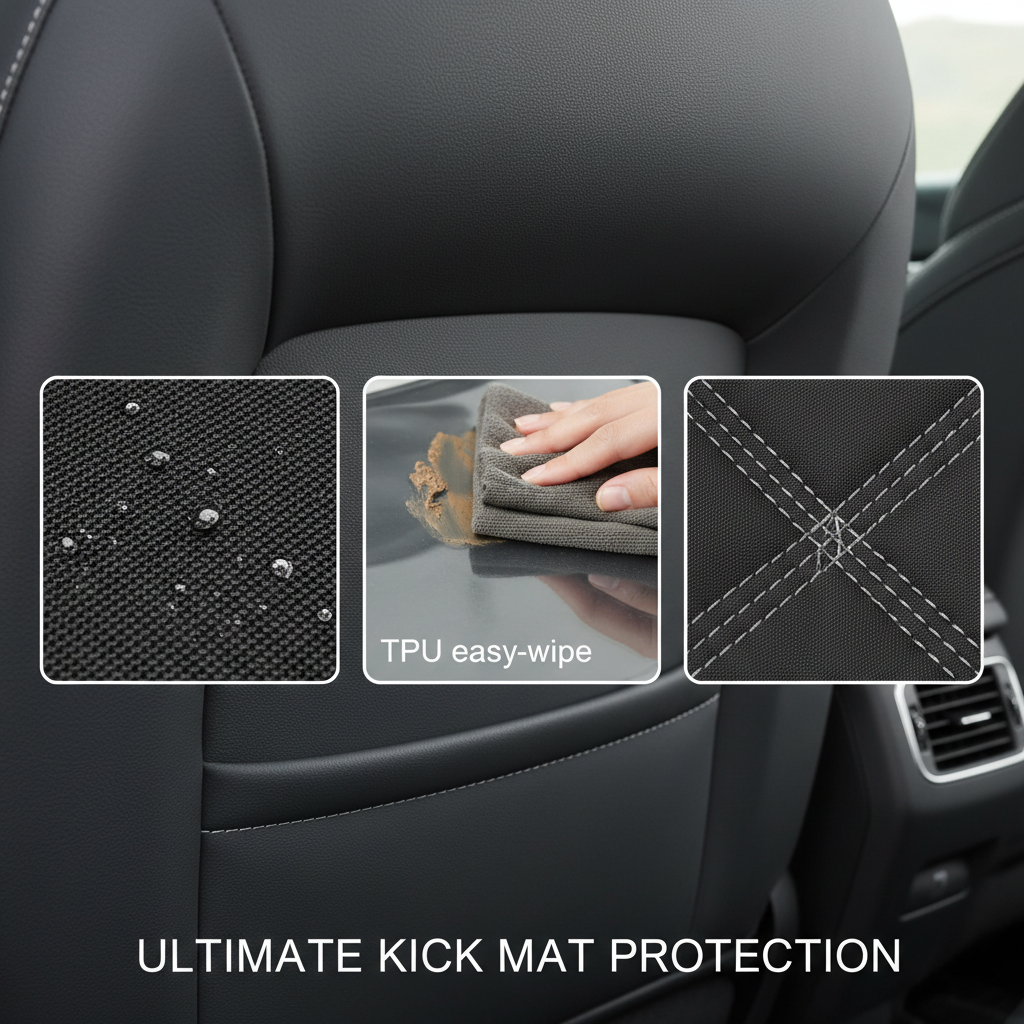
“Wipe clean” only matters if it actually wipes clean when you’re in a hurry. Many families do best with a water-resistant synthetic like oxford fabric with a coating, or a smooth TPU layer that doesn’t trap crumbs in texture.
- If your kid gets carsick: prioritize non-absorbent surfaces and sealed edges.
- If you hate plastic feel: a fabric face still works, but you’ll vacuum more.
4) Stitching and edge binding
Kick mats die at the edges, fraying, curling, splitting seams. Reinforced stitching and bound edges are unglamorous but usually worth paying for.
A quick self-check: which kick mat fits your family setup?
If you answer these in 60 seconds, you’ll avoid the common “returned it immediately” scenario.
- Do you use a rear-facing child seat? Choose a mat that doesn’t create lumps behind the child seat base and doesn’t interfere with tightening.
- Does your front seat have a fixed headrest? You’ll need a strap design that can secure without looping around a removable headrest post.
- Leather seats or cloth? Leather usually favors smoother, non-abrasive backing, cloth tolerates more textures.
- Do you rely on seatback pockets or vents? Oversized organizers can block vents or make pockets unusable.
- Is your kid a “kicker” or a “crumb dropper”? Kickers need coverage and grip, crumb droppers need easy vacuuming and a tighter fit.
If you’re still torn, choose coverage and stability over extra pockets. Storage sounds helpful, but a sagging organizer becomes clutter fast.
How to install a kick mat without making a mess of safety or fit
The goal is simple: protect the seatback while keeping everything else working as designed. When in doubt, follow your vehicle and child-seat manuals, and consider asking a certified child passenger safety technician if your setup feels complicated.
Step-by-step (works for most strap-on mats)
- Slide the front seat forward so you can work comfortably and see where straps route.
- Attach the top strap around the headrest posts or the headrest base, keeping it flat and not twisted.
- Attach the bottom strap around the seatback, not around any moving track or electrical wiring you can see.
- Tension gently until the mat lies flat, then re-check after you move the seat back to your normal driving position.
- Test for sliding by pushing the mat side-to-side; if it drifts easily, shorten straps or choose a model with better grip.
When you have a car seat installed
If the child seat presses hard against the kick mat and changes its angle, that’s a signal to pause. Many situations are fine, but you don’t want the mat to change how the child seat sits or tightens. According to the American Academy of Pediatrics, correct child restraint use is important for safety, so avoid add-ons that could complicate an otherwise solid install.
Cleaning and maintenance that actually keeps it looking decent
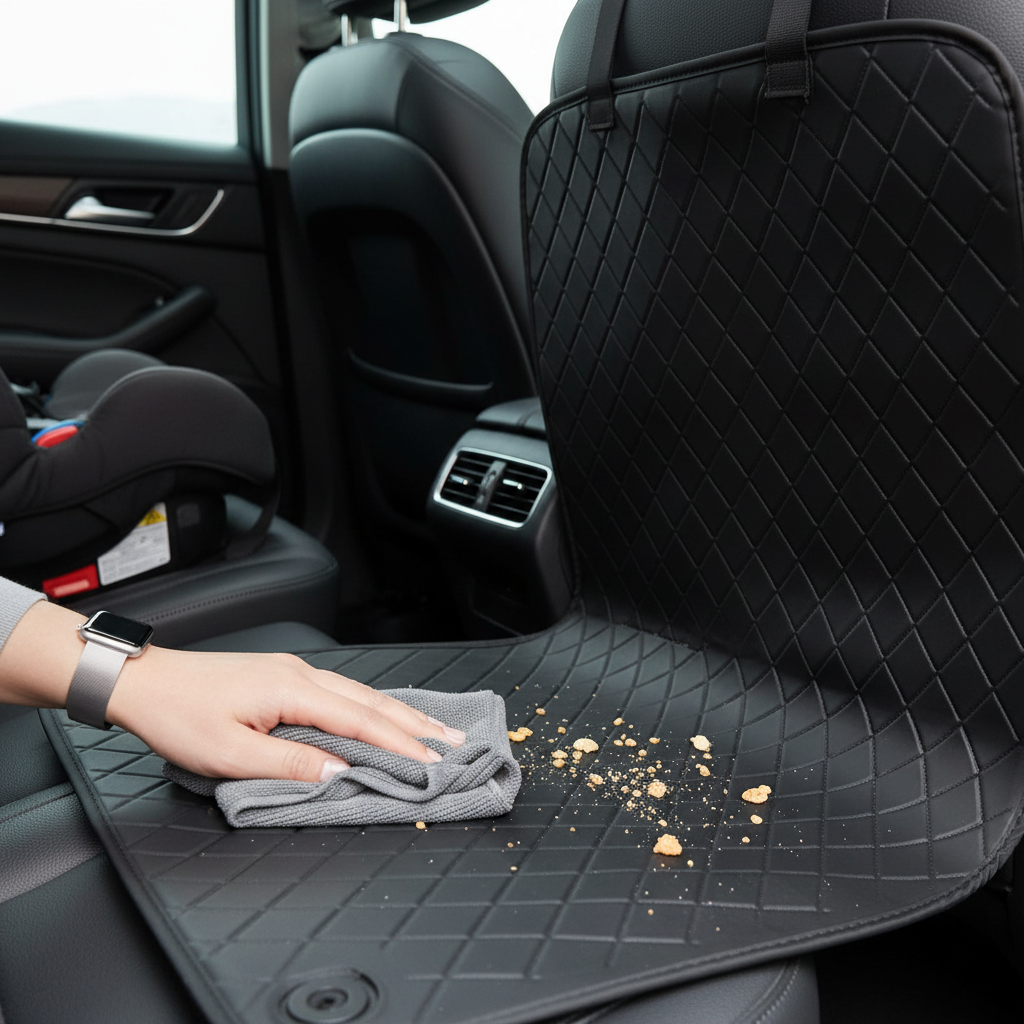
The best car rear seat kick mat for kids is the one you’ll clean without thinking twice. A few small habits keep it from turning into a permanent gray smudge.
- Weekly quick reset: shake out crumbs, then vacuum seams and pocket corners if you have an organizer style.
- Spot-clean sooner: dried mud usually needs scrubbing, fresh mud often wipes off with a damp cloth.
- Skip harsh solvents: they can damage coatings and make surfaces cloudy; mild soap and water often works.
- Air-dry: heat can warp some plastic layers and weaken stitching tape.
If your mat has a rubbery backing and it starts leaving marks on leather, stop using it and switch materials, that’s one of those annoying edge cases that happens in some interiors.
Common mistakes I see shoppers make (and how to avoid them)
- Buying for “any car” without measuring: measure seatback width and the distance from headrest to seat bottom, then compare to product specs.
- Over-indexing on pockets: organizers are useful, but overloaded pockets can bow the seatback cover and look messy.
- Ignoring strap routing: twisted straps loosen, and loose mats invite more dirt under the edges.
- Assuming waterproof means stain-proof: some surfaces repel liquid but still stain from dyes or sunscreen residue.
- Not checking car seat compatibility: if you use a child restraint, be cautious about anything adding thickness behind it.
So what should you buy? A practical recommendation framework
Instead of naming one “winner” that may not fit your seat, I’d pick based on your use case, then choose the highest-quality version within that lane.
- Daily school runs, messy shoes: a longer waterproof panel with strong straps and minimal pockets.
- Long drives, lots of stuff: organizer style, but choose reinforced pocket stitching and commit to not overfilling it.
- Leather interior, prefer clean look: smooth, easy-wipe surface with non-marking backing and conservative branding.
- Two kids behind the same seat: wider coverage or two separate mats with better edge overlap.
Key takeaways you can keep in your head while shopping:
- Fit beats features: correct size and stable straps usually matter more than extra pockets.
- Cleanability wins long-term: smooth wipe-down surfaces reduce “I’ll do it later” buildup.
- Be cautious around child seats: if anything changes the child seat’s fit, rethink the setup and consult a professional if needed.
Conclusion: keep it simple, protect the seat, reduce the cleanup
Finding the best car rear seat kick mat for kids is less about chasing a fancy feature list and more about buying the mat that fits your seatback, stays tight, and cleans fast. Start by measuring, choose the right style for your kid’s age and your interior, then install it so it sits flat and doesn’t interfere with any child restraint.
If you want a low-effort next step, measure your seatback today and narrow your shortlist to two options, one simple waterproof panel and one organizer style, then pick based on how you really use the back seat.
FAQ
- What is the best car rear seat kick mat for kids if I have a rear-facing car seat?
Look for a thin, flexible mat with secure straps that doesn’t bunch behind the child seat. If the mat changes the child seat angle or makes tightening harder, it’s safer to remove it and ask a CPST for guidance. - Do kick mats work on leather seats without leaving marks?
Many do, but it depends on the backing material and your leather finish. Choose non-abrasive, non-rubberized backing when possible, and check after a few days for any discoloration. - Are kick mats with pockets worth it for toddlers?
Sometimes, but toddlers often kick the pockets, which can sag and collect crumbs. If you want storage, keep it minimal and avoid overstuffing. - How do I keep a kick mat from sliding down?
Use a model with a bottom strap that fully wraps the seatback, tighten it after you set your driving position, and re-check tension weekly. Anti-slip backing helps, but straps do most of the work. - Can I machine wash a rear seat kick mat?
Some are machine-washable, many are not. Check the care label, and when in doubt, hand wash with mild soap and air dry to avoid warping coatings. - Will a kick mat protect against deep indentations from a child seat?
Not really. Kick mats mainly protect the seatback from shoes and dirt, not pressure marks on the seat cushion. For that, you’d be looking at a seat protector designed for under-seat use, and you should confirm child-seat compatibility. - What size kick mat should I buy?
Measure seatback width and the distance from headrest posts to the bottom of the seatback. Then choose a mat that covers the expected kick zone for your kid’s height, with a little extra length.
If you’re trying to choose between a few options and want a more “no surprises” setup, focus on a simple waterproof panel with strong straps and published dimensions, it’s usually the easiest path to less mess and fewer returns.