
Best car travel first aid kit compact size choices come down to one thing: whether the kit fits where you’ll actually keep it and still covers the injuries that happen in real cars, not in catalogs.
Most people don’t have room for a bulky “survival” box, and even if they do, it ends up buried under groceries or sports gear. A compact kit is the one you can reach fast with one hand, in the dark, while the other hand holds pressure on a cut.
This guide walks through what “compact” should mean, what a truly useful car kit includes, how to sanity-check quality, and how to set it up so you actually use it instead of forgetting it exists.
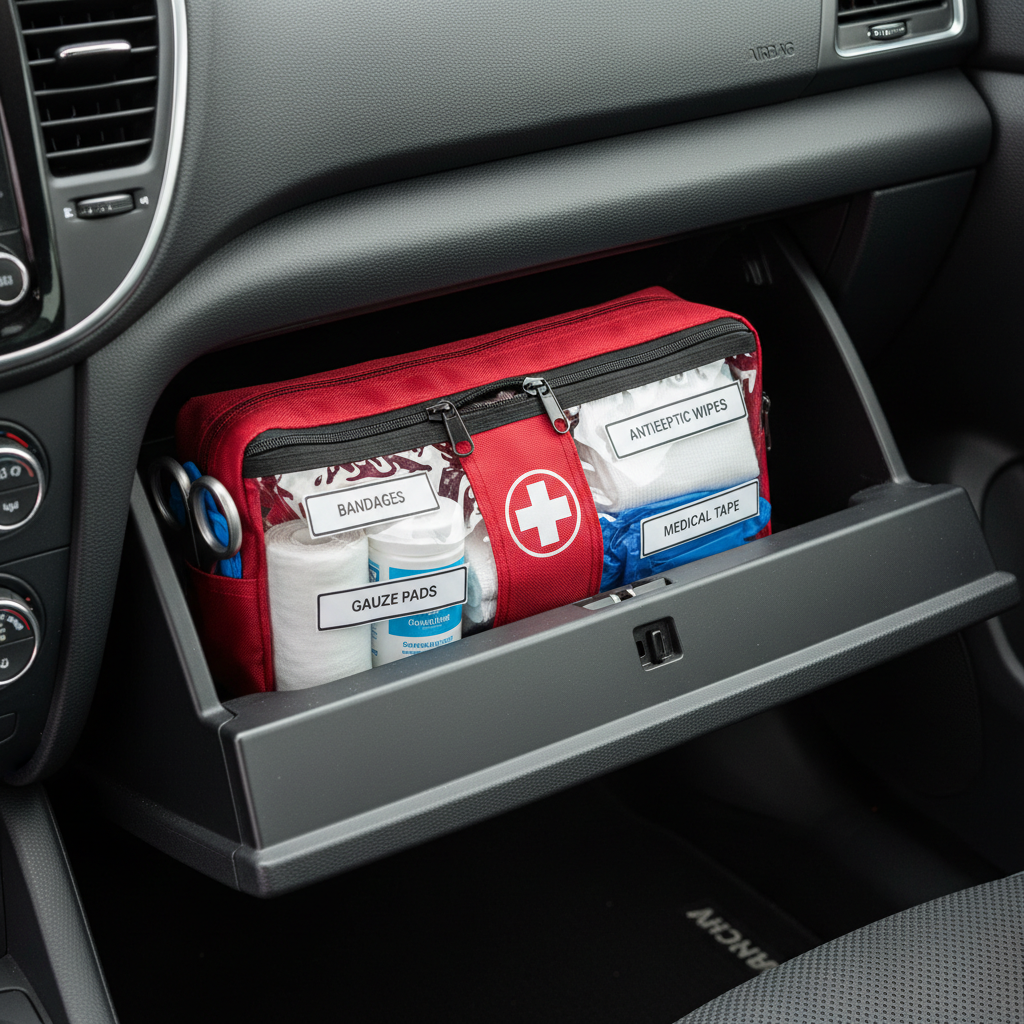
What “Compact Size” Really Means for a Car Kit
“Compact” isn’t a vibe, it’s a storage decision. In most vehicles, the best spot is glove box, center console, door pocket, or a slim pouch strapped to the seat-back. If the kit doesn’t fit one of those, it usually becomes trunk clutter.
A practical compact kit typically has:
- Soft zip pouch or thin hard case that won’t crack in heat
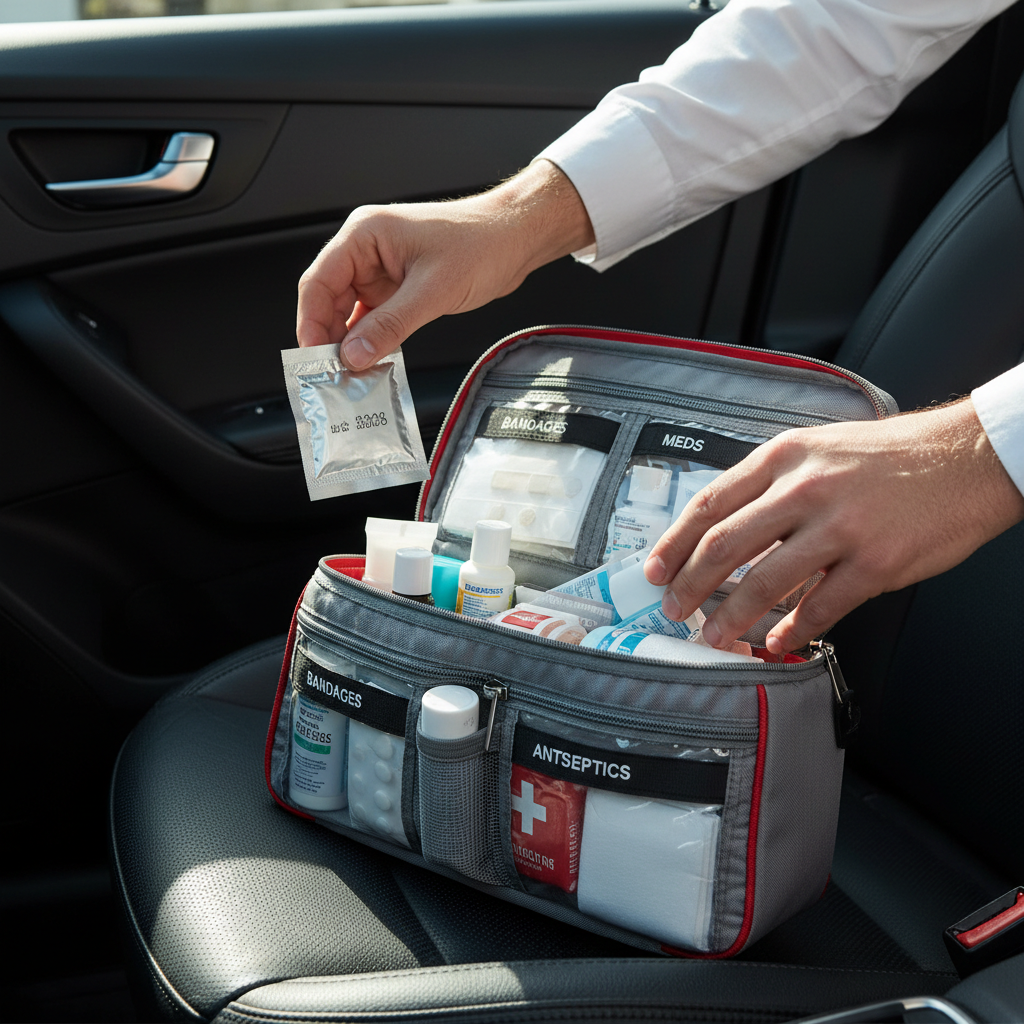
- Organized compartments so you can grab items without dumping everything
- Fast-open zipper and clear labeling, because stress ruins fine motor skills
Heat matters too. Cars get hot and cold, and some items degrade faster. That doesn’t mean “don’t keep a kit in the car,” it means you pick items that tolerate temperature swings and you check them on a schedule.
Common Road-Trip Injuries a Small Kit Should Handle
In a vehicle context, you’re usually dealing with minor injuries and “messy problems” that need quick control: bleeding, blisters, splinters, small burns, nausea, headaches, and allergy symptoms.
According to the American Red Cross, first aid focuses on immediate care until help is available, including controlling bleeding and caring for wounds. In a car, that means your kit should prioritize the basics that stop a situation from getting worse.
Look for coverage in these buckets:
- Bleeding control: gauze, pressure bandage, tape
- Wound cleaning: antiseptic wipes, saline pods if included
- Protection: nitrile gloves, small barrier items
- Minor pain + inflammation: common OTC options (check personal medical guidance)
- Skin issues: blister care, burn gel, hydrocortisone
Quick Self-Check: Are You Buying the Right Compact Kit?
Before you compare brands, check your own use case. This prevents overbuying and still keeps you prepared.
- Your storage spot: glove box, console, or trunk only?
- Who rides with you: kids, older adults, pets, coworkers?
- Trip pattern: short commuting, long highway drives, remote areas?
- Known needs: allergies, motion sickness, frequent blisters?
- Comfort level: do you want “basic” or “basic + a bit of trauma control”?
If you regularly drive rural roads with limited cell service, you may want a slightly more capable kit even if it’s still compact. If you only commute in a city, speed and convenience usually beat “more gear.”
What to Look for Inside the Best Car Travel First Aid Kit (Compact)
When people search for the best car travel first aid kit compact size, they often get distracted by item counts. A kit with 300 pieces can still be weak if it’s 280 cotton swabs and tiny bandages.
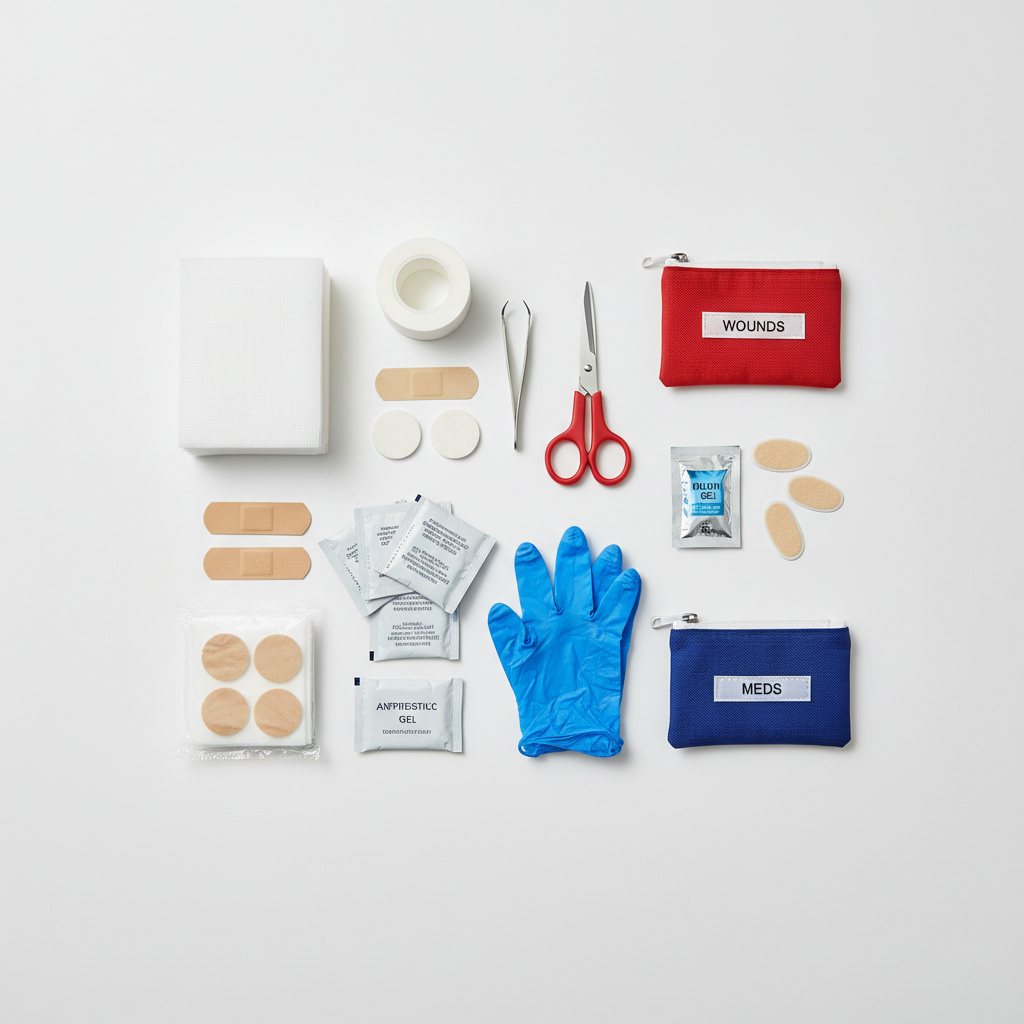
High-value items (worth paying attention to)
- Assorted adhesive bandages in realistic sizes, not only tiny strips
- Sterile gauze pads plus at least one larger absorbent pad
- Elastic or cohesive wrap for sprains and holding gauze in place
- Medical tape that actually sticks in humidity
- Antiseptic wipes (individually wrapped)
- Nitrile gloves (at least 2 pairs)
- Tweezers for splinters/ticks and small scissors for tape/gauze
- Instant cold pack if space allows
Nice-to-have, depending on your family
- Blister pads/moleskin for travel shoes
- Burn gel packets (minor kitchen/coffee burns)
- CPR face shield (compact barrier)
- Emergency blanket (thin, low bulk)
Medication packets can be useful, but they’re also where kits vary the most and where expiration matters. If you’re unsure what’s safe for you or your kids, it’s smart to ask a pharmacist or clinician for guidance rather than guessing.
Compact Kit Comparison Table (What Matters vs What’s Just Marketing)
Use this as a quick filter when you’re browsing product pages.
| Feature | Why it matters in a car | What to watch for |
|---|---|---|
| Dimensions & shape | Must fit glove box/console for fast access | Bulky boxes that only fit the trunk |
| Organization | You can find gauze/gloves quickly under stress | Single compartment “dump bag” designs |
| Bleeding control basics | Most urgent common issue is bleeding | Too many tiny bandages, not enough gauze/tape |
| Heat tolerance | Cars cook supplies; adhesives and meds degrade | No expiry info, leaking ointment tubes |
| Refillability | Good kits get used and should be restocked | Odd sizes that are hard to replace locally |
How to Set Up and Maintain a Small Car First Aid Kit (So It Stays Useful)
A compact kit works best when you treat it like a tool, not a decoration. Here’s a setup that tends to stick.
Placement that makes sense
- Daily driving: glove box or center console
- Family road trips: second kit or add-on pouch in the cabin, not the trunk
- Outdoor-heavy travel: add a small “grab pouch” you can take out of the car
A simple maintenance rhythm
- Check it when you change cabin air filter, rotate tires, or at daylight saving time
- Replace anything opened, dried out, or heat-damaged
- Review expiration dates, especially meds and ointments
According to the U.S. Food & Drug Administration (FDA), medications can lose potency over time and should be stored as directed on the label. In a car environment, that’s a reminder to be conservative with what you carry and to refresh items regularly.
Mistakes That Make a Compact Kit Useless (Even If You Bought a “Good” One)
These are the patterns that show up again and again.
- Chasing the highest item count instead of the right mix of gauze, tape, wraps, and gloves
- Putting it in the trunk “for emergencies,” then realizing you can’t reach it at a stoplight
- Never opening the kit until you need it, and discovering the layout makes no sense
- Ignoring heat damage, especially dried-out wipes and gooey ointments
- Forgetting personal needs, like allergy history or kids’ sizes for bandages
One more quiet issue: some kits include tools you’re not comfortable using. If you wouldn’t use it, it doesn’t count as preparedness. Keep it simple and realistic.
When to Get Professional Help (and When to Call 911)
A car kit is for first response, not full treatment. If someone has heavy bleeding that won’t slow with firm pressure, signs of concussion after a crash, trouble breathing, severe allergic reaction, or severe burns, it’s safer to seek emergency care immediately.
According to the Centers for Disease Control and Prevention (CDC), recognizing emergency warning signs and getting timely care can reduce risk in serious situations. If you’re unsure, calling 911 and following dispatcher instructions is usually the safest path.
If you want a bit more capability, consider a basic first aid course. It’s not about being a hero, it’s about making calm decisions when your brain wants to panic.
Key Takeaways (Fast Recap)
- Compact should mean “fits where you can reach it,” not “missing essentials.”
- Prioritize bleeding control, cleaning, gloves, and practical bandage sizes.
- Ignore inflated piece counts, look for gauze, tape, wrap, and organization.
- Check supplies on a simple schedule, car heat can shorten shelf life.
If you do one thing today, put a compact kit in the glove box and open it once, just to learn where everything sits. That small step removes a lot of hesitation later.
FAQ
What size is considered a compact first aid kit for a car?
Most people mean a pouch that fits a glove box or center console and can be grabbed with one hand. If it only fits the trunk, it may be “small” but not truly compact for quick access.
Is a 300-piece kit better than a 100-piece kit for car travel?
Not automatically. Many high-count kits pad numbers with low-utility items. For car travel, you’ll usually get more real value from better gauze, tape, wraps, and gloves than from a huge count.
Should I keep medications in my car first aid kit?
It depends on your climate and your household needs. Heat and cold can affect some products, and dosing varies by person. If you carry meds, store them as labeled and consider asking a pharmacist what’s appropriate.
What’s the most important item in a compact car first aid kit?
For everyday situations, it’s hard to beat a solid combination of gauze + tape + gloves, because controlling bleeding and keeping a wound clean is a common real-world need.
How often should I replace items in a car first aid kit?
Check at least a couple times a year, and anytime you use the kit. Wipes drying out and ointments leaking are common in cars, so a quick visual inspection goes a long way.
Where should I store a compact kit in the car?
Glove box or center console is ideal for speed. If you carry a larger kit, keep a small “core” pouch up front and the bigger refill kit in the trunk.
What if I want the best car travel first aid kit compact size for family road trips?
Look for organization, extra bandage variety, blister care, and a second pair of gloves. With kids, you also want items you can apply quickly without hunting around.
If you’re trying to pick a compact kit but keep getting lost in item lists, a simple approach is to choose a glove-box-friendly pouch, then confirm it covers bleeding control, cleaning, and basic tools, after that you can customize with a few personal add-ons without turning it into a bulky trunk box.