
Best car sunshade for rear window baby safety usually comes down to two things parents feel immediately on real drives: heat that builds fast in the back seat, and harsh sunlight that lands right on a baby’s face when they’re rear-facing.
If you’ve ever reached back to adjust a blanket, re-aim a toy, or realized the back window is basically a spotlight at 4 p.m., you already know why a “good enough” shade can still be annoying. Worse, the wrong kind can slip, block visibility, or turn into a distraction.
This guide focuses on practical selection: what features matter for safety, which shade styles fit different rear windows, what to avoid, and how to install so it stays put on bumpy roads. I’ll also share a quick decision checklist and a comparison table so you can pick without overthinking it.
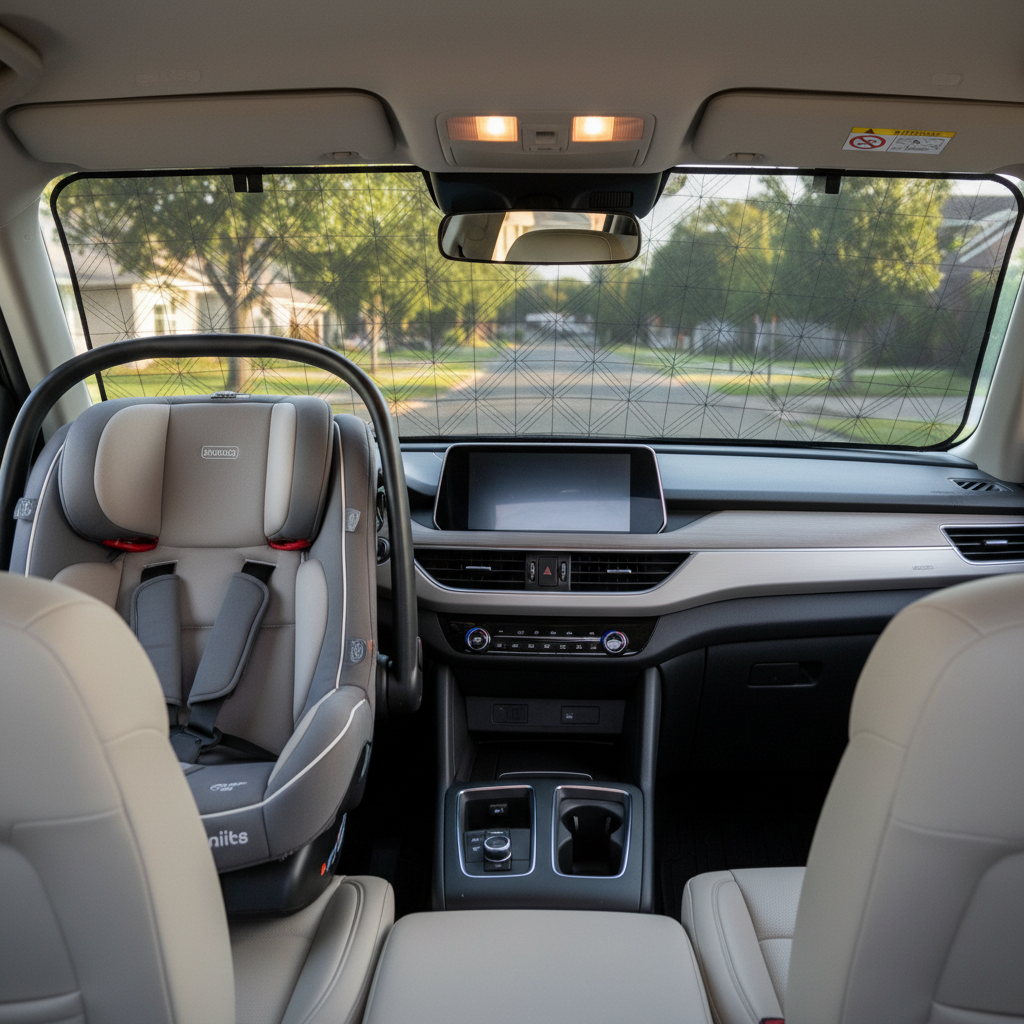
What a rear-window sunshade can (and can’t) do for baby safety
A rear-window shade can help with comfort and reduce glare, which indirectly supports safer driving because you’re less likely to turn around, squint, or fiddle with the back seat while moving. It can also cut some radiant heat coming through the glass.
But a sunshade is not a temperature control system, and it’s not a substitute for safe car-seat practice. According to the American Academy of Pediatrics, correct car seat use and proper installation are central to keeping infants safe in vehicles, so treat a shade as an add-on that improves ride conditions, not the foundation.
- Helps: glare reduction, less direct sun on baby, privacy at stops, a calmer nap environment.
- Doesn’t guarantee: a “cool” car in summer, UV elimination, or protection from unsafe cabin temperatures.
- Should never: interfere with driver visibility, rear wiper function, defroster performance, or airbags (if applicable to your vehicle layout).
Why the back seat gets so intense: real-world causes
Parents often assume the side windows are the whole story, then the rear window becomes the surprise problem. A few patterns show up a lot in day-to-day driving.
- Low-angle sun: mornings and late afternoons push sunlight straight through the rear glass, especially in sedans and hatchbacks.
- Rear-facing seats: babies often face the rear window line of light depending on recline angle and seat position.
- Glass area and tint: factory tint varies by model and state rules, and it may still allow uncomfortable brightness and heat.
- Stop-and-go traffic: airflow drops, cabin heat climbs, and a baby can get sweaty quickly even with AC running.
Also, if you have a rear wiper (common on SUVs/hatchbacks), some shade types fight with it. That becomes less about comfort and more about visibility in rain, which is a safety priority.
Quick self-check: which type of shade fits your car and routine?
If you answer these in two minutes, you’ll avoid buying the “popular” option that ends up shoved in a door pocket.
- Your rear window shape: mostly flat rectangle, or curved and steep (many crossovers)? Curved glass often needs custom-fit or flexible shades.
- Rear wiper/defroster: yes or no? If yes, prioritize shades that don’t cover the wiper sweep and won’t stress defroster lines.
- Parking situation: street parking in full sun vs. garage. Full sun usually benefits from higher-coverage shades or layered approach (rear + side).
- How often you open the hatch/trunk: frequent loading favors quick-remove designs.
- Baby’s behavior: some babies grab at mesh edges or suction cups once they notice them, so look for cleaner installs.
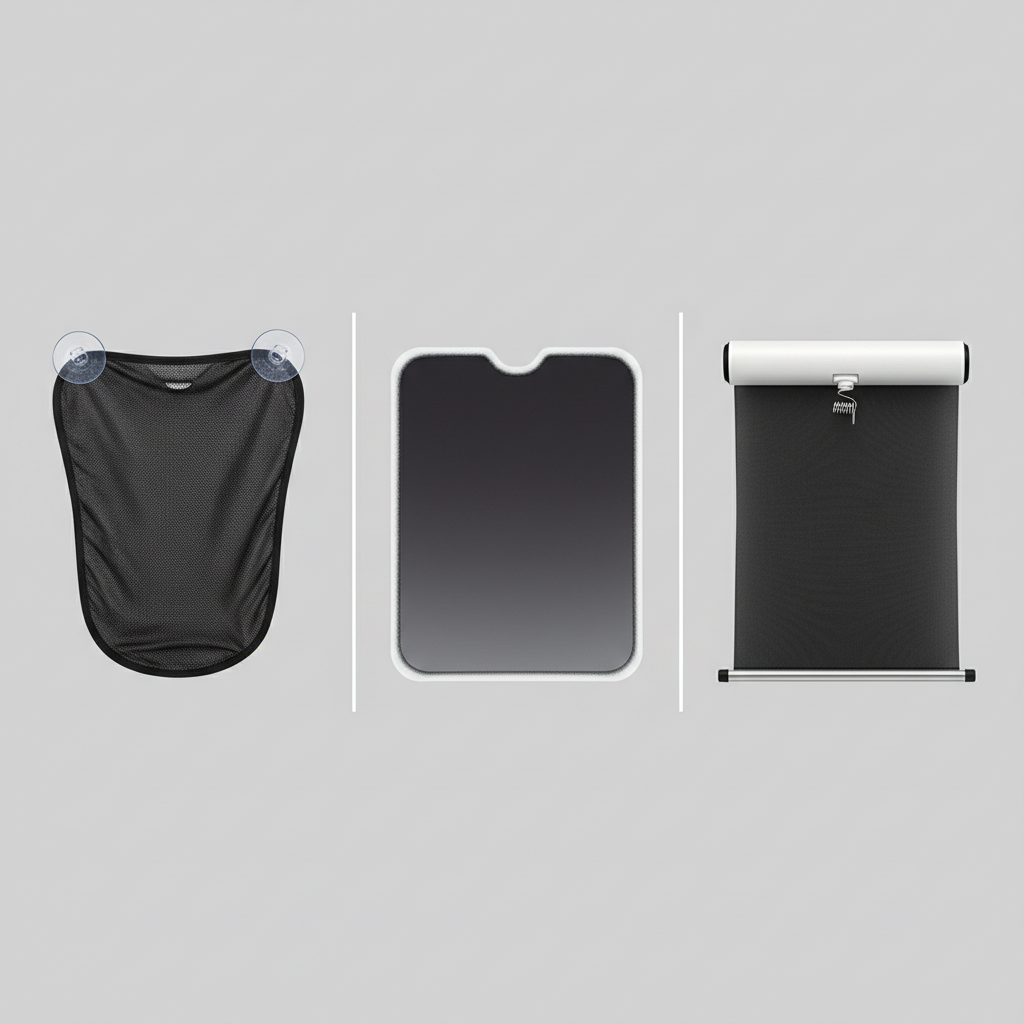
Rear window sunshade types compared (with baby-focused pros/cons)
There isn’t one perfect design. The “best car sunshade for rear window baby safety” is the one that stays secure, keeps reasonable visibility, and fits your glass without constant re-adjustment.
| Type | Best for | Pros | Watch-outs |
|---|---|---|---|
| Static cling film shade | Clean look, frequent driving | Usually no suction cups, smoother edges, often better coverage | Can be fussy on very curved glass, needs clean window |
| Suction cup mesh shade | Budget picks, rentals | Easy to move between cars, quick on/off | Suction can fail in heat, cups become choking hazard if they fall where baby can reach |
| Retractable roller shade | Adjustable shading | Variable coverage, tidy when retracted | Mounting can loosen, some designs leave gaps at sides |
| Custom-fit rear window shade | Specific vehicle models | Best fit and stability in many cases | Costs more, not always available for older cars |
What I’d prioritize for baby safety (not just convenience)
- Secure attachment: no slipping mid-drive, no small parts dropping into reach.
- Driver visibility: you still need a usable rear view, especially at night or in rain.
- Edge finish: less tempting for little hands, less likely to peel or curl.
- Heat tolerance: adhesives and suction should handle hot glass without failing quickly.
How to choose the right rear-window shade: a practical checklist
When you’re shopping online, product photos can hide the frustrating parts. Use these checks to filter options fast.
- Fit info is specific: dimensions listed, and ideally notes about curved rear glass or vehicle compatibility.
- Attachment method matches your climate: in many hot states, suction cups can soften and drop, static cling often holds better if the window is clean.
- Material visibility: look for “mesh” that still allows you to see headlights behind you at night, overly dark shades can be a problem.
- No sharp frames: rigid frames can become annoying during trunk access or if they pop loose.
- Easy cleaning: baby rides mean fingerprints, drool, snacks, you’ll wipe it down.
Key point: if a shade requires constant repositioning, it increases distraction. That’s the opposite of what you want.
Installation tips that keep the shade secure (and reduce safety compromises)
Even a good shade performs poorly with a sloppy install. This is where most complaints come from.
Step-by-step that usually works
- Clean the glass first: wipe with glass cleaner, then dry fully. Static cling and suction both depend on clean, dry surfaces.
- Test driver visibility: sit in the driver seat, adjust your mirror, then check if the shade blocks too much. If it does, consider partial coverage or a different style.
- Keep clear of wiper sweep: on hatchbacks/SUVs, cycle the rear wiper once to see its arc, then place shade outside that zone.
- Mind the defroster lines: avoid aggressive scraping or adhesives that might stress lines when removing.
- Secure loose parts: if the design includes extra clips or spare suction cups, store them out of baby’s reach.
Realistic expectations in summer
A shade helps, but a parked car still heats quickly. According to the National Highway Traffic Safety Administration (NHTSA), children should never be left unattended in a vehicle, and heat can become dangerous fast. If you’re trying to solve “my baby gets sweaty immediately,” pair shading with airflow, pre-cooling, and shorter idle time when possible.
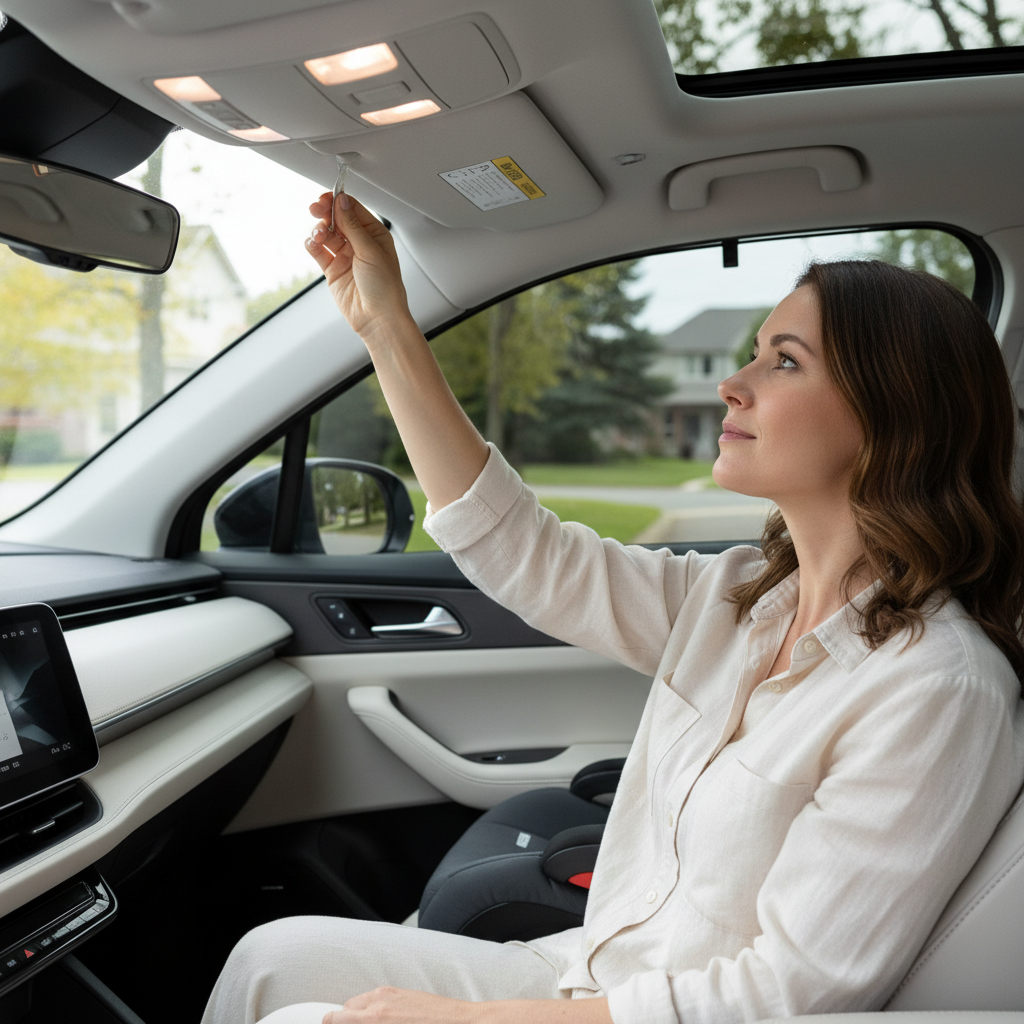
Common mistakes and what to do instead
- Going too dark: very dark mesh may feel like “more protection,” but it can reduce night visibility. Choose balanced opacity and verify in your driveway after dark.
- Covering the entire rear window by default: full coverage can be fine, but if your rear view becomes useless, that’s a problem. Many families do better with a shade that leaves a clear strip or uses a lighter mesh.
- Relying on a blanket over the car seat: blankets can slip and risk covering baby’s face. If you’re worried about sun on baby, use window-based shading and check the car seat manual for safe accessory guidance.
- Buying without measuring: rear windows vary a lot. A quick tape-measure check saves time and returns.
If you’ve been stacking solutions, like side window shades plus a rear shade plus a cover, pause and reassess. Too many add-ons can create new hazards, mostly around visibility and loose items.
When it’s worth asking a professional (or at least slowing down)
If you’re unsure whether your setup affects your car seat installation, or you’re fighting persistent overheating and baby seems unusually flushed or lethargic after rides, it’s reasonable to get help rather than guessing. You can consult your pediatrician for health concerns, and for car-seat setup, a certified Child Passenger Safety Technician may be able to check installation in your area.
Also consider professional advice if your vehicle has unusual rear-window geometry, integrated sensors, or you regularly drive in conditions where rear visibility is already limited, like heavy rain or nighttime rural roads.
Conclusion: the “best” choice is the one you stop thinking about mid-drive
The right rear-window shade makes the back seat calmer without adding new hassles. Aim for a secure attachment, a fit that matches your rear glass, and visibility you feel comfortable with in the real conditions you drive in, not just midday sunshine.
If you want a simple next step, measure your rear window tonight, then pick one shade style to try based on your climate and window shape, install it carefully, and do a quick night-visibility check before calling it done.
FAQ
What is the best car sunshade for rear window baby safety if my car has a rear wiper?
Many people do better with a shade that can be positioned around the wiper sweep, like a flexible static cling option or a custom-fit shade made for that model. After installation, run the rear wiper once to confirm it won’t snag or smear.
Are suction cup shades safe around babies?
They can be fine, but suction cups sometimes drop in heat and become a small loose part. If your baby can reach the rear window area, it’s smart to choose designs with fewer detachable pieces, or keep the cups firmly out of reach.
Do rear window shades reduce UV exposure for infants?
Some products claim UV reduction, but effectiveness varies by material and the car’s factory glass. If UV protection is your main concern, look for clearly stated specs and consider asking your pediatrician for guidance if your baby has sensitivity issues.
Will a rear window sunshade affect my ability to see cars behind me?
It might, especially at night. Before committing, sit in the driver seat and check your rear mirror view in low light. If visibility feels compromised, switch to a lighter mesh or partial coverage.
Is it okay to use a blanket or cover over a rear-facing car seat to block sun?
It’s common, but it can slip and change airflow around baby’s face. In many cases, window-based shading is a cleaner approach. For anything that touches the car seat, check the seat manual because some manufacturers discourage aftermarket add-ons.
How do I know if the shade is making the back seat cooler?
You’ll usually notice less direct sun and less “burning” on surfaces, but cabin temperature can still rise quickly when parked. Pair the shade with ventilation and avoid idling or waiting in a parked car with baby inside.
Can a rear window shade interfere with the rear defroster?
It shouldn’t block the defroster from working entirely, but adhesive or rough removal could stress defroster lines on some cars. Use gentle removal, and avoid products that feel overly sticky on the defroster area.
Key takeaways
- Choose stability over gimmicks: a shade that stays put reduces distraction.
- Protect visibility: test rear view at night and in rain conditions.
- Measure first: rear windows vary, fit problems cause most returns.
- Shade is supportive, not sufficient: don’t rely on it to solve hot-car risk.
If you’re trying to find a more no-drama setup, it often helps to start with one well-fitting rear window shade, install it cleanly, then add side-window shading only if your baby still gets hit by sun during your usual route.