
The best car rear view mirror phone holder stable option is usually the one that matches your mirror stem shape, locks tightly without over-tightening, and keeps the phone from bouncing on rough roads.
If you’ve ever had a mount slowly rotate, sag mid-drive, or vibrate so much you can’t read maps, you already know stability isn’t a “nice to have”, it’s what makes the holder usable. A rear view mirror mount can help because it anchors higher and often closer to your line of sight, but only if the clamp and arm design are solid.
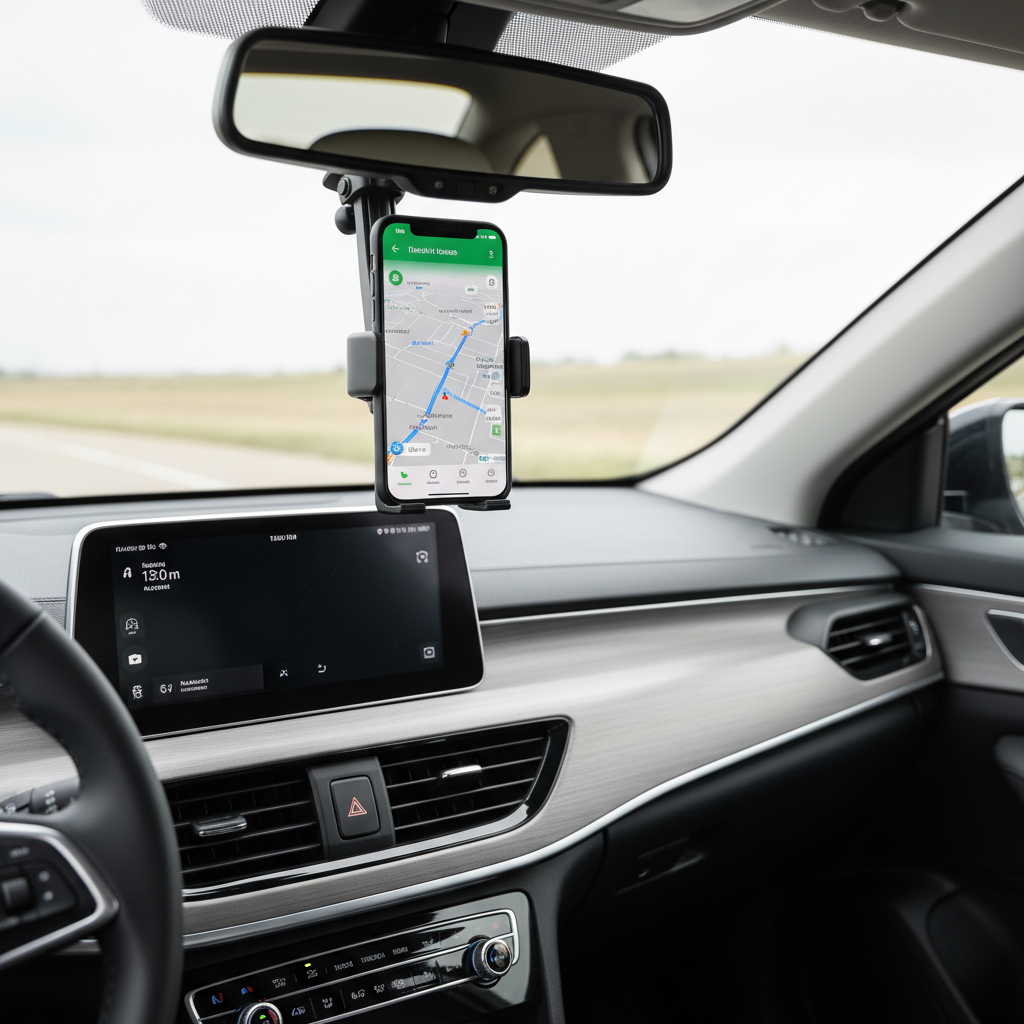
This guide breaks down why mirror mounts wobble, how to tell whether a product is actually stable (not just marketed that way), and how to install it so it stays put. I’ll also flag situations where a mirror mount is the wrong move, because sometimes the “stable” solution is simply a different mounting location.
What “stable” really means for a rear view mirror phone holder
Stability is not just “it doesn’t fall off.” In real driving, the common failure is micro-movement: vibration blurs the screen, the ball joint slowly droops, or the clamp creeps around the mirror stem.
- Clamp stability: the mount does not rotate around the mirror stem when you hit bumps or adjust the phone.
- Arm stability: the arm does not bounce like a spring, especially with heavier phones.
- Joint stability: the angle holds after days of heat/cold cycles and repeated adjustments.
- Phone grip stability: the cradle or magnetic face resists road vibration and quick turns.
According to NHTSA, driver distraction is a major safety issue, and anything that encourages extra glances or fiddling mid-drive can raise risk. A mount that constantly shifts is not only annoying, it can push you into adjusting it when you shouldn’t.
Why rear view mirror phone holders wobble (real-world causes)
Most “unstable” complaints come from a few predictable mismatches between the mount and the car or phone. If you spot the cause, you can usually fix it or avoid buying the wrong style.
- Mirror stem shape mismatch: some cars have thicker stems, tapered stems, or housings that don’t give the clamp a flat bite.
- Over-long arms: longer arms increase leverage, which amplifies vibration. Even a strong clamp can’t fully save a long, thin arm.
- Ball joint fatigue: inexpensive ball joints can “polish” over time, then they start drooping, especially in summer heat.
- Heavy phone setups: large phones plus thick cases, plus a charging cable tugging sideways, add constant torque.
- Installation shortcuts: slightly crooked clamp placement or skipped anti-slip pads often leads to slow rotation later.
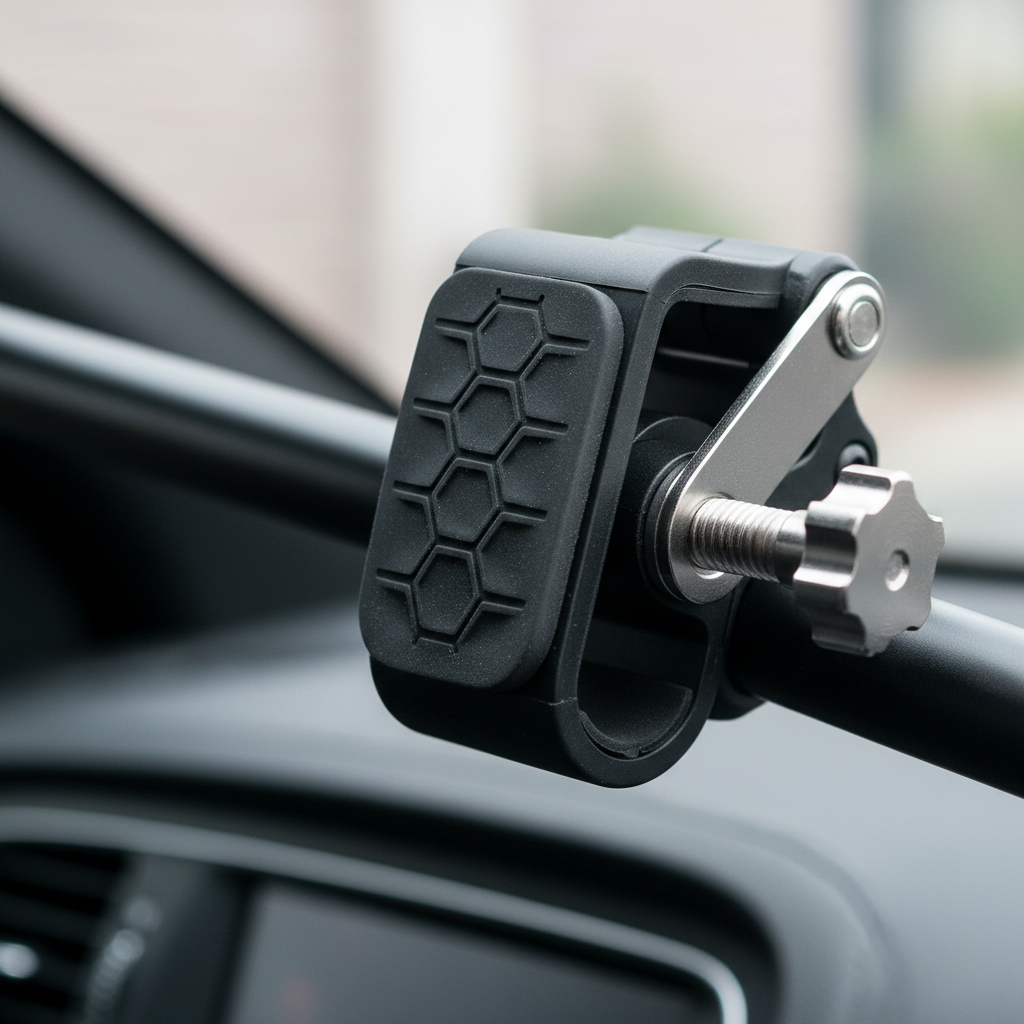
One more thing people miss: some mirrors transmit more vibration than you expect because the mirror assembly itself has play. In that case, the best car rear view mirror phone holder stable pick might still look shaky, because the mirror is shaky.
Quick self-check: is a rear view mirror mount right for your car?
Before you shop, take 60 seconds and answer these. It saves you from buying a “great” mount that never had a chance in your vehicle.
- Do you have a visible mirror stem? If the mirror sits on a tight housing with no stem, many clamps won’t fit.
- Any sensors/cameras near the mirror? Many newer cars have ADAS housings. You should avoid blocking sensors or cables.
- Do you already have mirror vibration? If yes, a phone mount will likely magnify that movement.
- Do you need the phone centered? Mirror mounts often place the phone slightly off-center depending on arm design.
- Do you frequently adjust the mirror? If you share the car, re-aiming the mirror can shift the phone position too.
If you answered “yes” to sensors/cameras, it’s smart to check your owner’s manual or ask a qualified installer. Many situations are fine, but guessing around safety tech can get expensive.
What to look for when buying a stable rear view mirror phone holder
Marketing photos rarely show the parts that decide stability. Here’s what usually matters in day-to-day use.
Key features that typically improve stability
- Short, thick arm or no arm: less leverage equals less bounce.
- Metal-reinforced core: especially in the arm and clamp hinge, where flex often starts.
- Large clamp contact area: wider bite plus quality rubber pads reduces rotation.
- Locking mechanism you can actually tighten: a knob/screw tends to hold better than purely spring tension.
- High-friction ball joint: ideally with a locking collar, not only a “tight” ball.
Magnetic vs. cradle: stability tradeoffs
- Magnetic mounts: fast one-hand docking, but stability depends on magnet strength and plate placement; some cases weaken the hold.
- Cradle/grip mounts: typically more secure over bumps, but can be slower to use and may press side buttons on some phones.
If you want the best car rear view mirror phone holder stable setup for a heavier phone, a rigid cradle with a firm bottom support often holds position longer than a loose spring grip.
Comparison table: how to choose based on your driving and phone
Use this as a practical filter, not a rulebook. Different cars transmit vibration differently, and that changes the “best” answer.
| Scenario | What usually works | What to avoid |
|---|---|---|
| City driving, smooth roads | Compact clamp + medium joint tension | Very long arm that crowds the mirror |
| Rough roads or older suspension | Short arm, locking collar, reinforced clamp | Thin “gooseneck” arms that bounce |
| Large/heavy phone | Cradle with bottom support + strong joint lock | Weak ball joint, small clamp footprint |
| Frequent rideshare/delivery use | One-hand dock, repeatable angle, stable clamp | Mounts that slip after repeated adjustments |
| Cars with ADAS camera housing | Low-profile mount that clears sensors | Anything that blocks camera/rain sensor area |
Install it like you mean it: steps to maximize stability
Even a good mount can feel mediocre if installation is sloppy. This is the part people rush, then blame the product.
Step-by-step setup
- Clean the contact point: wipe the mirror stem area so rubber pads grip, not slide on dust or dressing.
- Center the clamp on the stem: avoid tapered edges where the clamp can creep.
- Apply pads correctly: if the mount includes different thickness pads, use the one that eliminates “gap” without forcing the clamp open.
- Tighten to “no twist”: test by trying to rotate the mount by hand. If it twists, tighten slightly more.
- Set the arm short: start with the shortest reach that gives you visibility.
- Route the cable: if you charge, secure the cable so it doesn’t tug the phone on turns.
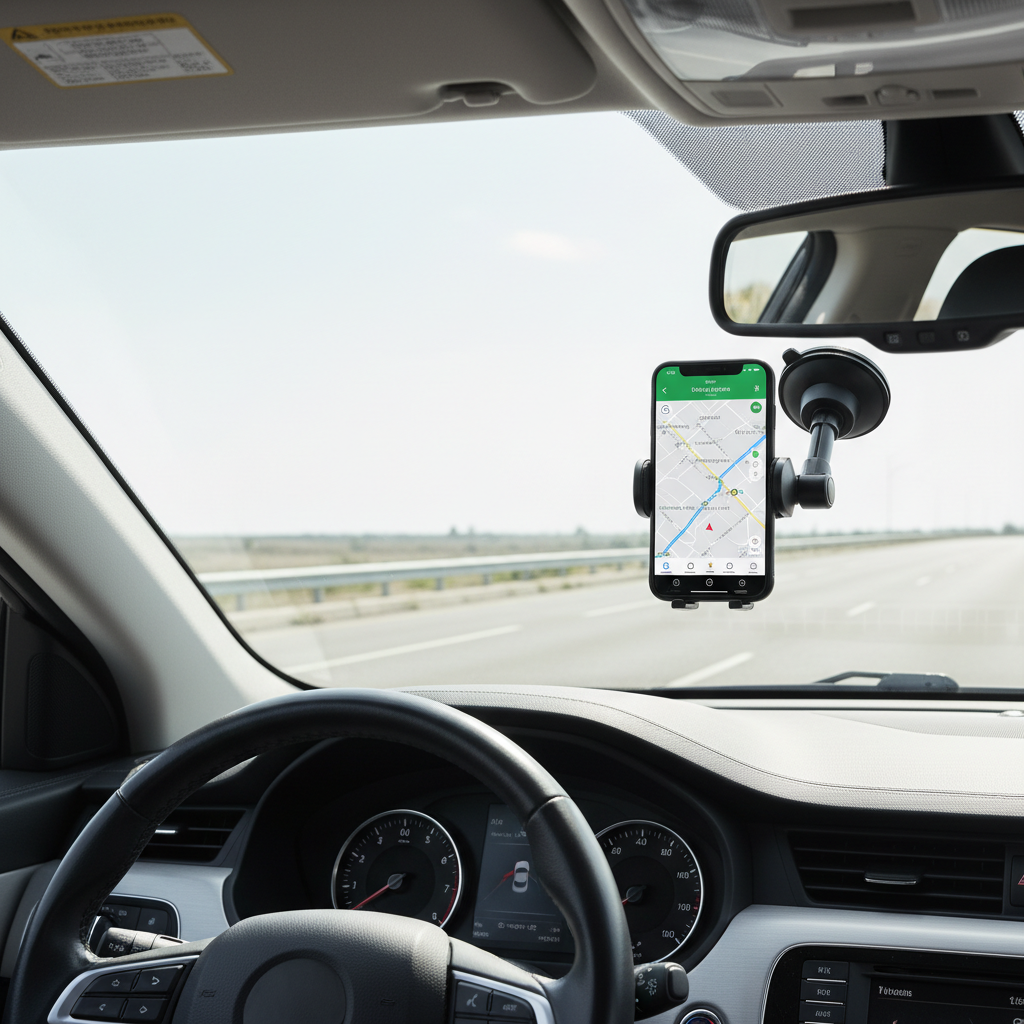
Key point: if you must overtighten until you feel like you’re crushing plastic, the clamp design may not match your mirror stem. Back off and reassess, forcing it can crack trim or damage the mount.
Mistakes that make “stable” mounts feel unstable
- Mounting too far from the stem base: leverage increases, bounce gets worse.
- Ignoring heat: interiors get hot, some joints loosen. If it droops only in summer, that’s often the cause.
- Blocking your mirror view: people push the phone higher to “see it better” and end up compromising the mirror, then keep adjusting.
- Chasing perfection: a tiny amount of vibration is normal. If the map remains readable and the mount holds angle, that’s “stable” in practice.
Also keep legality in mind. Phone placement rules vary by state, and enforcement often focuses on visibility obstruction. If you’re unsure, a quick check of your state DOT guidance is worth it.
When to consider a different mount (or ask for help)
A rear view mirror mount is not always the safest or most stable solution.
- If your mirror assembly already shakes: fix the mirror first, a mount won’t cure the source vibration.
- If you have complex sensor housings: consult your dealer, installer, or a qualified technician to avoid interfering with ADAS components.
- If you can’t keep the mount out of your sightline: a dash or vent mount might be a better compromise.
- If you feel tempted to adjust it while driving: rethink placement, stability should reduce interaction.
According to CDC, distracted driving includes taking your eyes off the road even briefly, so reducing “fuss factor” matters. If you’re constantly fiddling with angles, it may be time to change the mounting approach rather than keep tightening knobs.
Practical conclusion: what to buy, and what to do next
For most drivers, the best results come from a short-arm rear view mirror mount with a screw-tight clamp, thick anti-slip padding, and a locking ball joint, then installing it close to the mirror stem base and keeping the phone position modest.
If you want a quick next step, do two things: measure your mirror stem area and decide whether you prefer a cradle or magnetic grip, then pick a design that stays compact. That’s usually how you land on the best car rear view mirror phone holder stable setup without buying twice.
FAQ
- What makes a rear view mirror phone holder more stable than a vent mount?
Mirror mounts often clamp to a rigid stem instead of flexible vent slats, so they can resist twisting better. But if your mirror vibrates, a vent mount may actually look steadier. - Will a rear view mirror phone mount damage the mirror or loosen it?
It can, especially if you overtighten or clamp on fragile trim. Tighten only until the mount stops rotating by hand, and avoid forcing clamps that don’t fit your stem shape. - Is a magnetic rear view mirror mount stable enough for bumpy roads?
Many are “stable enough” with strong magnets and correct plate placement, but heavier phones and thick cases can reduce holding power. For rough roads, a cradle with bottom support is often more forgiving. - Why does my mount droop after a few days even if it felt tight at first?
Ball joints can settle, and heat can soften plastics, so the joint loses friction. A locking collar or higher-friction joint typically holds angle longer. - Where should I place the phone so it doesn’t block my view?
Keep it low and close to the mirror stem, not high in the windshield area. If you can’t position it without blocking the mirror or your forward view, consider a different mounting location. - Can I put a rear view mirror phone holder on a car with ADAS cameras?
Sometimes yes, sometimes no, depending on housing design and sensor placement. If anything would sit in front of the camera/rain sensor area, it’s safer to consult the owner’s manual or a professional installer.
If you’re trying to minimize shake and want a more “set it and forget it” setup, look for a compact rear view mirror mount with a true locking joint and a clamp designed for your mirror stem size, it usually saves time compared with constantly re-tightening a flimsy option.