
How to check car transmission fluid level correctly comes down to two things most people skip: reading it at the right temperature, and following the procedure your transmission was designed for.
If you check it cold when it needs to be hot, or you check it hot when it needs to be cold, the dipstick tells you a story that is simply not true. That leads to overfilling, underfilling, or chasing “slipping” problems that are really just a bad reading.
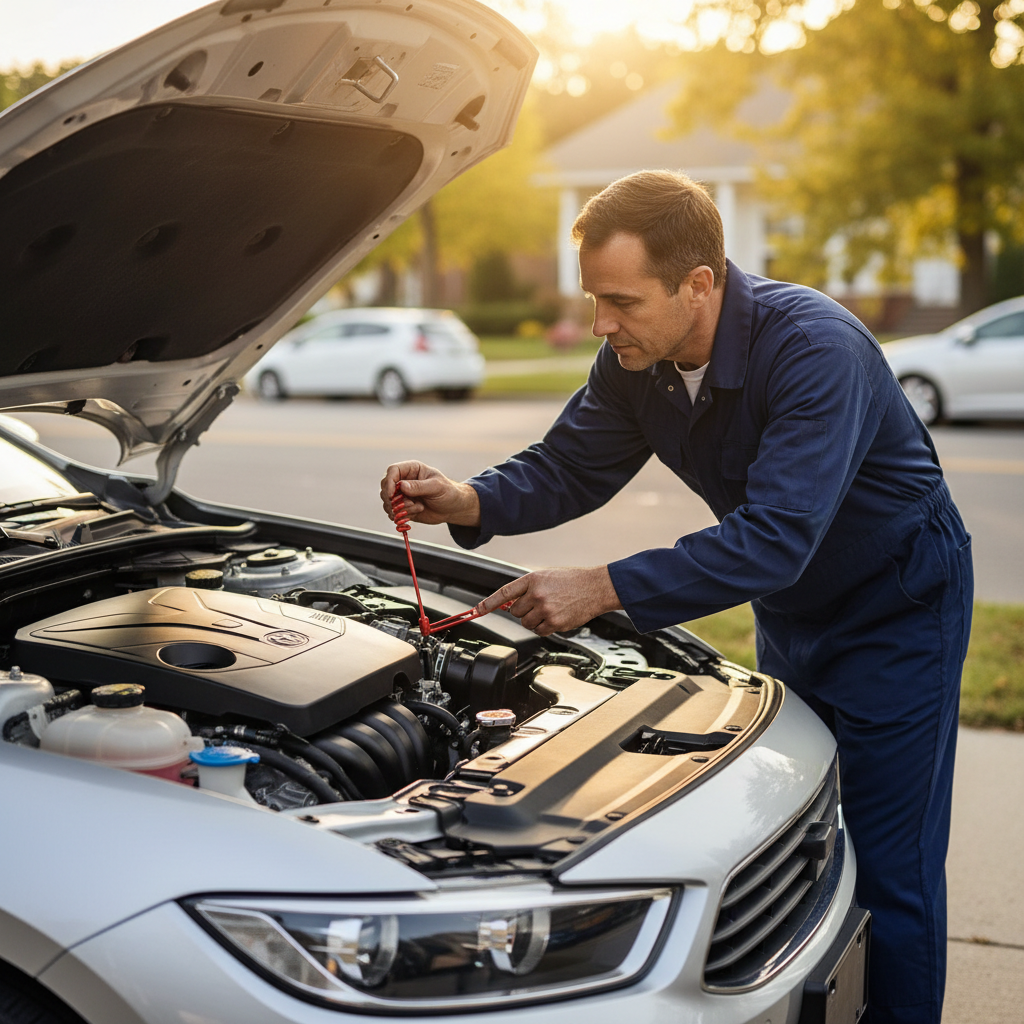
This guide walks through the common setups you’ll see in the US, what “normal” looks and smells like, and what to do if your vehicle has no dipstick at all. You’ll also get a quick checklist and a simple table you can reference next time.
Know which transmission setup you have (dipstick vs sealed)
Before you touch anything, confirm what you’re working with. A lot of late-model cars look “easy” until you realize the transmission has no traditional dipstick.
- Traditional dipstick automatic: you can measure fluid level from the engine bay using a transmission dipstick.
- “Sealed” automatic (no dipstick): level is checked through a fill/level plug, usually with the vehicle level and the fluid at a specific temperature.
- Manual transmission: there is no dipstick, level is usually checked through a side fill plug.
- CVT: some have a dipstick, many use a plug procedure, CVT fluid is specific and not interchangeable.
If you’re unsure, look in the owner’s manual under “Transmission Fluid,” or search your exact year/make/model plus “transmission fluid check procedure.” According to the National Highway Traffic Safety Administration (NHTSA), following the manufacturer’s instructions is part of safe vehicle operation, especially for maintenance items tied to drivability.
Tools and prep that make the reading accurate
You can do this with minimal tools, but accuracy depends on prep more than gear.
- Owner’s manual for the correct procedure and fluid spec
- Clean lint-free rag or paper towel to wipe the dipstick
- Gloves because fluid smells and can irritate skin
- Flashlight for reading the marks and fluid color
- OBD-II scanner (optional) if your vehicle needs a temperature-based check and you want to monitor trans temp
Park on a flat surface, set the parking brake, and keep loose clothing away from belts and fans. If you need to work under the vehicle for a plug-style check, use proper jack stands, not just a jack.
How to check transmission fluid level with a dipstick (automatic)
This is the process most drivers mean when they ask how to check car transmission fluid level, but the details vary by brand. Many automatics want the engine running and the fluid warm, yet a few want a different condition. When in doubt, the manual wins.
Step-by-step (the common “warm, idling” method)
- Warm the car up with a 10–15 minute drive so fluid expands to its normal operating range.
- Park level, keep the engine running, set parking brake.
- Cycle the shifter slowly through P-R-N-D and back, pausing 2–3 seconds per gear. This fills the valve body and passages.
- Find the transmission dipstick. It often has a red or bright handle, and it may sit lower than the oil dipstick.
- Pull, wipe, reinsert fully, then pull again to read.
- Read the correct side if the stick has “HOT” and “COLD” ranges. Use the range the procedure calls for.
A good read is a clean “wet line” between the marks. If it barely touches the stick or doesn’t register, treat that as a warning sign, not a “maybe.”
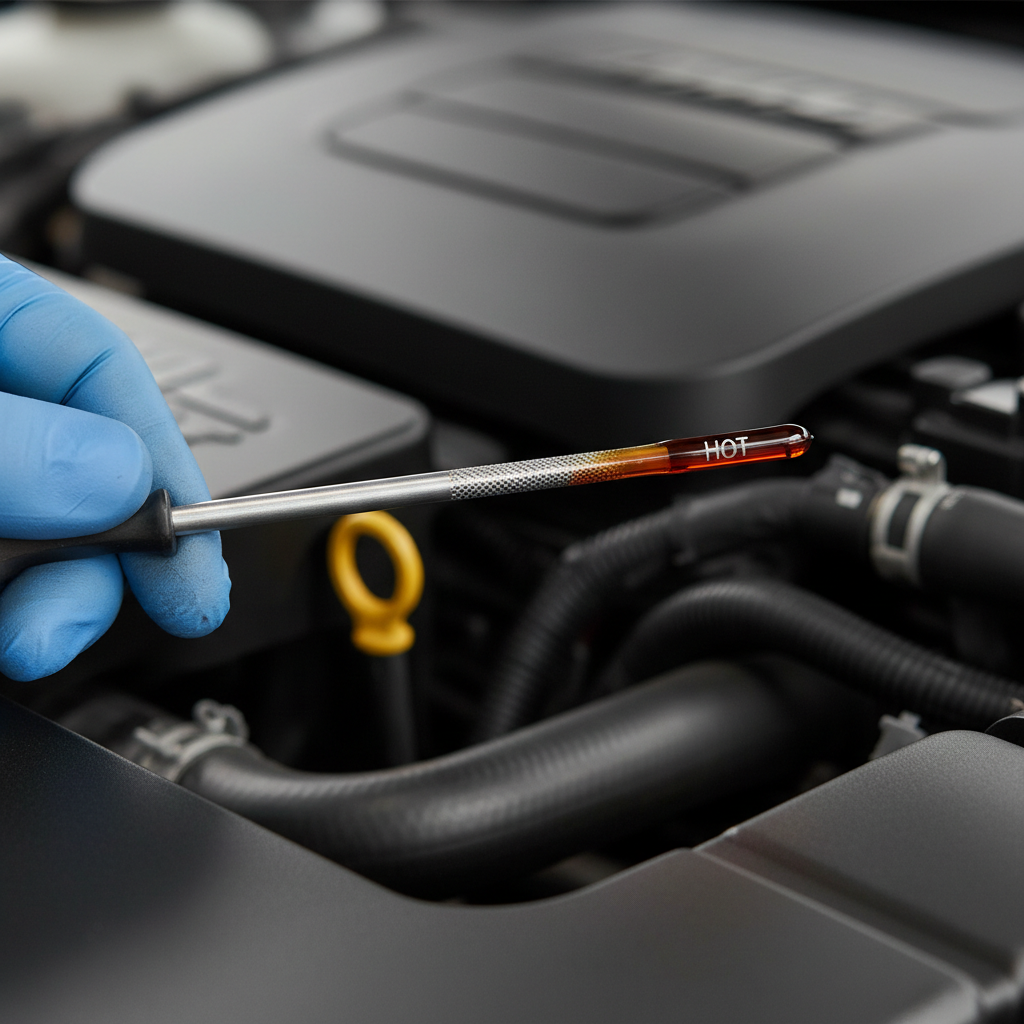
Quick interpretation
- Within marks: level is likely OK.
- Slightly low: could be normal seepage over time or the start of a leak, recheck after correcting.
- Overfull: can aerate (foam) and cause shifting issues, don’t ignore it.
According to AAA, vehicle fluid checks are a practical way to catch small issues before they become breakdowns, and transmission fluid condition is one of the big ones people forget until symptoms show up.
Reading the fluid: color, smell, and feel (what “bad” often looks like)
Level matters, but condition matters too. If you only do one thing beyond the dipstick reading, do this: look at the fluid on a white paper towel.
- Healthy (many automatics): often red or reddish-brown, fairly clear.
- Oxidized/aged: darker brown, may smell “hot.”
- Possible overheating: burnt smell, very dark fluid. This deserves a careful next step, not wishful thinking.
- Contamination: milky appearance can suggest coolant mixing in some scenarios, which is a “stop and diagnose” moment.
- Metallic sparkle: small shimmer may appear in some used fluid, but obvious glitter or debris points to internal wear and should be evaluated.
Different brands use different dye and fluid types, so don’t rely on color alone. “Burnt” smell and suspended debris are usually more meaningful than shade.
What to do if your car has no transmission dipstick (sealed units)
For sealed transmissions, how to check car transmission fluid level is less about a quick look and more about a controlled procedure: correct temperature, vehicle level, and a specific plug. Many require a scan tool to confirm fluid temperature.
What the process typically involves
- Vehicle on a level lift or level jack stands
- Transmission at a specified temperature window
- Engine running or off depending on design
- Remove a level/check plug and observe whether fluid dribbles at the correct temp
This is where DIY confidence can turn into a mess fast. Wrong temperature can make you add fluid you didn’t need, and some fill points are tight, hot, and easy to strip. If you don’t have the tools to safely lift and level the vehicle, it’s reasonable to have a shop do the level check.

According to SAE International, automatic transmission designs vary widely, and service procedures depend on the unit’s engineering, which is why generic “just top it off” advice often backfires.
Self-check checklist: which situation are you in?
If you want a fast sanity check before you start, use this. It prevents the most common “I checked it but I’m still not sure” loop.
- My car has a transmission dipstick: use dipstick procedure, confirm hot vs cold requirement.
- My car has no dipstick: likely a plug-based level check, may require temperature monitoring.
- I have shifting issues plus low fluid: check for leaks before repeated top-offs.
- Fluid smells burnt or looks contaminated: avoid hard driving, schedule diagnosis.
- Level is high: don’t keep driving “to see if it clears,” overfill can cause aeration.
Common readings and what they usually mean (table)
Use this as a practical guide, not a final diagnosis. Real-world causes can overlap.
| What you see | What it often points to | What to do next |
|---|---|---|
| Fluid below MIN/ADD mark | Minor leak, incomplete warm-up, or incorrect procedure | Recheck per manual, inspect for leaks, add correct fluid if confirmed low |
| Fluid above MAX/FULL mark | Overfill, wrong check temp, fluid foaming | Recheck at correct temp, consider professional drain to correct level |
| Dark fluid with burnt smell | Heat stress, clutch wear, possible internal damage | Schedule inspection, ask about service history and next steps |
| Pink/milky fluid | Possible coolant contamination in some failures | Stop driving if severe, get immediate diagnosis |
| Level OK but shifting feels off | Software adaptation, solenoid issues, engine-related drivability, fluid condition | Scan for codes, confirm fluid spec, consult a shop if symptoms persist |
Practical “do this, not that” tips when topping off
If your procedure confirms it’s low and your manual allows topping off, go slow. Transmission fluid is not like engine oil where a small overfill rarely matters.
- Match the exact fluid spec (Dexron, Mercon, ATF+4, specific CVT fluid). “Universal” fluids work in some cases, but this varies and the label fine print matters.
- Add small amounts, then recheck. Many dipsticks move noticeably with a few ounces.
- Use a funnel and keep dirt out. Contamination causes expensive problems.
- Don’t chase the top line if your manual says check hot. Wait until the transmission is at the right condition, then adjust.
Key takeaways: correct temperature, correct spec, small increments, and a second confirmation read solve most confusion around how to check car transmission fluid level.
When it’s smarter to get professional help
Some situations are “DIY-able,” others are risk-heavy because a wrong move can create a bigger problem than the original one.
- No dipstick and no safe way to lift/level the car: have a shop perform the check.
- Burnt smell, slipping, delayed engagement: a fluid check is only step one, you may need diagnostics.
- Visible leaks at the bellhousing or heavy dripping: could be a seal issue, usually not a driveway fix.
- Unknown service history on a high-mileage transmission: ask a trusted technician about risks and options before any flush-style service.
If you’re seeing warning lights or significant drivability changes, it’s reasonable to consult a qualified mechanic, especially because many modern transmissions tie into electronic controls and temperature-based procedures.
Wrap-up: a clean check beats a quick check
If you only remember two things, make them these: check under the conditions your manual specifies, and treat “fluid condition” as seriously as “fluid level.” Both can save you from guessing, and guessing gets expensive fast.
Your next move is simple: confirm whether you have a dipstick or a sealed unit, do one accurate check, then decide whether you’re topping off, monitoring for leaks, or booking a diagnosis.
FAQ
How often should I check transmission fluid level?
Many drivers do it every oil change or a few times a year, but it varies by vehicle and usage. If you tow, drive in mountains, or sit in heavy traffic often, checking more frequently can make sense.
Do I check transmission fluid hot or cold?
It depends on the manufacturer procedure. Many automatics are checked warm with the engine idling, but some specify cold ranges or a temperature window, especially on sealed units.
Can low transmission fluid cause slipping or delayed shifts?
Yes, low fluid can reduce hydraulic pressure and lead to slipping or delayed engagement. That said, similar symptoms can come from other issues, so treat the fluid check as a starting point, not a final answer.
What happens if I overfill transmission fluid?
Overfilling can whip the fluid into foam, which may cause erratic shifting and heat. If you suspect overfill, recheck using the correct procedure and consider having the level corrected.
Is it normal for transmission fluid to be brown?
Slightly darkened fluid can be normal with age, but very dark fluid paired with a burnt odor is more concerning. If the smell is sharp or “burnt toast,” a professional inspection is a safer call.
Can I use any ATF if I’m low?
It’s risky. The correct spec matters because friction characteristics and additives differ. If you can’t confirm the right fluid, it may be better to wait and consult a shop than to mix unknown fluids.
Why is there no dipstick on my transmission?
Many manufacturers moved to sealed designs to reduce contamination and discourage improper topping off. The trade-off is that checks can require special steps and temperature measurement.
If you’re checking fluid because the car feels “off,” or you keep finding the level low, a quick level reading is helpful but it’s not the whole story. If you’d rather have a more certain answer with the right temperature checks and leak inspection, a reputable local shop can confirm level and condition without guesswork.