
The best windshield sun shade foldable is the one you actually use every time, because it fits your glass closely, pops in fast, and stores without turning into a frustrating mess.
If you park outside in the US, you already know the routine, touch the steering wheel and regret it, watch your dash look tired over time, and feel the AC work overtime. A good foldable shade doesn’t “solve summer,” but it can make your cabin noticeably easier to live with and help reduce sun wear.
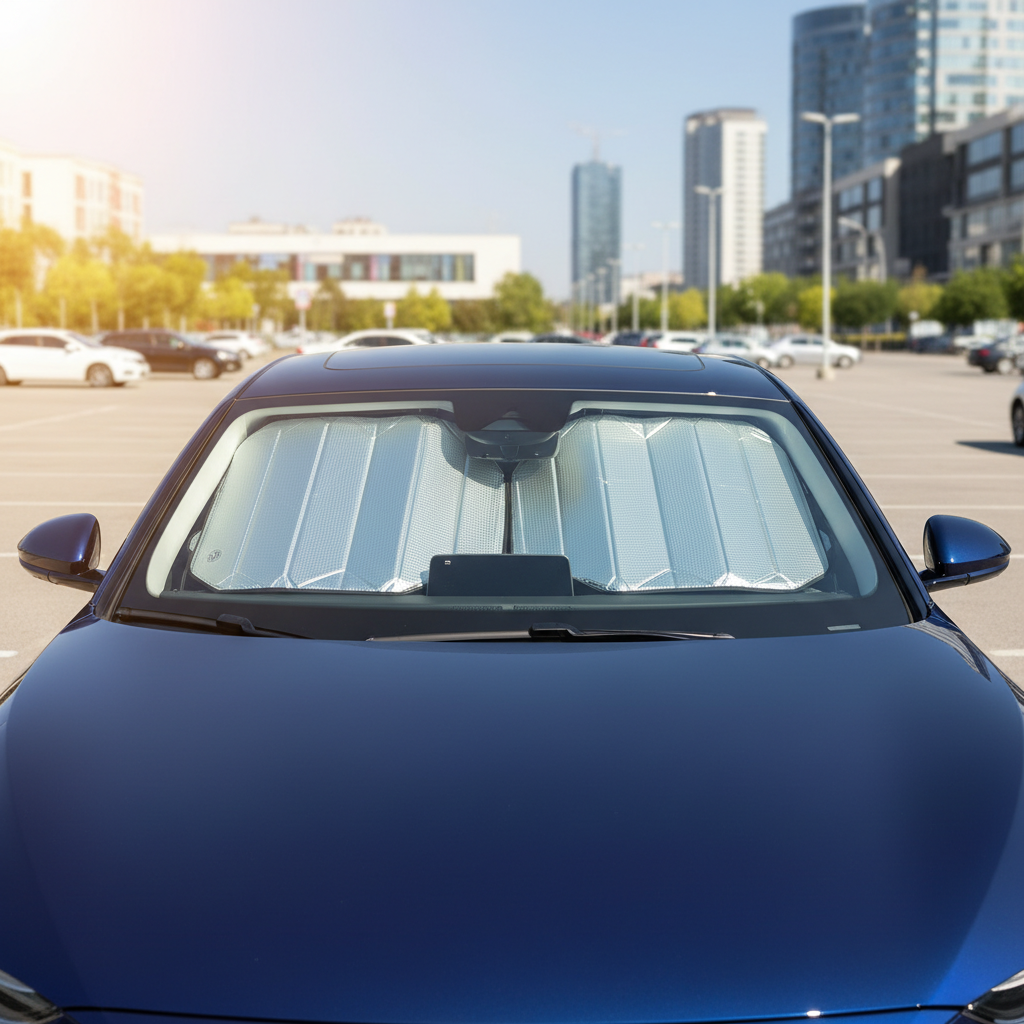
People often overthink brand names and underthink sizing and shape. This guide focuses on what matters in real daily use, how to pick the right style for your vehicle, and how to avoid the common “it doesn’t fit so it lives in the trunk” outcome.
What “best” really means for a foldable windshield sun shade
“Best” is less about a single winner and more about matching your car and habits. A foldable shade can be excellent in one vehicle and annoying in another, especially with steep windshields or big rearview mirror housings.
- Coverage: Close-to-edge coverage limits light leaks around A-pillars and the dash top.
- Ease: If setup takes more than 20–30 seconds, many drivers stop using it.
- Storage: Folded size and whether it needs a pouch matters in compact cars.
- Durability: Repeated folding stresses seams, ribs, and reflective layers.
- Interior friendliness: Some reflective surfaces scuff tint film or snag on mirror mounts.
Key takeaway: A “perfect material” with a bad fit usually performs worse than a decent material that seals the edges well.
Foldable types compared: accordion, pop-up, and rigid-panel
Most foldable options fall into a few designs. Knowing the trade-offs saves time and returns.
Quick comparison table
| Type | How it folds | Best for | Watch-outs |
|---|---|---|---|
| Accordion (pleated) | Collapses into narrow stack | Fast daily use, lots of sizes | Pleats can warp, needs correct width |
| Pop-up twist | Twists into a circle | Small storage space | Twist-fold can annoy some users |
| Rigid-panel fold (multi-panel) | Folds along firm panels | Clean fit, easy alignment | Bulkier to store, can crease at hinges |
For many US drivers, accordion or rigid-panel fold styles tend to win because they’re intuitive at stoplights and office parking lots. Pop-up shades store small, but the twist-and-pack step is the part people quit on.
How to choose the right size and shape (this is where most go wrong)
If a shade “almost fits,” you’ll get edge gaps that let sun hit the dash, and the shade may sag away from the glass. That’s the moment your best windshield sun shade foldable stops feeling best.
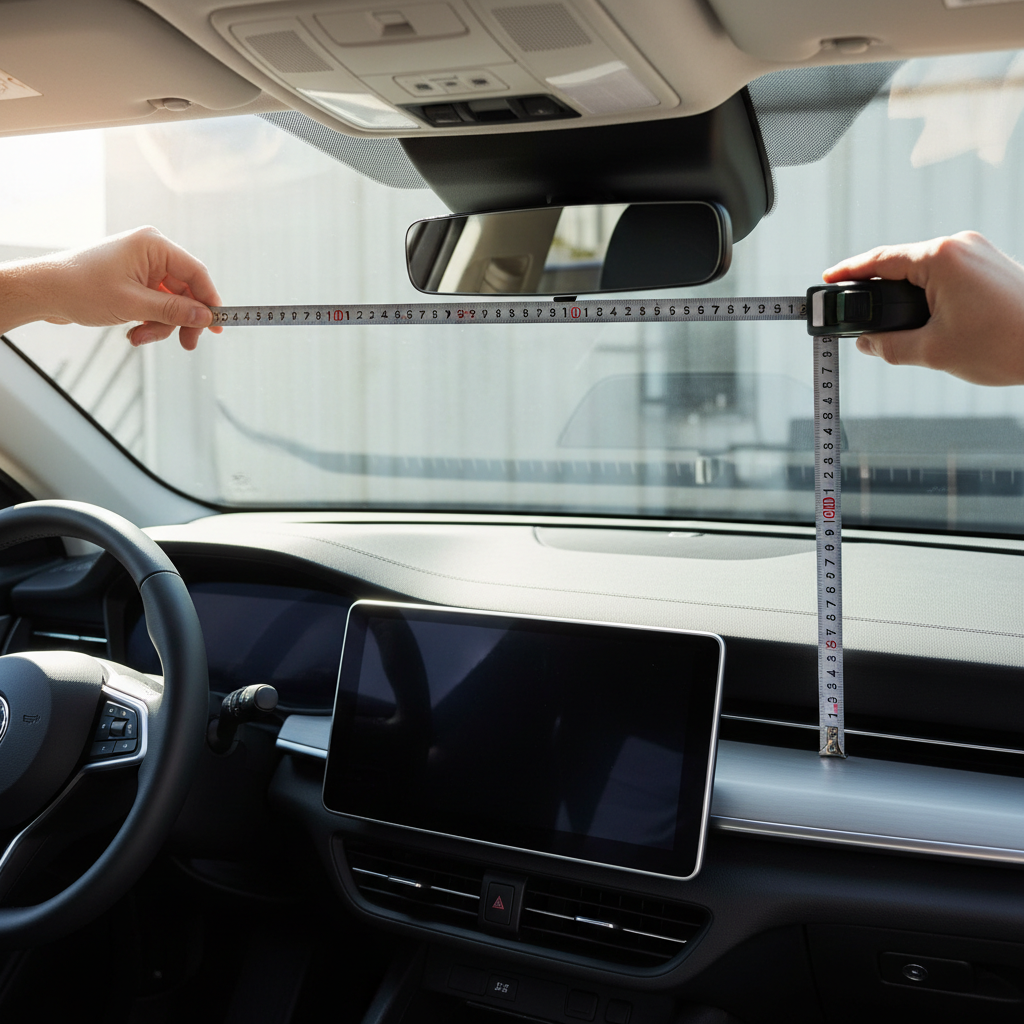
Instead of guessing “SUV” or “sedan” sizing, do a quick check:
- Width at the widest point: Usually near the bottom of the windshield.
- Height at center: From dash top to headliner line.
- Mirror and sensor cutouts: Big housings need a notch or flexible top edge.
- Windshield curvature: More curve often benefits from a slightly more flexible shade.
Tip that feels small but matters: if you’re between sizes, many drivers do better choosing the size that matches width first, then accepting a small height gap rather than big side leaks.
Material and build details that actually affect performance
Marketing terms get loud here. Focus on what influences heat and longevity in daily folding.
- Reflective outer layer: Commonly metallic or aluminized film, it reflects sunlight outward.
- Core insulation: Foam or bubble-style layers slow heat transfer; thickness can help but adds bulk.
- Edge binding and stitching: Weak binding is a common failure point after repeated folds.
- Frame or ribs: Spring steel rings in pop-ups, or stiffeners in panel designs, keep shape against the glass.
According to the U.S. Department of Energy, strategies that reduce solar heat gain can cut cooling load in enclosed spaces; cars are their own extreme case, but the logic still applies, more reflected sun usually means less heat soak you have to fight later.
One more practical note, very shiny films can show scratches faster, while slightly matte reflective surfaces sometimes look “less premium” but hold up better in everyday handling.
A simple self-check: which foldable sun shade style fits your routine?
Before buying, be honest about how you park and how patient you are at the end of a long day.
- I park for short errands (10–30 minutes) all day: Favor fast deployment, accordion or rigid-panel.
- I have limited cabin storage: Pop-up twist may make sense, if you don’t mind folding technique.
- I hate fiddly alignment: Rigid-panel styles tend to land “square” more easily.
- I share the car: Choose something intuitive so others don’t stop using it.
- My windshield has sensors/cameras: Look for a center notch or a flexible top section.
If you want the best windshield sun shade foldable for real life, match the design to your patience level, not your wishful thinking.
Step-by-step: getting a better seal and faster setup
A lot of shades “work fine” once you learn the little tricks. These steps also help you judge whether a poor result is user error or a bad fit.
Install in 30 seconds (repeatable routine)
- Slide the shade up to the glass, align the top edge near the headliner first.
- Center around the rearview mirror housing, use the notch if there is one.
- Press the bottom edge into the dash line, then flip sun visors down to pin it.
- If edges bow inward, adjust width or rotate the shade slightly to match curvature.
Storage that prevents warping
- Let it cool briefly before folding if it feels very hot, some materials crease when heat-softened.
- Fold along existing creases, don’t force new ones.
- Store flat behind a seat or in a door pocket only if the design supports it.
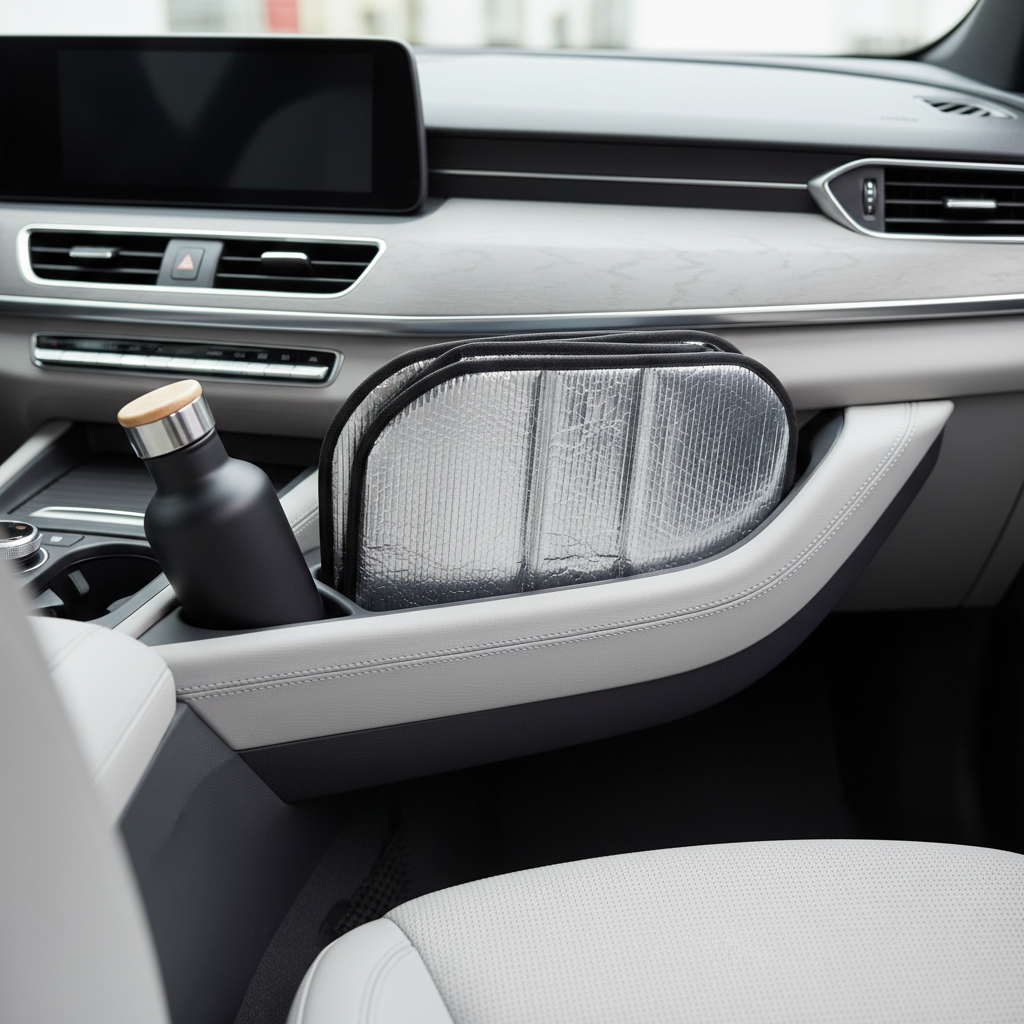
Small upgrade that often helps: if your shade tends to sag, using both visors and slightly tucking the bottom edge can improve contact with the glass, which is where performance usually comes from.
Common mistakes and what to do instead
Most complaints trace back to a few predictable issues. Fixing them often matters more than switching brands.
- Mistake: Buying “one size fits most.” Do instead: Choose by measured width and mirror clearance.
- Mistake: Expecting zero heat. Do instead: Treat it as a heat-reduction tool, not a portable AC.
- Mistake: Leaving gaps at the sides. Do instead: Re-center and use visors to hold edges flush.
- Mistake: Folding randomly. Do instead: Follow original creases to avoid permanent wrinkles.
- Mistake: Ignoring windshield accessories. Do instead: Account for dash cams, toll tags, sensor pods.
Also, if you run a dashboard camera, confirm it won’t be pushed or pulled by the shade. In some setups, it’s safer to mount the camera higher or route the shade around it to avoid stressing the adhesive mount.
When to consider other options (or ask a pro)
Foldable shades cover most needs, but not all. If you’ve tried correct sizing and still see heavy side glare, a custom-fit shade might be worth it for your specific windshield geometry.
If heat exposure affects medications, medical devices, or you have health concerns about high temperatures, it may be smart to ask a qualified professional for guidance about safe storage and temperature limits. A sun shade helps, but it cannot guarantee a “safe” interior temperature in extreme conditions.
Conclusion: picking your best foldable sun shade without overpaying
The practical path is simple, measure for fit, pick a fold style you won’t hate using, then pay attention to edge seal and storage habits. For many drivers, that’s enough to land on the best windshield sun shade foldable for their situation without chasing specs that don’t show up in daily comfort.
If you want a quick next step, measure your windshield width today, decide whether you prefer accordion or rigid panels, and use that as your shortlist filter before you compare materials and price.