
The best car steering wheel cover leather is the one that fits tightly, feels comfortable in your hands, and stays grippy when it’s hot, cold, or a little sweaty. If your wheel feels slick, too thin, or just unpleasant on long drives, a quality leather cover can change the whole “touch point” of your car without a big upgrade.
But leather steering wheel covers get confusing fast, real leather vs PU, stitch-on vs slip-on, “universal” sizing that isn’t universal, and a lot of listings that look identical. The stakes are small until the cover rotates when you turn, then it becomes a control and safety issue, not a style choice.
This guide focuses on what actually matters when shopping: material honesty, fit and sizing, grip texture, heat behavior, and install difficulty. You’ll also get a comparison table, a quick self-check list, and practical buying advice based on common U.S. driving conditions.
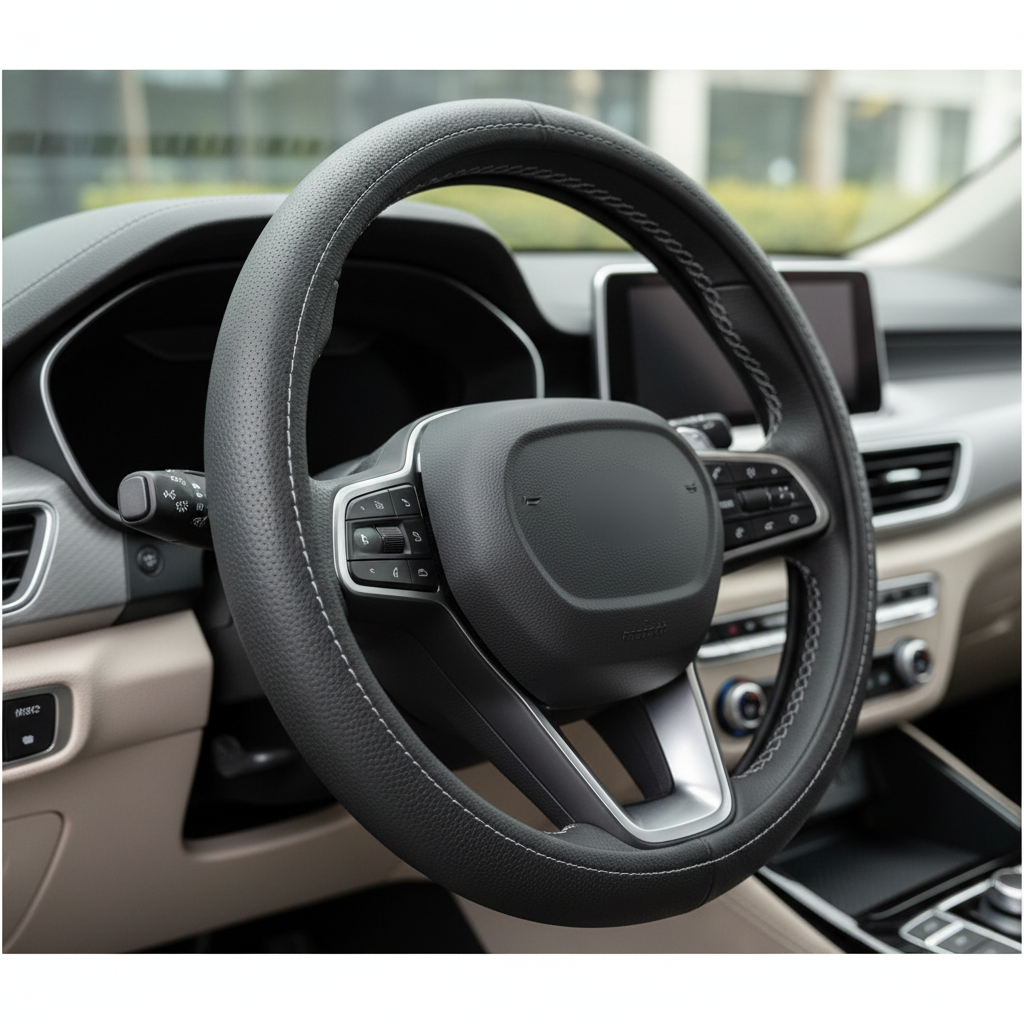
What “Best” Means for Leather Steering Wheel Covers
“Best” usually comes down to three things: fit, feel, and finish. If any one of those is off, the cover turns into an annoyance you’ll notice every time you drive.
- Fit: A tight, non-rotating fit matters more than brand names. A cover that slips defeats the point.
- Feel: Texture, padding thickness, and seam placement decide whether your hands relax or fight the wheel.
- Finish: Stitch quality, edge alignment, and consistent grain affect durability and comfort, not just looks.
Key takeaway: If you only optimize one thing, optimize sizing and tightness. You can live with “not your favorite grain,” but you can’t live with a cover that moves.
Real Leather vs PU “Leather”: What You’re Actually Buying
A lot of “leather” covers in the U.S. market are PU (polyurethane) or “leatherette.” That’s not automatically bad, but it changes how the cover ages and how it behaves in heat.
Genuine leather (often top-grain or split leather)
- Usually develops a softer feel over time, can last longer if cared for
- Breathes better than many plastics, tends to feel less sticky in heat
- Needs occasional cleaning and conditioning, can dry out if neglected
PU / synthetic leather
- Typically cheaper, consistent appearance, often easier to wipe clean
- May trap heat more, can feel slick when hands are sweaty
- Higher risk of peeling or cracking after long UV exposure, varies by quality
According to NHTSA, maintaining good control of the steering wheel is part of safe driving practice, so treat “grip and stability” as functional requirements, not cosmetic preferences.
If your main goal is a premium hand feel and long-term wear, real leather often wins. If you want easy cleanup and a lower price, PU can be fine, but you’ll want to be stricter about fit and surface grip.
Types of Leather Steering Wheel Covers (and Who They Fit Best)
Before you shop “best car steering wheel cover leather” listings, pick the style that matches your patience level and your wheel shape.
Slip-on (stretch fit)
- Pros: Fast install, no tools, easy to replace
- Cons: Fit varies a lot, can rotate if sizing is even slightly off
- Best for: Drivers who want a quick refresh and don’t mind redoing fit once
Stitch-on (hand-sewn wrap)
- Pros: Tightest fit, most “factory” look, better long-term stability
- Cons: Install takes time, seam placement matters
- Best for: Anyone bothered by movement or bulk, and willing to spend 1–2 hours installing
Laced / segmented (hybrid)
- Pros: Adjustable tension, often easier than full stitch-on
- Cons: Can look busy, lace may loosen over time
- Best for: People who want more control over tightness without full sewing
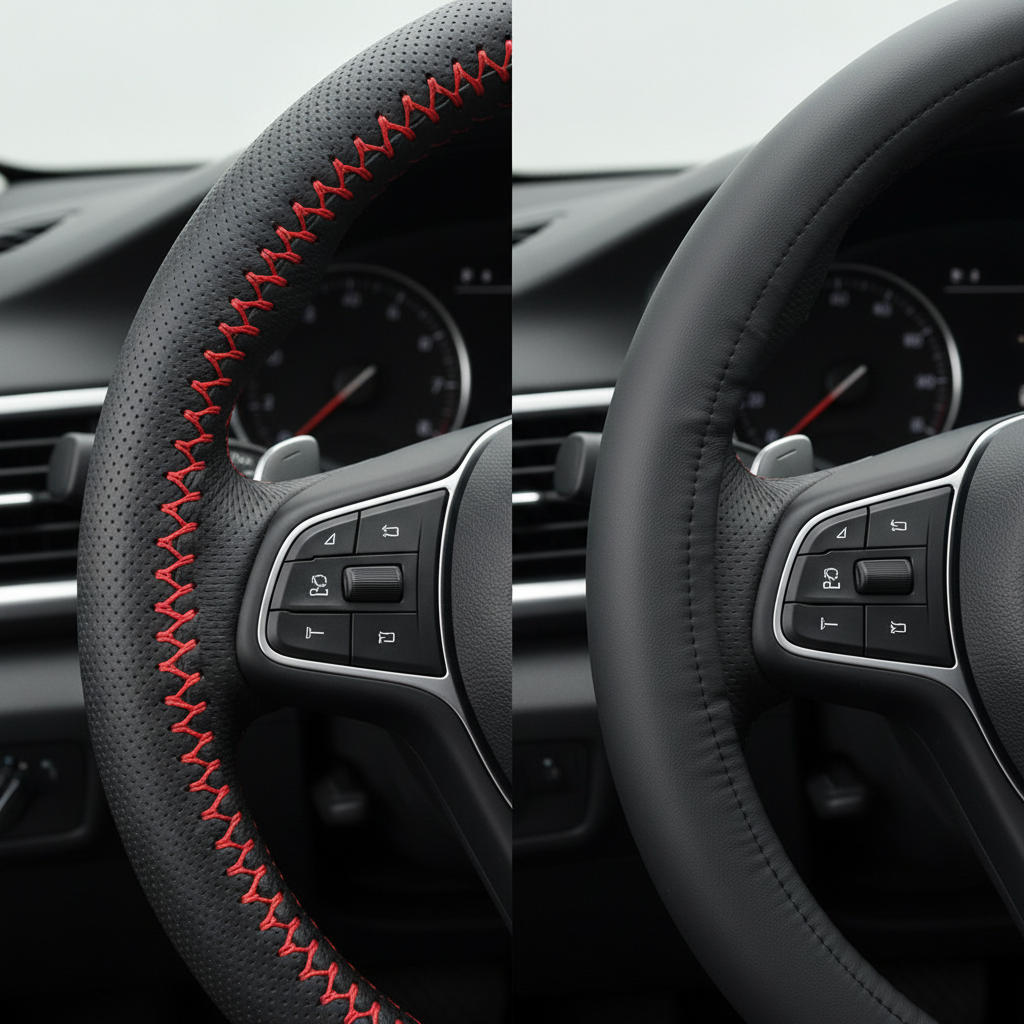
Quick Comparison Table: Choosing the Right Leather Cover
This isn’t about “one winner.” It’s about matching the cover type and material to your daily driving reality.
| Option | Grip & Stability | Comfort | Heat/Cold Feel | Install Effort | Who It’s For |
|---|---|---|---|---|---|
| Real leather, stitch-on | High | High (custom feel) | Usually balanced | Medium–High | Drivers who want “OEM-like” fit |
| Real leather, slip-on | Medium (depends on size) | Medium–High | Usually balanced | Low | Quick upgrade, careful measurers |
| PU leather, stitch-on | High | Medium | May feel warmer | Medium–High | Budget-focused but picky about fit |
| PU leather, slip-on | Low–Medium | Medium | Often warmer/cooler swings | Low | Temporary refresh, rentals, beater cars |
Self-Check: How to Tell What You Need Before You Buy
If you skip this step, you’re more likely to buy twice. Do a quick check in your driveway.
- Measure diameter: Most U.S. cars land around 14.5–15.5 inches, but don’t guess. Use a tape measure across the wheel.
- Check wheel thickness: If your wheel is already thick, avoid heavily padded covers unless you like a “truck wheel” feel.
- Look for thumb grips: Some wheels have molded grips at 9 and 3 o’clock. Bulky covers can feel awkward over them.
- Notice surface issues: Peeling, slick spots, or sun damage can make any cover harder to seat evenly.
- Be honest about your patience: If you hate fiddly installs, go slip-on but be strict on sizing and return policy.
Rule of thumb: If you’ve ever had a cover rotate even a little, move to stitch-on or a tighter sizing range. That “tiny slip” tends to get worse with time and heat.
How to Choose the Best Leather Cover for Your Driving Conditions
Choosing the best car steering wheel cover leather gets easier when you anchor on your climate and your driving pattern, commuting vs weekend, garage vs street parking, lots of turning vs mostly highway.
Hot states and sun exposure
- Favor real leather or perforated leather for less “sticky” feel
- Avoid overly glossy finishes that can feel slippery when warm
- If your car bakes outside, consider a lighter color, though it may show dirt faster
Cold winters
- Slight padding can improve comfort, but too much padding can reduce steering feel
- Look for softer grain and smooth seams, rough stitching can irritate dry hands
Long drives and hand fatigue
- Even thickness around the wheel matters, lumps cause pressure points
- Seam placement matters more than people think, avoid thick seams at your natural grip spots
Work vehicles, rideshare, high cleaning frequency
- PU may be practical if you wipe down often, but check reviews for peeling complaints
- Choose darker colors and textured surfaces that hide scuffs
Installation Tips That Prevent Slipping (Slip-on and Stitch-on)
Most “this cover is terrible” complaints are really “this cover is slightly the wrong size” or “install left slack.” A few small habits help.
Slip-on installs
- Warm the cover slightly: Let it sit in the sun or a warm room so it stretches evenly, not abruptly.
- Seat the top first: Anchor at 12 o’clock, then work down both sides evenly.
- Check rotation immediately: With the car parked, turn the wheel firmly left and right. If it shifts, return it.
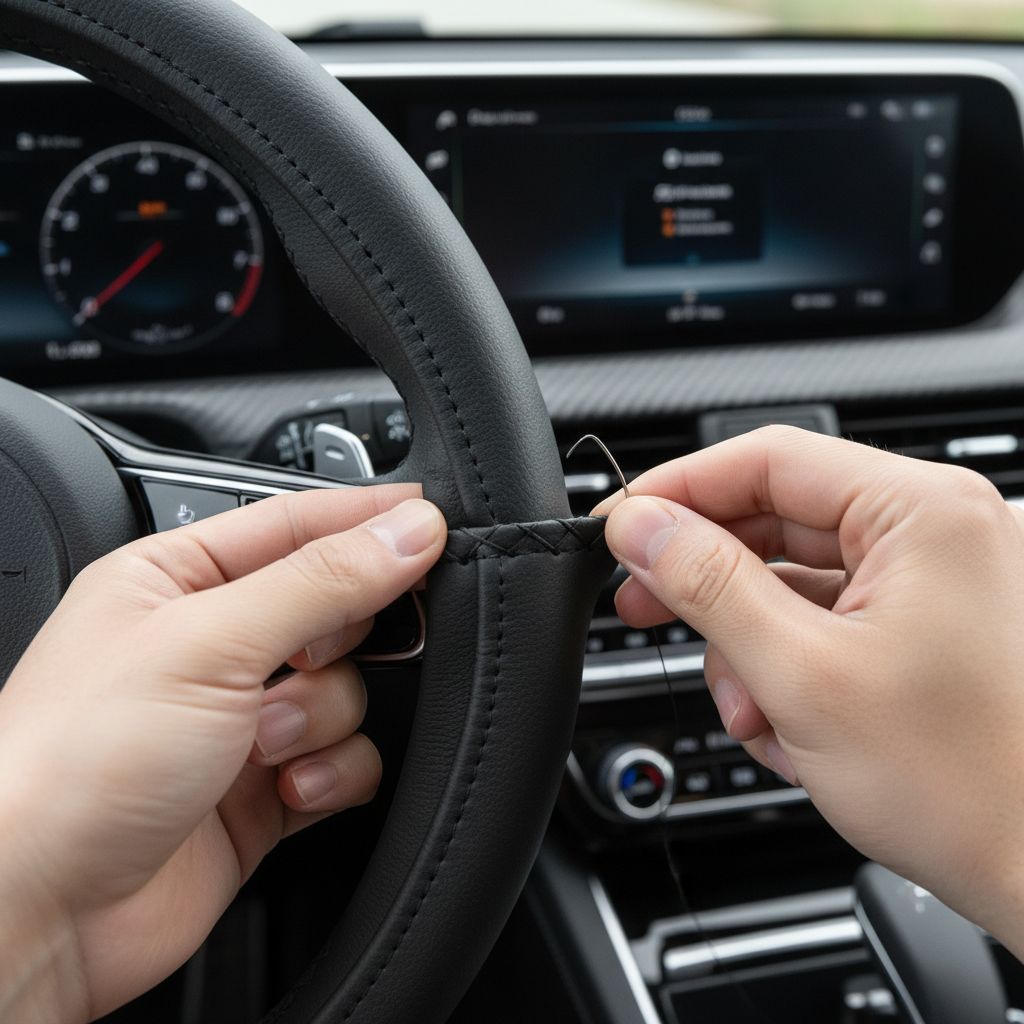
Stitch-on installs
- Dry-fit before sewing: Align seams, spokes, and any thumb grips so the wrap sits centered.
- Keep tension consistent: Uneven pull creates ripples, and ripples become pressure points.
- Don’t rush corners: Around spokes is where slack hides, take extra time there.
According to AAA, keeping your vehicle in safe operating condition includes attention to controls you use constantly. If an installed cover interferes with steering feel or control, it’s worth redoing the install or choosing a different style.
Common Mistakes (and What to Do Instead)
Most buyers don’t need a “premium” cover, they need fewer unforced errors. These show up all the time.
- Buying universal size without measuring: Measure wheel diameter and compare to the listing’s range, if the range is wide, be cautious.
- Choosing thick padding for a thin-wheel problem: A thin wheel can feel better with modest padding, but too much can reduce fine control.
- Ignoring seam comfort: A beautiful cross-stitch can still feel annoying if it lands under your thumbs.
- Assuming “real leather” means high grip: Some leather finishes are smooth and can feel slick, texture matters.
- Over-cleaning with harsh chemicals: Strong cleaners can dry leather or cloud synthetic finishes, use interior-safe products and test a small area.
If your goal is improved grip, prioritize a lightly textured leather and a tight fit over “luxury-looking” shine.
When It’s Worth Getting Professional Help (or Skipping a Cover)
In many cases you can DIY, but a few situations deserve extra caution.
- Airbag concerns on the wheel area: Most covers sit on the rim, not the center airbag module, but if your wheel has unusual contours or integrated controls, check your owner’s manual and the cover instructions.
- Severely damaged wheel: If the rim is cracked, sticky, or shedding material, a cover may hide the problem instead of fixing it.
- Persistent slipping after correct sizing: That can mean the wheel surface is too smooth or contaminated. A detailer or upholstery shop may suggest a rewrap instead.
If you’re unsure about compatibility with your specific vehicle, especially for unusual wheel shapes, a local upholstery shop can often tell you quickly whether a stitch-on wrap will sit correctly.
Conclusion: Picking Your Best Match and Next Step
The “best” leather steering wheel cover is the one you stop thinking about because it feels secure, comfortable, and consistent day after day. For most drivers, that means measuring carefully and choosing the tightest-fitting style you’ll realistically install.
If you want a simple next step, do this: measure your wheel diameter today, decide whether you can tolerate a stitch-on install, then shop within a narrow size range and prioritize tight fit over flashy looks. That’s usually how you end up with a cover you keep.