
How to clean steering wheel leather comes down to two goals, lift body oils and grime without stripping the finish, then leave the surface dry, even, and not slippery.
If your wheel feels shiny, tacky, or oddly slick, that usually is not “nice leather,” it is buildup, skin oils, hand lotion, sunscreen, and sometimes cleaner residue, and it can make the wheel feel gross fast.
This guide walks you through what to use, what to avoid, and a practical routine you can repeat every couple weeks, plus a quick table to match your situation to the right method.
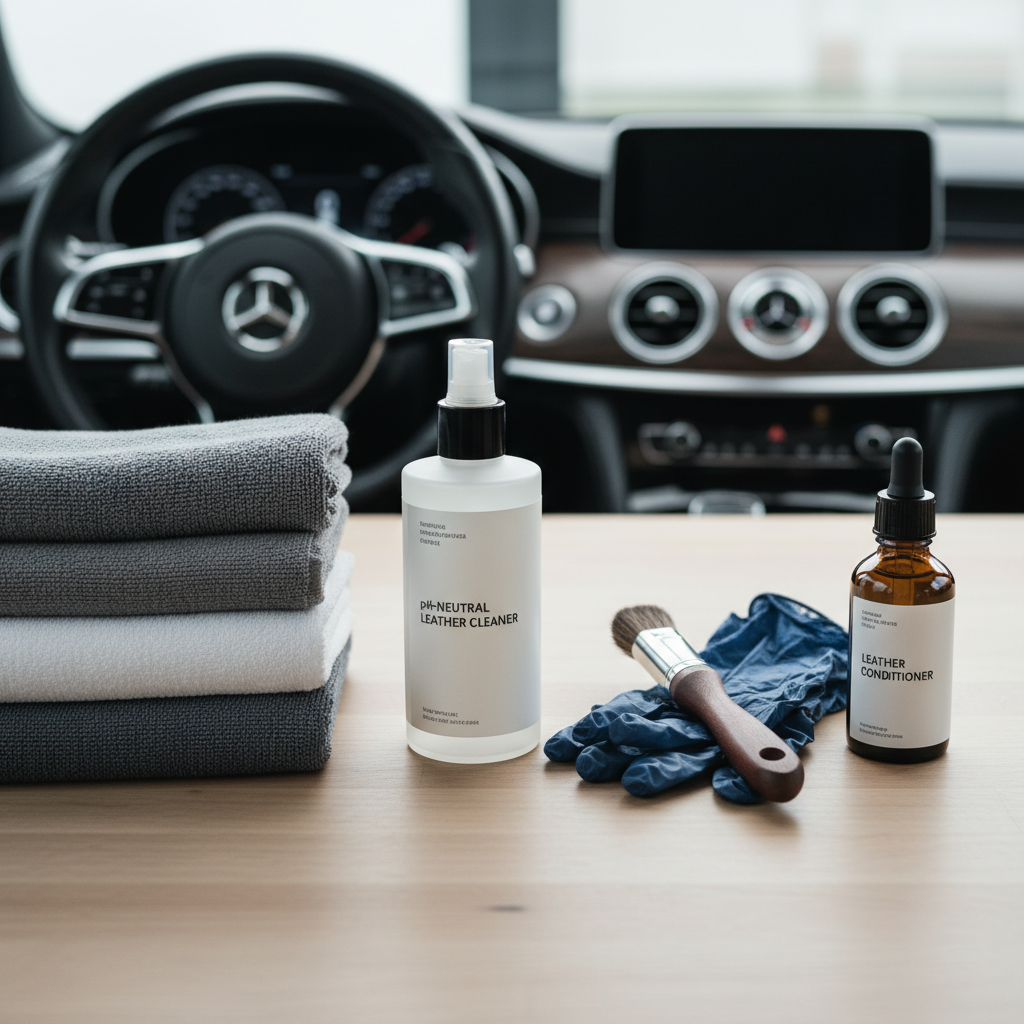
Why leather steering wheels get sticky, shiny, or rough
Most steering wheels in the U.S. are coated leather, meaning there is a protective top layer. That is good news because you can clean it safely, but it also means the “shine” you see is often contamination sitting on top of that coating.
- Body oils and sweat build up in the high-touch zones, usually at 10 and 2 o’clock.
- Hand lotion and sunscreen can leave a film that attracts dust and turns tacky.
- Dirty microfiber or harsh cleaners can smear residue, so the wheel feels slick even after “cleaning.”
- Heat and UV exposure slowly dry the coating, leading to a rough, grainy feel.
- Alcohol-heavy wipes can dull or dry the finish over time, especially if used often.
According to the U.S. Environmental Protection Agency (EPA), products with strong solvents can affect indoor air quality, so using only what you need and ventilating the car is a sensible baseline.
Quick self-check: what are you dealing with?
Before you grab a bottle, do a 30-second check. It saves time and helps you avoid over-conditioning, which is where many people accidentally create a slippery wheel.
- Looks glossy in the grip areas: usually oil and grime buildup on the coating.
- Feels sticky or tacky: often sunscreen or cleaner residue, sometimes both.
- Feels dry and slightly rough: likely needs gentle cleaning, then light conditioning.
- Color transfers to your towel: proceed carefully, the finish may be worn; test in a hidden spot.
- Visible cracking: cleaning helps, but restoration may require a pro re-dye or repair.
What to use (and what to avoid)
You do not need a huge kit. You need the right chemical “strength” and the right tools, because the tool choice often prevents damage more than the product does.
Recommended basics
- pH-balanced leather cleaner or a gentle interior cleaner labeled safe for leather.
- 2–3 clean microfiber towels, one for cleaning, one for damp wipe, one for dry buff.
- Soft detailing brush (or a very soft toothbrush) for the grain and stitching.
- Nitrile gloves if your skin reacts to cleaners.
- Leather conditioner designed for coated automotive leather, used lightly.
Usually worth avoiding
- Household degreasers and high-alkaline cleaners, they can dry or haze the finish.
- Magic erasers, they are abrasive and can dull the top coat fast.
- Shiny dressings, they may look “nice” but often leave a slick grip.
- Strong alcohol wipes as a routine option, occasional emergency use is different from weekly use.
If you are unsure whether your wheel is real leather, synthetic, or has a specialized coating, check the owner’s manual or ask the dealer, because product compatibility can vary.
Step-by-step: how to clean a leather steering wheel safely
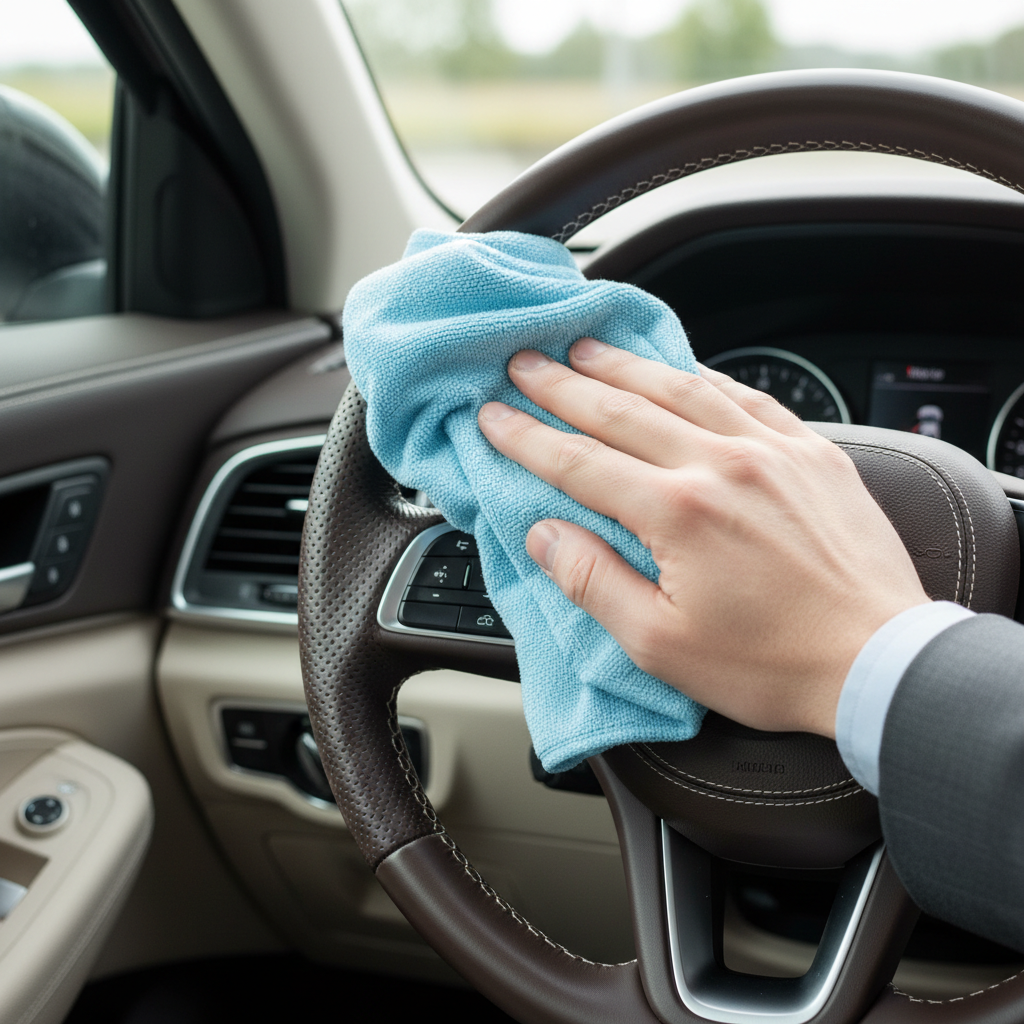
This method aims for a clean, matte feel. If you want one sentence to remember, it is this: spray the towel, not the wheel.
- Cool the cabin and ventilate: park in shade, open doors for a minute so cleaner does not flash-dry.
- Dry dust first: wipe the wheel with a dry microfiber, especially seams and spokes.
- Apply cleaner to the towel: 1–3 sprays is usually enough for one section.
- Wipe in small sections: do the top, then each side, then bottom, using light pressure.
- Agitate the grain: use a soft brush on textured areas and stitching, short gentle strokes.
- Damp wipe to remove residue: a second towel lightly dampened with water helps stop streaks.
- Dry buff: a third towel, dry, until the surface feels clean and not slick.
Key point: If your towel turns dark quickly, swap to a fresh side. Smearing is what makes people think the cleaner “doesn’t work.”
Situation-based fixes (table): pick the right approach
Different symptoms usually mean different residue types. This is a simple way to avoid doing “more product” when you really need “better removal.”
| What you notice | Likely cause | What to do | What to avoid |
|---|---|---|---|
| Shiny grip areas | Oil + grime film | Cleaner on towel, gentle brush, damp wipe, dry buff | Heavy conditioner as a first step |
| Sticky/tacky feel | Lotions, sunscreen, cleaner residue | Repeat with less product, add a damp wipe, extend dry buffing | More spray directly on wheel |
| White haze or streaks | Product drying on surface | Work in shade, smaller sections, follow with damp towel | Letting cleaner air-dry |
| Rough/dry feel | Dehydrated coating, heat exposure | Clean, then apply a very light conditioner, buff fully | Oily dressings that leave shine |
| Dye/color transfer on towel | Worn finish | Stop, test gentler cleaner, consider pro inspection | Scrubbing or abrasives |
Conditioning: when it helps and how not to make the wheel slippery
Many modern steering wheels do not need frequent conditioning because the protective coating does the heavy lifting. Conditioning can still help with feel, but only if you keep it light.
- Use conditioner sparingly: a few drops on a towel, not a wet layer.
- Let it sit briefly: follow the product directions, often a few minutes is enough.
- Buff until matte: if it feels slick, you used too much, keep buffing with a clean towel.
- Do it less often: many drivers find once every 2–3 months is plenty, sometimes longer.
According to the National Highway Traffic Safety Administration (NHTSA), maintaining good control of the steering wheel is essential for safe driving, so if any product leaves a slippery surface, remove it before you drive.
Common mistakes that quietly ruin the finish
This is the part that saves money, because replacement or re-wrap gets expensive, and damage often starts with habits that feel harmless.
- Using one towel for everything, you end up re-depositing oil and turning the wheel glossy again.
- Over-wetting stitching, moisture can sit in seams and create odors or weak spots.
- Scrubbing to “make it faster”, friction can burnish the coating and make permanent shine patches.
- Weekly conditioning, the buildup attracts dirt and makes the grip inconsistent.
- Cleaning in direct sun, product flashes and leaves haze, then you chase it with more product.

When you may need professional help
Cleaning works for most day-to-day grime. It does not fix structural damage or failing topcoat, and pushing harder can make things worse.
- Cracks, peeling, or sticky coating that returns immediately: may indicate coating breakdown, a detailer or upholstery shop can advise options.
- Significant color loss: re-dyeing requires proper prep and matching, often better handled by a specialist.
- Persistent odor or suspected mold: avoid aggressive chemicals in a closed cabin, consider a professional assessment.
If you have skin sensitivities or respiratory concerns, it is reasonable to choose low-odor products and consult a professional detailer about safer alternatives.
Key takeaways and a simple routine to keep it clean
If you want the wheel to feel “new” again, consistency beats intensity. A quick wipe every week or two usually prevents the heavy, glossy buildup that takes longer to remove.
- Weekly or biweekly: dry wipe, then a light cleaner wipe if needed.
- Every 1–3 months: consider a very light conditioner, then buff fully.
- Anytime it feels slick: remove residue with a damp wipe and a dry buff before driving.
If you try the steps above and still struggle with tackiness, switch to less product and more towel changes, that small adjustment solves a surprising number of “why is it still sticky?” situations.
FAQ
- How often should I clean a leather steering wheel?
Most people do well with a light clean every 1–2 weeks, then a deeper clean monthly if the wheel gets shiny fast, but your climate and hand products matter. - Can I use baby wipes on a leather steering wheel?
Sometimes they work for quick dust, but many wipes leave surfactant residue that can feel slick, if you use them, follow with a damp towel and dry buff. - What if my steering wheel is “vegan leather” or synthetic?
Many synthetics tolerate mild interior cleaners well, but avoid heavy conditioners designed for absorbent leather, test a small area and aim for a clean matte finish. - Why does my wheel get shiny right after I clean it?
Usually residue or a dirty towel, use less cleaner, add a damp wipe step, and finish with a fresh dry microfiber until the sheen drops. - Is it safe to use isopropyl alcohol to remove sticky residue?
It can help in a pinch on small spots, but frequent use may dry or dull coatings, dilute if appropriate and test first, or choose a leather-safe cleaner. - Should I condition a leather steering wheel?
Sometimes, but lightly and not often, if the wheel already feels slick, skip conditioner and focus on removing oils and product film. - What should I do if color comes off on my towel?
Stop scrubbing, switch to gentler methods and test an inconspicuous area, if color transfer continues, a professional repair or re-dye consult is usually smarter than DIY.
If you want a more set-and-forget routine, keep a dedicated microfiber and a leather-safe cleaner in your garage, then do a 2-minute wipe on wash days, it is usually enough to keep the wheel comfortable without chasing shine or slip.