
how to remove bird poop from car paint comes down to one thing: speed, plus the right amount of moisture, so you lift it off instead of grinding it in.
If you’ve ever wiped a fresh splat with a dry paper towel and watched it smear, you already know why this matters. Bird droppings can be surprisingly acidic, and on a warm panel they can start etching into clear coat faster than most people expect.
This guide breaks down what works in real driveways and parking lots, what to use when you have nothing on hand, and how to tell whether you’re dealing with a simple cleanup or actual paint damage.
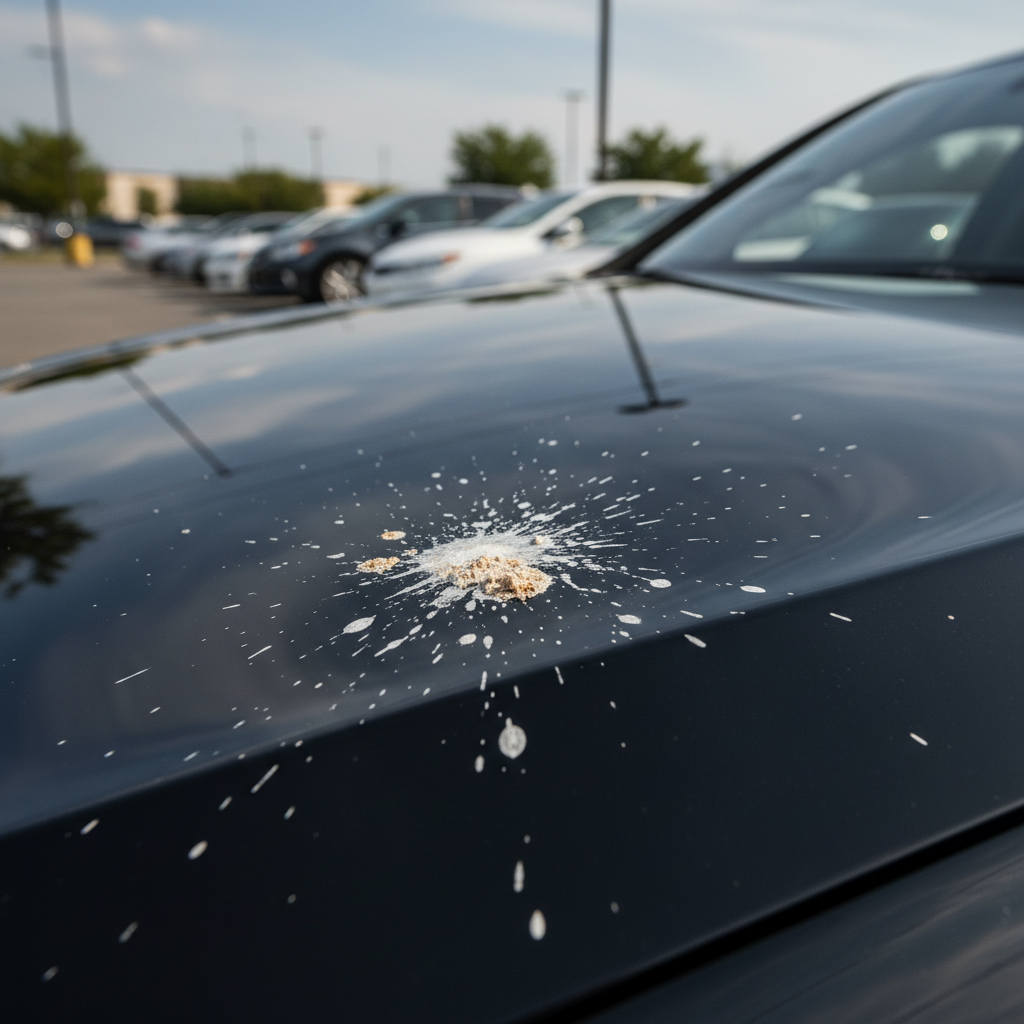
Why bird poop can damage car paint (and why timing matters)
Bird poop is more than “just dirt.” It often contains uric acid, grit, and partially digested material, which together can stain and mark the clear coat. Heat makes it worse because the panel warms up, moisture evaporates, and the residue bakes on.
According to the American Chemical Society, uric acid is a weak acid found in bird droppings and similar waste, and acids can interact with surfaces over time. You don’t need lab numbers to see the effect: leave it long enough, and a faint outline can remain even after cleaning.
Another problem is scratching. Dried droppings can hide tiny sand-like particles. If you wipe hard, you may create swirl marks that are far more noticeable than the original mess.
Quick decision checklist: what you’re dealing with
Before you grab a towel, take 15 seconds to size it up. This saves paint.
- Fresh and wet: easiest case, usually lifts with gentle spray and a microfiber.
- Dry and crusty: needs soaking time, don’t scrape with nails or a credit card.
- On a hot panel: move the car into shade if possible, cleaning on a cool surface is safer.
- Stain/outline remains after removal: could be etching, mineral staining, or a light clear-coat mark.
- Paint feels rough after cleanup: likely contamination, may need clay bar or a pro detail.
What to use: a practical product table (safe picks first)
You do not need a full detailing cabinet, but you do need the right “texture” of tools: lubrication, soft fibers, and something that breaks residue down.
| Option | Best for | How to use | Notes |
|---|---|---|---|
| Quick detailer spray | Fresh to lightly dried spots | Spray, dwell 30–60 sec, wipe gently with microfiber | Great “keep in trunk” choice |
| Rinseless wash (diluted) | Parking-lot cleanups | Soak microfiber, lay on spot, then wipe | High lubrication helps reduce marring |
| Water + microfiber (emergency) | Very fresh droppings | Flood with water, blot and lift | Better than dry wiping, but less effective on dried mess |
| Dedicated bug & tar remover | Stubborn residue | Follow label, test small area first | Avoid letting it dry on paint |
| Detailing clay + clay lube | Remaining roughness | Light pressure, lots of lube | Can mar softer paint if rushed |
Avoid: dry paper towels, kitchen sponges, abrasive “magic eraser” style pads, and harsh household cleaners. They can scratch, dull, or strip protection.
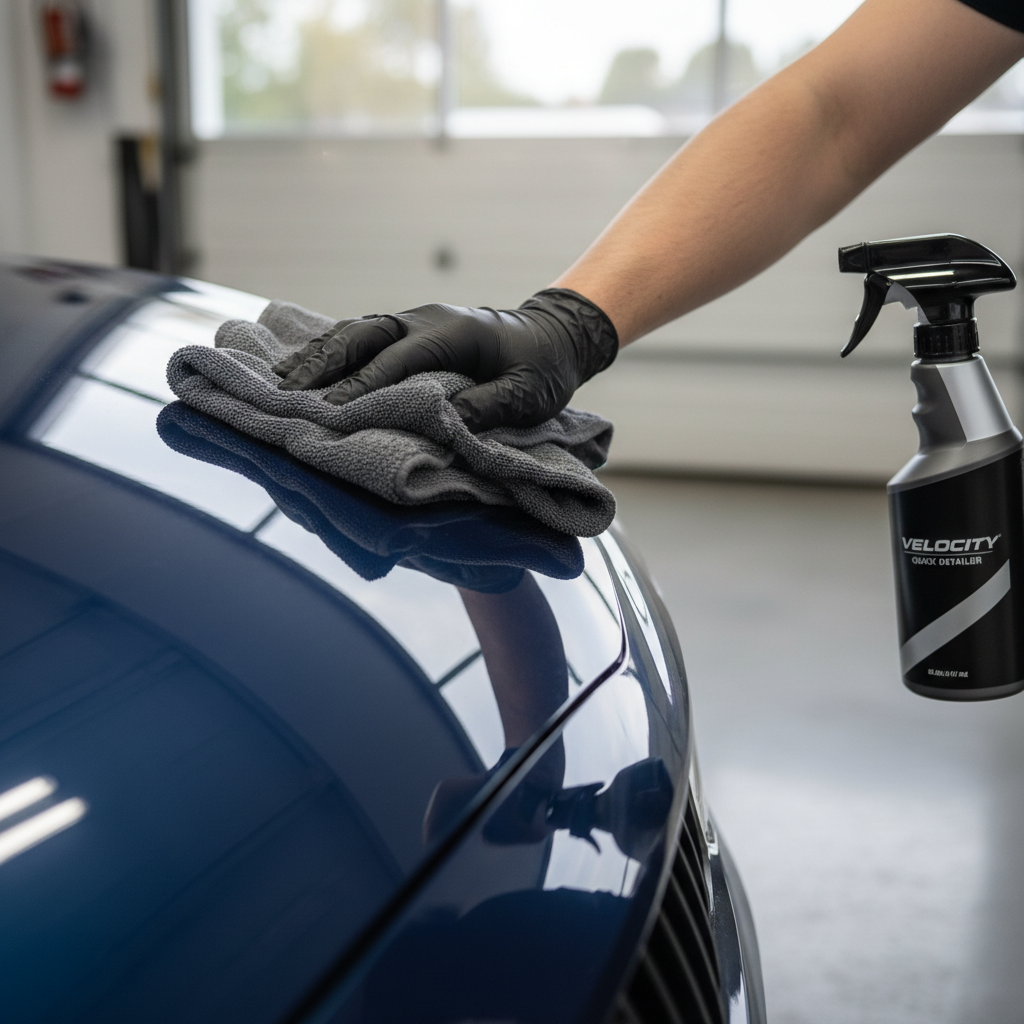
Step-by-step: how to remove bird poop from car without scratching
This is the “do it now” method that works in most situations. The theme is simple: soften, lift, then lightly finish.
1) Cool the surface and rinse if you can
Park in shade or wait a few minutes if the panel feels hot. If you have access to water, gently rinse the area to remove loose grit.
2) Soak the spot instead of rubbing it
Spray quick detailer or a diluted rinseless wash onto the droppings. Let it sit 30–90 seconds. If it’s really dry, place a wet microfiber over the area like a compress and give it a couple minutes.
3) Lift with a microfiber, using light passes
Fold your microfiber into quarters so you always have a clean face. Wipe in one direction with very light pressure, then switch to a clean section. If it drags, stop and re-soak.
4) Final wipe and inspection
Once the bulk is gone, lightly buff with a second clean microfiber. Check the finish from different angles. If you see a faint ring, it may be staining or etching rather than leftover residue.
Key points worth remembering
- Moisture is your friend: dwell time beats elbow grease.
- Two towels help: one for removal, one for final buff.
- Blotting works: for fresh mess, blot and lift instead of dragging.
If it’s dried hard: safe “soften and lift” methods that actually work
Dried droppings are where people panic and start scraping. Don’t. Most of the time, you can get it off with patience and the right “soak.”
- Microfiber compress: saturate a microfiber with rinseless wash solution, lay it on the spot for 3–5 minutes, then lift it off and wipe gently.
- Foam-based wash: if you’re at home, a gentle car shampoo foam can rehydrate the mess before you touch it.
- Repeat cycles: two short soak cycles are often safer than one aggressive wipe.
If you’re wondering how to remove bird poop from car paint when you’re stuck at work with limited supplies, a bottled water rinse plus a clean microfiber is still safer than a dry wipe. Even a soft napkin can scratch if the spot has grit, so treat “whatever’s available” as a last resort.
After cleanup: removing stains, etching, and restoring protection
Sometimes the poop comes off but the mark stays. That doesn’t always mean the paint is ruined, but it does change what you should do next.
Stain vs. etch: a quick way to tell
- Stain/mineral deposit: you see discoloration, but the surface still feels smooth.
- Etching: you see a dull outline or “shadow,” and under light it may look slightly textured.
What you can try at home
- Wash and dry fully: residue can look like etching until the area is clean.
- Apply wax or sealant: sometimes it visually reduces a light mark and restores gloss.
- Light polish (carefully): a mild finishing polish can improve minor etching, but it removes a tiny amount of clear coat, so use the least aggressive option and don’t chase perfection.
- Clay bar only if rough: clay helps with bonded contaminants, not etched clear coat.
According to the International Detailing Association (IDA), proper paint correction is a process of choosing the least aggressive method that achieves the goal. In plain English, don’t jump straight to heavy compounds unless you know what you’re doing.
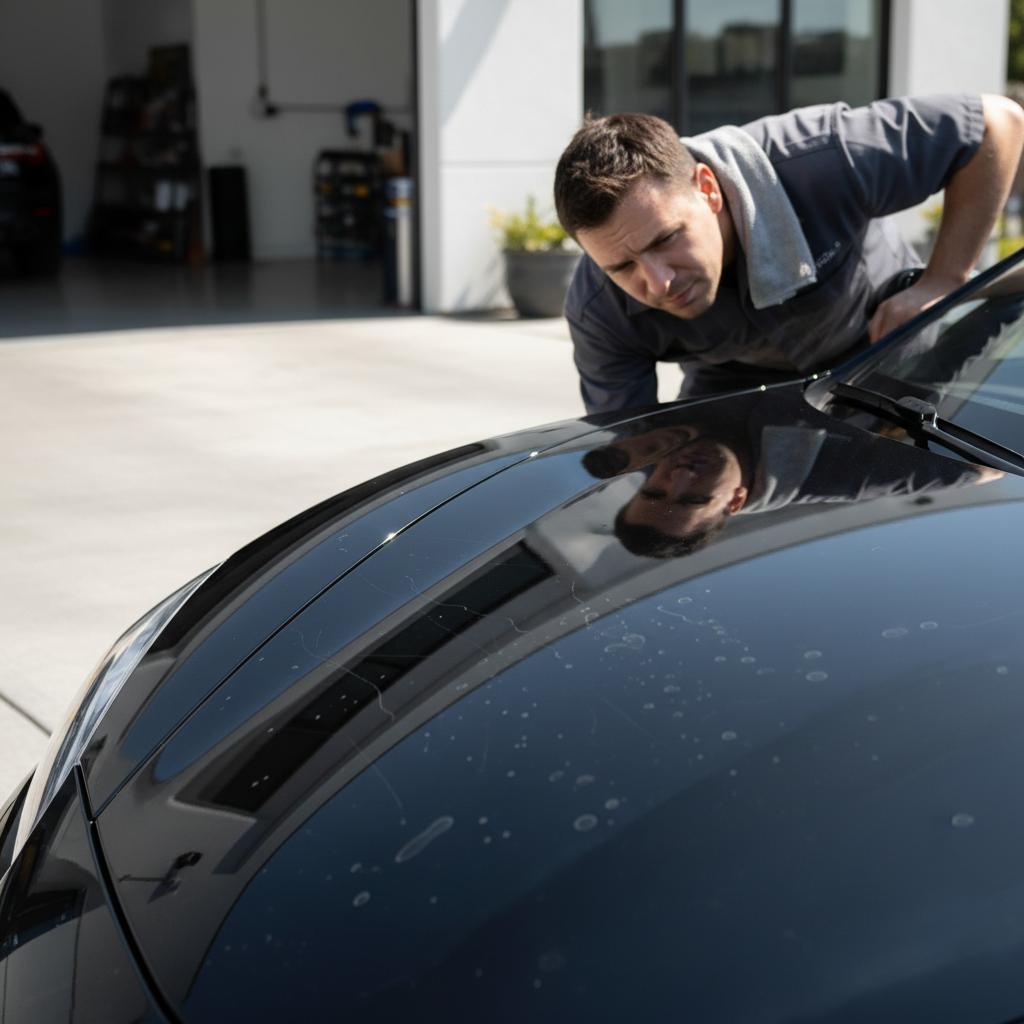
Mistakes that make paint damage more likely
Most paint problems here come from “trying to be quick” in the wrong way. These are the repeat offenders.
- Dry wiping: even if it looks soft, it can carry grit that scratches.
- Scraping with hard edges: cards, keys, fingernails, plastic tools without lubrication.
- Using glass cleaner or strong degreasers on paint: some formulas can strip protection or haze trim, product labels matter.
- Letting chemicals dry on the panel: especially in sun or wind.
- Reusing a dirty towel: one contaminated microfiber can create swirls fast.
If your goal is learning how to remove bird poop from car safely, the “slow” method usually finishes faster than fixing scratches later.
When to consider a pro detailer (and what to ask for)
If the mark remains after a careful wash and a light protection step, it may be etched into the clear coat. That’s when a detailer can help, but it’s still worth being specific about what you want.
- Consider professional help if: you feel a texture change, the spot looks dull from multiple angles, or the car has very soft paint that mars easily.
- Ask for: a test spot, the least aggressive polish that improves it, and a clear explanation of what “improvement” might look like.
- If you have a ceramic coating: tell them, coatings change product choices and polishing approach.
If you’re unsure, it’s reasonable to start with a reputable hand wash/detail shop and ask them to evaluate. No one should promise a perfect outcome without seeing the paint in person.
Conclusion: the simple routine that prevents most bird poop damage
If you only take one habit from this, make it this: keep a small kit in the trunk, and remove droppings the same day whenever possible. A quick detailer or rinseless wash plus a clean microfiber solves most cases with minimal risk.
Next time you spot a mess, don’t rub it dry, soak it, lift it, then protect the area with a wax or sealant if you have one. That’s the practical answer to how to remove bird poop from car paint without turning a small annoyance into a paint correction project.