
How to secure dog in car safely usually comes down to one thing: preventing your dog from becoming a moving projectile while also keeping you focused on driving.
If you have ever had a dog climb into the front seat, step on the window switches, or slide off a seat during a sudden stop, you already know why this matters, it is not just “messy,” it can turn into an injury risk fast.
This guide breaks down the common restraint options in the U.S., how to choose what fits your dog and vehicle, and how to set it up so you actually use it every time, not just on long road trips.
Why unsecured dogs are a real safety problem
People often think the biggest issue is distraction, and that is part of it, but the bigger risk is physics. In a hard brake or crash, an unrestrained dog can slam into the seatback, windshield, or passengers.
There is also the “escape at the wrong time” problem, dogs jumping out when a door opens at a gas station, or bolting after a fender-bender when everyone is stressed.
According to the National Highway Traffic Safety Administration (NHTSA), drivers should secure pets in a way that does not interfere with driving. They do not certify specific pet products, but the principle is clear: keep pets restrained and out of the driver area.
Your main options: harness, crate, carrier, or barrier
You have a few workable ways to secure a dog, and the best choice depends on your dog’s size, temperament, and where they ride.
- Crash-tested car harness + seat belt: A popular choice for medium and large dogs riding in the back seat, when sized and used correctly.
- Travel crate (hard-sided or reinforced): Often the most “contained” solution, good for anxious dogs, multi-dog homes, and SUVs, when it is secured so it cannot slide.
- Small carrier: For small dogs, a carrier that can be secured with a seat belt can reduce movement and stress.
- Vehicle barrier: Helps keep dogs out of the front area in SUVs and wagons, but a barrier alone may not prevent injury in a crash.
If your dog rides in the front seat, that is usually where problems start. Most owners who ask how to secure dog in car safely end up moving the dog to the back seat because it is simpler and avoids airbags.
Quick comparison table (what works for which scenario)
Use this as a practical cheat sheet, then read the next sections for setup details.
| Option | Best for | Pros | Watch-outs |
|---|---|---|---|
| Crash-tested harness | Most dogs in back seat | Affordable, easy daily use | Fit matters, avoid long slack |
| Secured travel crate | Anxious dogs, long trips, cargo area | Containment, helps reduce roaming | Must be tied down, size and ventilation matter |
| Seat-belted carrier | Small dogs | Portable, familiar den-like space | Carrier quality varies a lot |
| Barrier (SUV) | Keeping dog out of driver zone | Reduces distraction | Often needs combo with harness/crate |
How to choose the right restraint for your dog
Buying the “top-rated” item is not the same as choosing what your dog will tolerate. The best gear is the one you will use on every single drive, even the five-minute one.
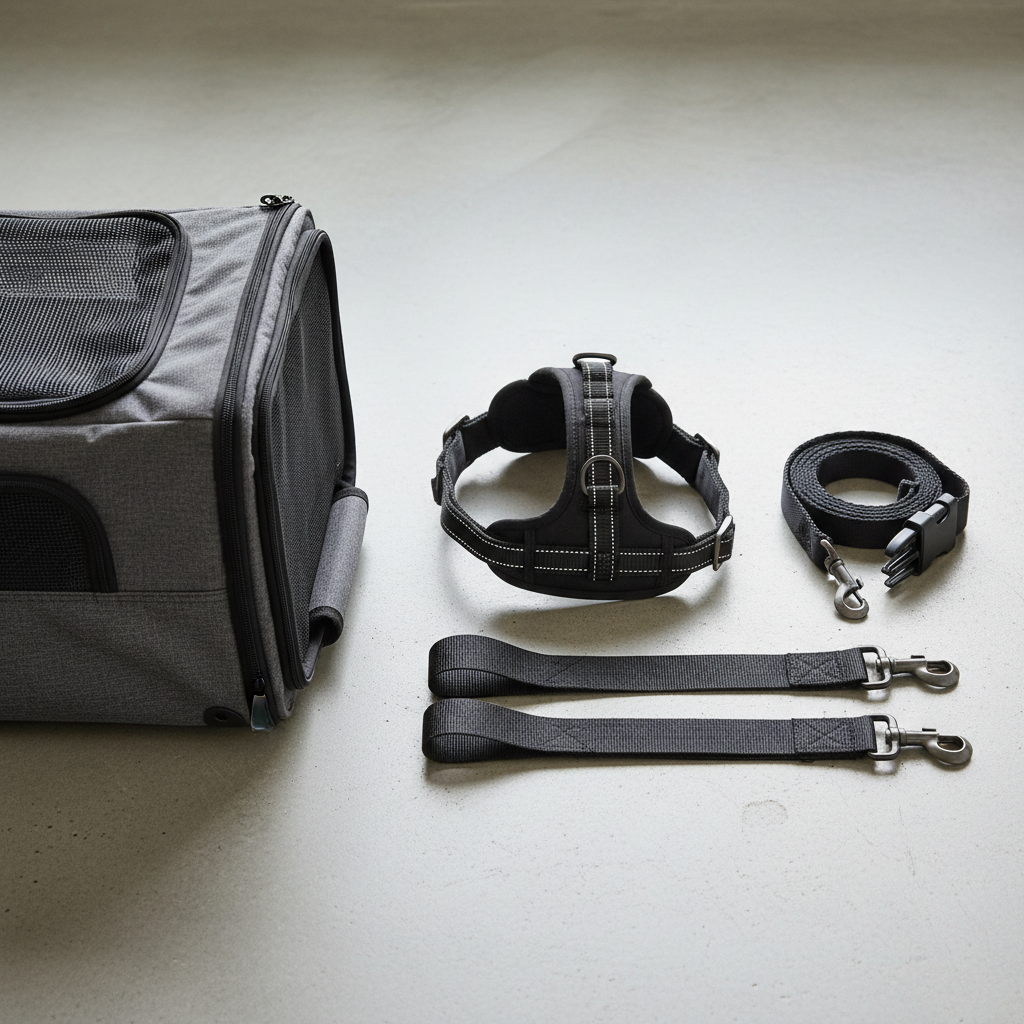
Here is a quick decision checklist you can use before spending money:
- Size and strength: A strong 70 lb dog needs sturdier hardware than a 12 lb dog, even if both are calm.
- Motion and anxiety: Dogs that pace, whine, or drool often do better in a crate or carrier because it limits visual overload.
- Vehicle layout: Sedans tend to favor harnesses in the back seat, SUVs can support crates in the cargo area with tie-down points.
- Frequency: Daily school runs call for fast routines, fiddly systems get abandoned.
- Chewing habits: If your dog chews leashes, look for reinforced tethers and inspect often.
For product claims, look for language around crash testing from credible third parties. According to the Center for Pet Safety, some harnesses and carriers have been independently crash tested, and their website explains test protocols and results. That does not mean every product is “safe,” but it is a better starting point than marketing copy.
Step-by-step: securing a dog with a car harness (back seat)
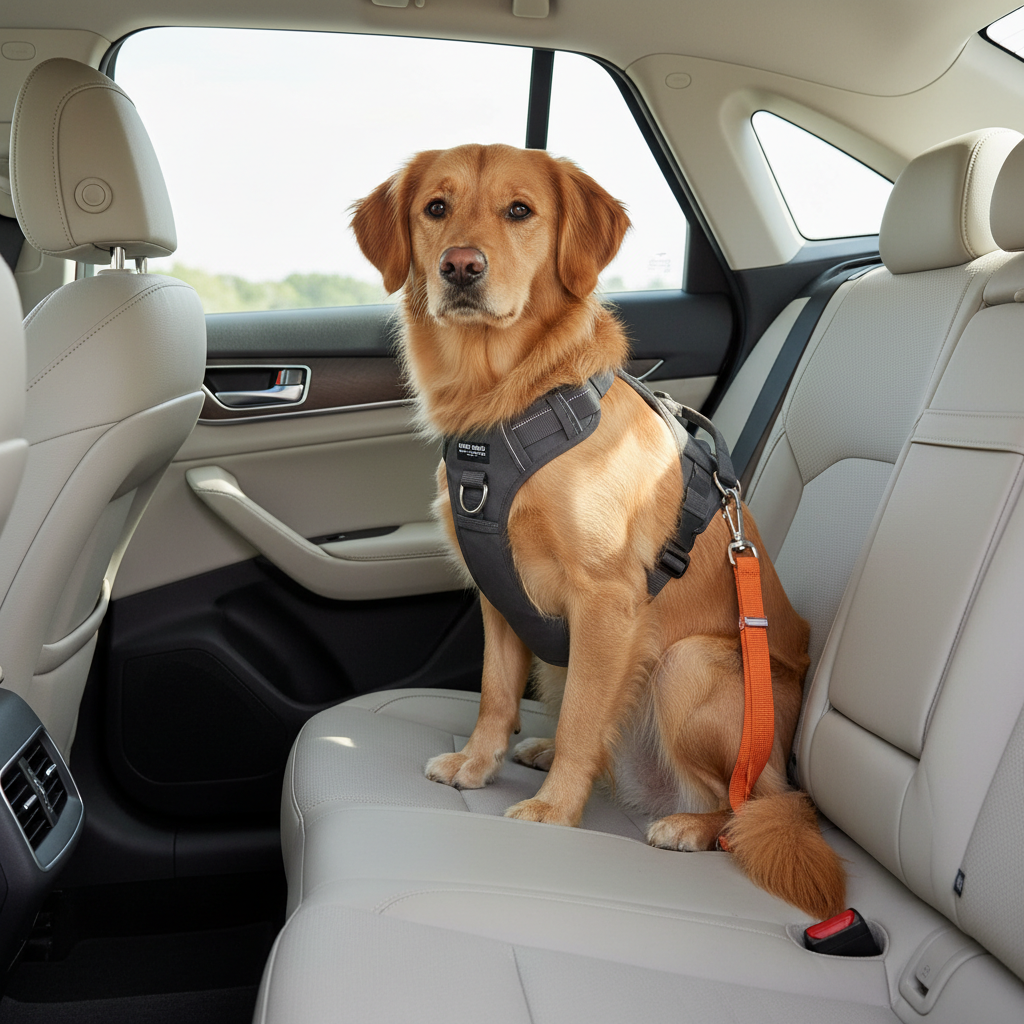
If you want a routine that works for most households, this is usually it. A properly fitted harness paired with the seat belt keeps your dog in the back seat and limits forward motion.
1) Fit the harness like you mean it
Snug is not the same as tight. You typically want enough room for two fingers under the straps, but not so much slack that the harness twists when the dog shifts weight.
- Adjust straps at home, not in the driveway two minutes before leaving.
- Check rubbing points behind the front legs and along the chest.
- Re-check after a few rides, webbing can “settle” and loosen.
2) Connect to the seat belt correctly
Follow the manufacturer’s routing instructions, because different designs attach differently. In many setups, the car seat belt threads through the harness and clicks into the buckle, rather than clipping a tether to a collar ring.
- Do not attach a tether to a collar, that can put force on the neck in a sudden stop.
- Keep slack short enough that your dog cannot reach the front seats.
- Use the back seat, away from front airbags.
3) Give your dog one “job”
This sounds fluffy, but it works: ask for “sit” or “down,” reward calm, then start driving. Dogs who understand the routine settle faster, which helps you keep using the system.
Step-by-step: traveling with a crate or carrier
Crates and carriers can be excellent, but only when they are secured. A loose crate in the cargo area can slide or tip, which defeats the point.
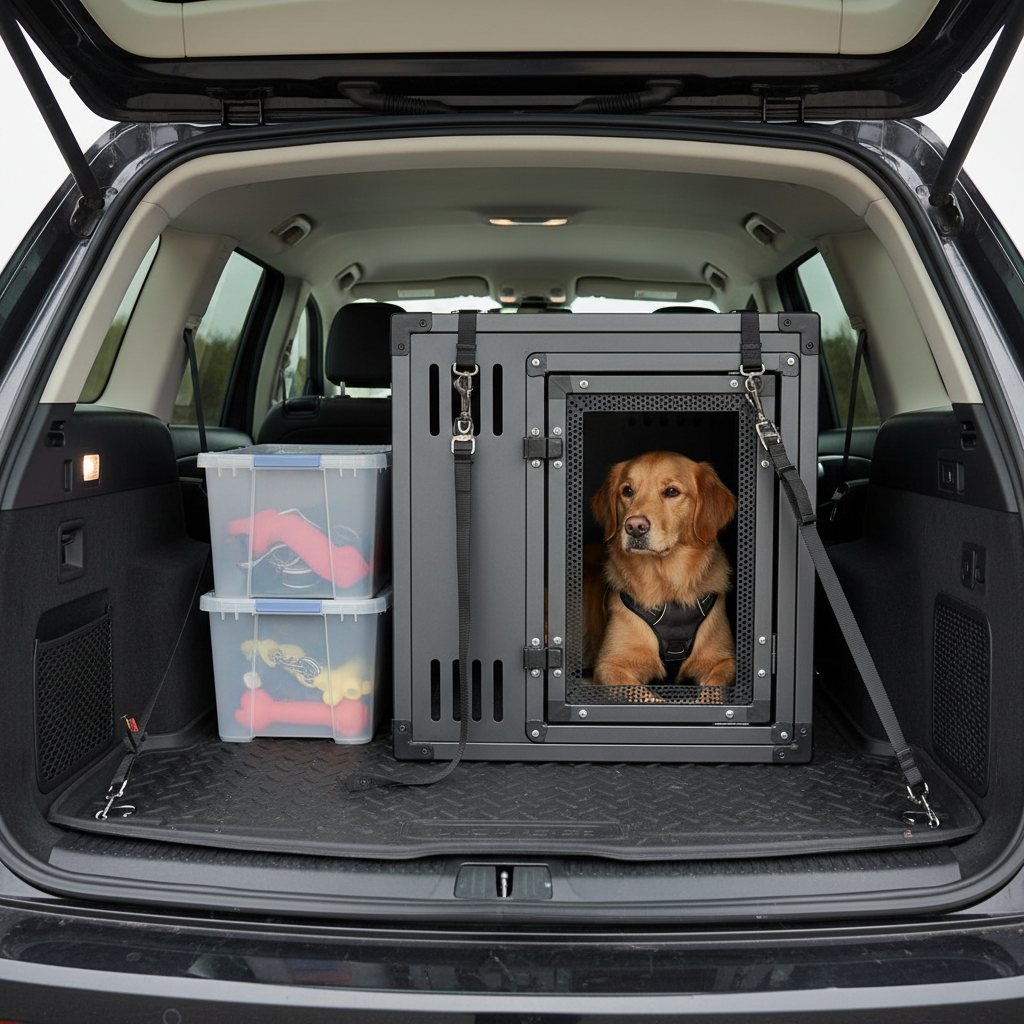
Crate in an SUV or hatchback
- Choose a crate size that lets your dog stand and turn, but not bounce around.
- Place it lengthwise when possible, tight against the rear seatback.
- Use tie-down straps to anchor points so it cannot slide forward.
- Keep airflow in mind, especially in summer, cracked windows and AC help but do not rely on them alone.
Carrier in the back seat (small dogs)
- Pick a carrier with belt paths or a clear way to secure it with the seat belt.
- Position it on the back seat, not on your lap or the front passenger seat.
- Do a short test ride, some dogs relax immediately, others need gradual training.
If you are still deciding how to secure dog in car safely for a small breed, a seat-belted carrier is often easier than a harness because it reduces spinning and tangling.
Mistakes that quietly make your setup less safe
Most “fails” are not dramatic, they are small shortcuts that turn into habits.
- Using a collar as the attachment point: neck force risk rises in sudden deceleration.
- Letting your dog ride unrestrained “just this once”: consistency is what makes your dog accept the routine.
- Too much slack: your dog reaches the front seat or gets tangled, which can cause panic.
- Assuming a barrier is enough: it may help distraction, not necessarily impact protection.
- Skipping acclimation: anxious dogs fight restraints, then owners stop using them.
Also, watch heat and ventilation. According to the American Veterinary Medical Association (AVMA), pets should never be left unattended in vehicles because temperatures can rise quickly, even when it does not feel that hot outside.
Practical routine: make it easy to do every drive
This is where most people succeed or quit. Your gear might be fine, but the routine is too annoying, then the dog ends up loose again.
A simple “before you shift into drive” checklist
- Dog goes in back seat or secured cargo crate, no exceptions.
- Harness or carrier buckled, tug test so you know it is latched.
- Leash clipped off or stored so it cannot wrap around anything.
- Water plan for longer trips, but no open bowl on the seat.
If your dog hates the car restraint
Go smaller and slower. Start with the harness or carrier inside the house, reward investigation, then do “sit in the parked car” sessions before driving around the block. If your dog shows severe panic, heavy drooling, or vomiting, it is worth discussing motion sickness or anxiety with a veterinarian or qualified trainer, especially before a long trip.
Key takeaways (save this)
- Back seat beats front seat for most dogs, it avoids airbags and reduces driver interference.
- Harness, crate, or carrier can work, but only when fitted correctly and secured to the vehicle.
- Consistency matters, the safest setup is the one you keep using on short drives.
- Look for credible testing language, and be skeptical of vague “safety” claims.
Conclusion: a safer ride is mostly about a repeatable system
Once you decide how to secure dog in car safely for your specific dog, the goal is boring consistency, same spot, same buckle, same quick check. If you pick a setup you can do in 20 seconds, you are far more likely to keep your dog protected and your attention on the road.
Your next move can be simple: choose one restraint method that matches your vehicle, do a five-minute fit check at home, then take two short practice rides before you commit to a longer trip.