
how to use air compressor for car tires comes down to three things: knowing your target PSI, using the right valve connection, and stopping at the right moment so you don’t overinflate.
If you’ve ever pulled up to a gas station pump and felt unsure, you’re not alone, tire pressure feels “simple” until you realize a few PSI can change how the car rides, wears tires, and even brakes in wet weather.
This guide walks through what to check before you start, how to inflate with different compressor types, and what to do when the gauge, hose, or valve doesn’t cooperate, plus a quick table for common pressure ranges and troubleshooting.

What you need before you start (and what matters more than people think)
You can inflate a tire with almost any working compressor, but accuracy and consistency depend on a few basics. Grab these up front and you’ll avoid most of the common mistakes.
- Your target PSI: Use the placard on the driver door jamb, not the number molded into the tire sidewall. The sidewall number is a maximum tire rating, not a “fill to” recommendation.
- A decent gauge: Built-in pump gauges can be off. A simple digital or dial gauge often gives more confidence.
- Valve caps: They look disposable, but they help keep dirt and moisture out of the valve core.
- Time and patience: Small top-offs work better than trying to jump 10 PSI in one continuous blast.
According to NHTSA, maintaining proper tire inflation supports safe vehicle handling and reduces the chance of tire-related issues on the road.
Find the correct tire pressure for your car (PSI, “cold” tires, and real-world timing)
The right pressure is usually listed as PSI for front and rear tires. You’ll see it on the door jamb sticker, and sometimes in the owner’s manual.
That number is intended for cold tires, meaning the car has been parked for a few hours or driven gently for a short distance. If you check after highway driving, pressure rises with heat, so you might “chase” the number and end up underinflated later.
Quick pressure reality check
- If you drove less than a couple miles at low speed, your reading is often close enough for topping off.
- If you just got off the freeway, it’s usually smarter to wait, or inflate only if you’re clearly low.
- If your TPMS light is on, treat it as a prompt to verify with a gauge, not as a precise measurement tool.
Step-by-step: how to use an air compressor for car tires
Most problems happen at the connection step or from not checking pressure in small increments. Slow is smooth here.
1) Park safely and prep the valve
- Park on flat ground, set the parking brake, and turn on hazard lights if you’re roadside.
- Remove the valve cap and put it somewhere you won’t lose it.
- Quickly press your gauge on the valve to get the current PSI, this sets your “delta,” so you know how much air you actually need.
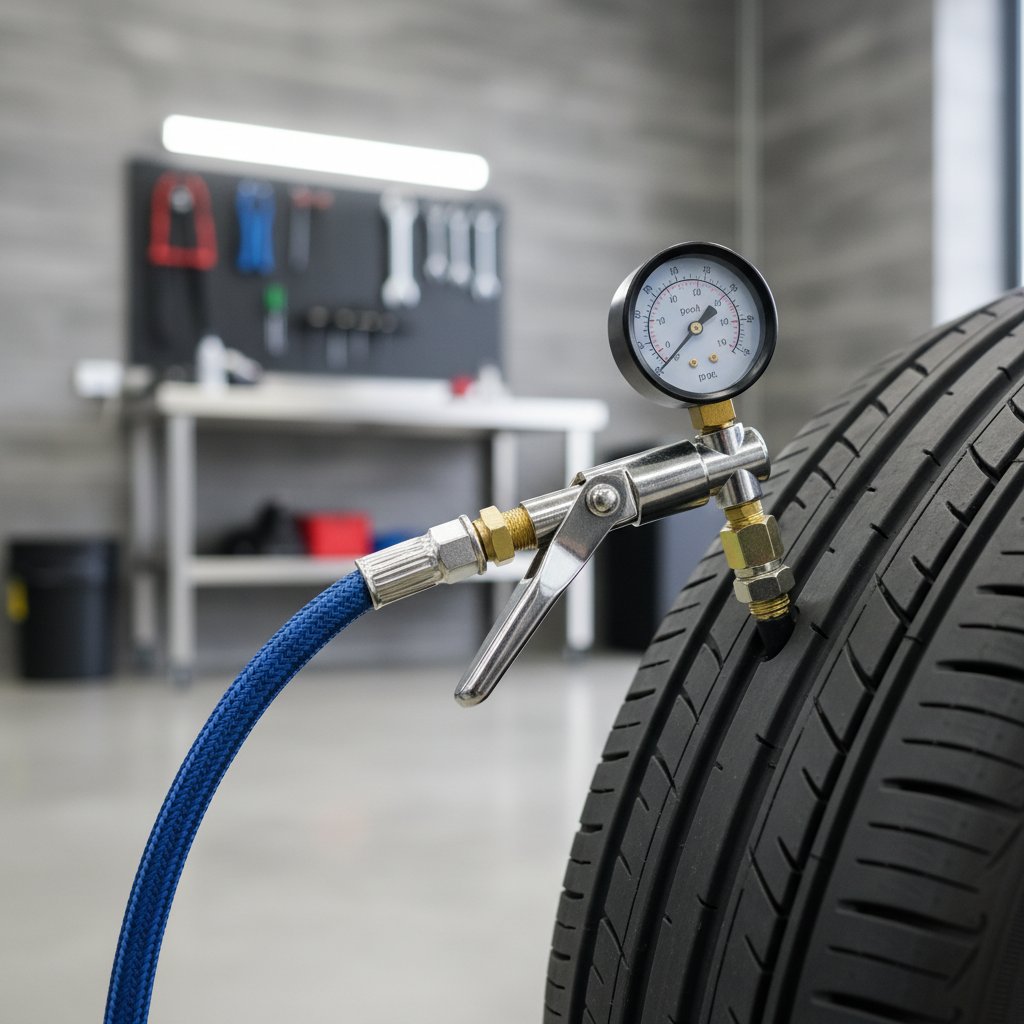
2) Connect the air chuck (listen for leaks)
- Push the chuck straight onto the valve stem until it seals.
- If it’s a lever-lock style, flip the lever to lock.
- A constant loud hiss usually means it’s not seated, reset and try again.
3) Inflate in short bursts and re-check
- Add air for 2–5 seconds, then check PSI with your gauge.
- Repeat until you’re at the target, if you overshoot by a little, you can bleed air (many chucks have a bleed button, or you can carefully press the valve pin).
- Finish by reinstalling the valve cap snugly.
Key point: If you’re learning how to use air compressor for car tires, the best habit is checking pressure frequently instead of trusting one long fill.
Different compressor types: what changes and what stays the same
The process stays consistent, but the “feel” and accuracy vary depending on the compressor you use.
Gas station compressor
- Often runs on a timer, and gauges can be abused or inaccurate.
- If the machine lets you set a PSI, still verify with your own gauge, especially if your tires were hot.
- Watch out for awkward hose angles that stress the valve stem.
Portable 12V compressor (plugs into car)
- Convenient for topping off at home or on trips.
- Many units show PSI on a built-in screen, but it’s still worth cross-checking occasionally.
- Let it rest if it gets very hot during multiple tires, some units slow down as they heat up.
Garage compressor (tank-style) with regulator
- Fast and consistent when paired with a good inflator tool.
- Set the regulator to a sensible range, you don’t need triple-digit PSI feeding the inflator.
- Drain the tank periodically to reduce moisture, moisture can affect tools and fittings over time.
Common PSI ranges (table) and what “looks wrong” in practice
Exact numbers vary by vehicle, but this table helps you sanity-check whether you’re in a normal neighborhood before you dial in the placard PSI.
| Vehicle type | Typical placard range (PSI) | Notes |
|---|---|---|
| Most sedans | 32–35 | Often similar front/rear, but not always |
| Small SUVs / crossovers | 33–38 | Some trims specify higher rear pressure |
| Pickups (light duty) | 35–45 | May have different pressures for load conditions |
| Performance cars | 32–40 | May be sensitive to a few PSI, follow placard |
If your gauge reads something like 20 PSI on a normal passenger car tire, treat it as urgent, add air before driving far. If you see 45+ PSI on a sedan, bleed down carefully and re-check, overinflation can reduce traction and ride comfort.
Quick self-check: are you inflating at the right time and in the right way?
- You’re using the door-jamb PSI, not the tire sidewall number.
- You checked when tires were cold, or you adjusted expectations because they were warm.
- You can connect the chuck without constant hissing, a small brief hiss at connection is normal.
- You re-check with a gauge after adding air, at least a couple times per tire.
- You matched front vs rear if the placard lists different values.
If you’re doing all five, you’re already ahead of many people who “wing it” and wonder why the TPMS light keeps coming back.
Troubleshooting: when the hose, gauge, or valve fights you
Learning how to use air compressor for car tires often gets stuck on little mechanical annoyances. Most have simple fixes.
Problem: Air leaks loudly at the connection
- Re-seat the chuck straight on the valve, crooked connections leak.
- Check for a cracked rubber seal inside the chuck, worn seals leak even when “locked.”
- Inspect the valve stem for damage, especially if it’s rubber and looks dry or cracked.
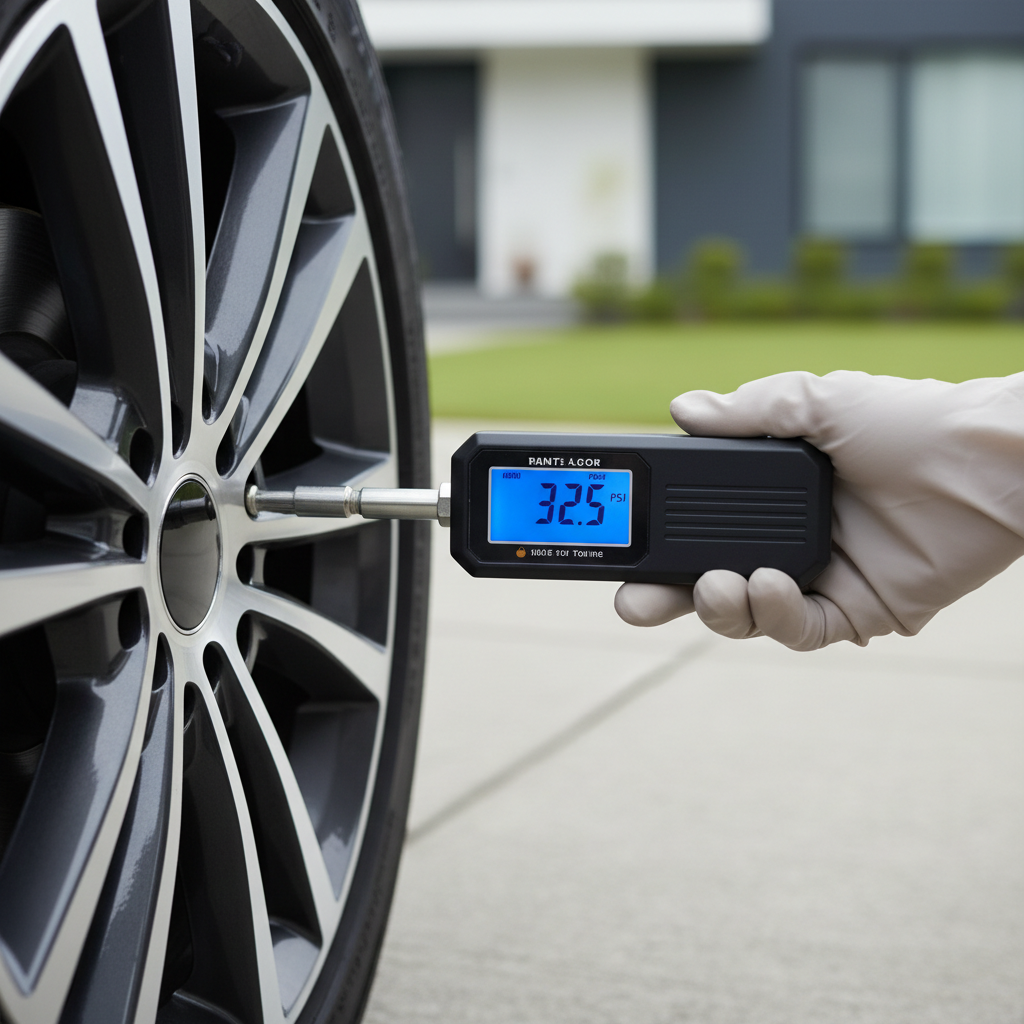
Problem: PSI reading jumps around
- Press the gauge firmly and quickly, a slow, weak press can leak and skew the reading.
- Try a second gauge if results seem unrealistic, gauges fail more often than people expect.
- If you’re using a gas station inflator with an auto-stop feature, still verify with your own gauge.
Problem: You overinflated
- Use the bleed button if your inflator has one, then re-check.
- If not, press the valve pin briefly with the tip of a key or tool, go in tiny taps.
Problem: TPMS light stays on after inflation
- Drive a few minutes, many systems update after rolling.
- Confirm all four tires match the placard and none are still low.
- If the light flashes or won’t clear, a sensor issue is possible, a tire shop can scan the system.
Safety and common mistakes (what to avoid)
Inflating tires is usually low risk, but a few habits keep things safer and prevent expensive tire wear.
- Don’t aim for the sidewall max PSI unless a professional recommends it for a specific scenario, that number isn’t your everyday target.
- Don’t ignore uneven pressure left-to-right can differ if you have a slow leak, measure all four tires, not just the one “looks low.”
- Don’t forget the spare if you have one, many spares run higher pressure and sit for months.
- Be cautious with damaged tires (bulges, cords showing, large cracks), adding air may be unsafe, in many cases you’ll want a tire professional to inspect it.
According to NHTSA, you should also avoid driving on underinflated tires because they can overheat and fail, if you’re significantly low, inflate before longer trips or higher speeds.
Practical routine: keep tire pressure stable without overthinking it
If you want a simple system, check monthly and before road trips, and keep a small gauge in the glove box. In many climates, pressure drops when temperatures fall, so you may top off more often in colder months.
- Pick one day each month, check tires cold in the morning if possible.
- Top off to placard PSI, then re-check once more after removing the chuck.
- Note repeat offenders, if one tire keeps losing air, schedule a puncture check or valve service.
Key takeaways: Use the door-jamb PSI, inflate in short bursts, verify with a gauge, and treat repeated low pressure as a fixable issue, not a forever habit.
Conclusion: the “right” fill is the one you can repeat
Once you learn how to use air compressor for car tires in a calm, repeatable way, the job stops feeling like guesswork, you check the placard, measure cold PSI, add air gradually, and leave with pressures you trust.
If you have five minutes this week, check all four tires and the spare, then write the target PSI in a note on your phone, it’s a small move that tends to pay back in smoother driving and fewer warning lights.