
Best car storage cubes for closet shoppers usually want one thing: a cube that looks tidy indoors but can still survive trunk duty without collapsing, snagging, or turning into a lint magnet. If you have tried cheap fabric bins, you already know the problem, they look fine for a week, then they bow, slump, and swallow your stuff.
This topic matters because storage cubes sit in the annoying middle ground, you need them to be light and foldable, but also structured enough to stack, slide, and keep shape. The wrong cube wastes space, makes closets messy, and in the car it can turn into a rolling hazard when you brake.
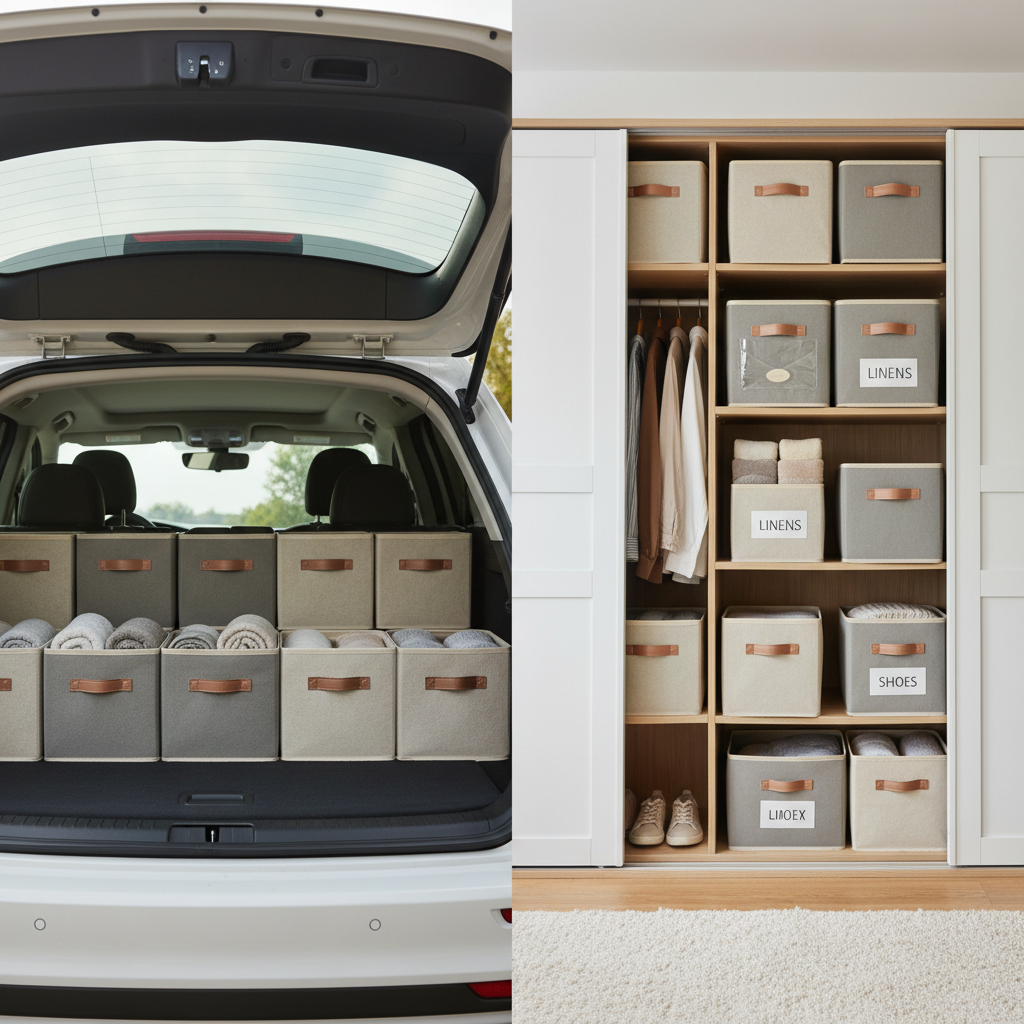
I will keep this practical, how to pick the right size, what materials actually hold up, when you should choose a trunk organizer instead of cubes, plus a short checklist so you can decide fast without overthinking.
What makes a storage cube “work” in both trunk and closet
The best dual-use cubes share a few traits, and none of them are fancy. They focus on structure, grip, and predictable sizing.
- Rigid panels or thick board inserts so the cube stays square when half full
- Reinforced seams and handles because car use means more grabbing and dragging
- Non-slip or textured base so the cube does not skate across trunk liners
- Easy-clean surface, usually polyester, oxford cloth, or a coated fabric
- Consistent dimensions that match common shelving systems, especially 11 inch and 13 inch cubes
One more reality check, car trunks add heat, friction, and grit, so a cube that feels “soft and nice” in a closet can still be a bad pick for driving days.
Materials and build details that actually matter
When people ask for the best car storage cubes for closet setups, the winning choice is usually not the thickest fabric, it is the best balance between structure and foldability.
Fabric: polyester vs oxford vs felt
- Polyester canvas tends to be the all-around option, it wipes down and resists fraying in many cases
- Oxford cloth usually feels stiffer and more abrasion resistant, a good sign for trunk use, especially with groceries and tools
- Felt looks cozy in closets, but it can attract lint and show wear faster in a trunk, especially on edges
Panels, frames, and “why your cube collapses”
Many collapses happen because the bottom insert is thin, or side panels are missing. If you plan to stack cubes on a shelf or in a trunk corner, look for side reinforcement, not just a stiff base.
Handles: stitched vs riveted vs cut-out
Cut-out handles look clean, but they can stretch and tear under heavy lifting. Stitched webbing handles often last longer, and they are easier on hands when you haul a cube out of a trunk.
Size and fit: a quick guide (with a comparison table)
Size mismatches cause most “I hate these bins” moments. Closet shelves, cube organizers, and trunk spaces all have different constraints, so start with your tightest space and work outward.
| Common cube size | Best for closets | Best for trunk use | Typical use cases |
|---|---|---|---|
| 10–11 inch | Small shelves, kids rooms | Light items, easy to carry | Scarves, cables, small toys, cleaning cloths |
| 12–13 inch | Most cube organizers | General trunk organizing | Gym gear, emergency kit, snacks, chargers |
| 14–15 inch | Deep shelves, fewer stacks | Bulky items but can slide around | Blankets, towels, winter layers |
| Long bins (not true cubes) | Top shelves | Better trunk stability | Groceries, sports gear, roadside supplies |
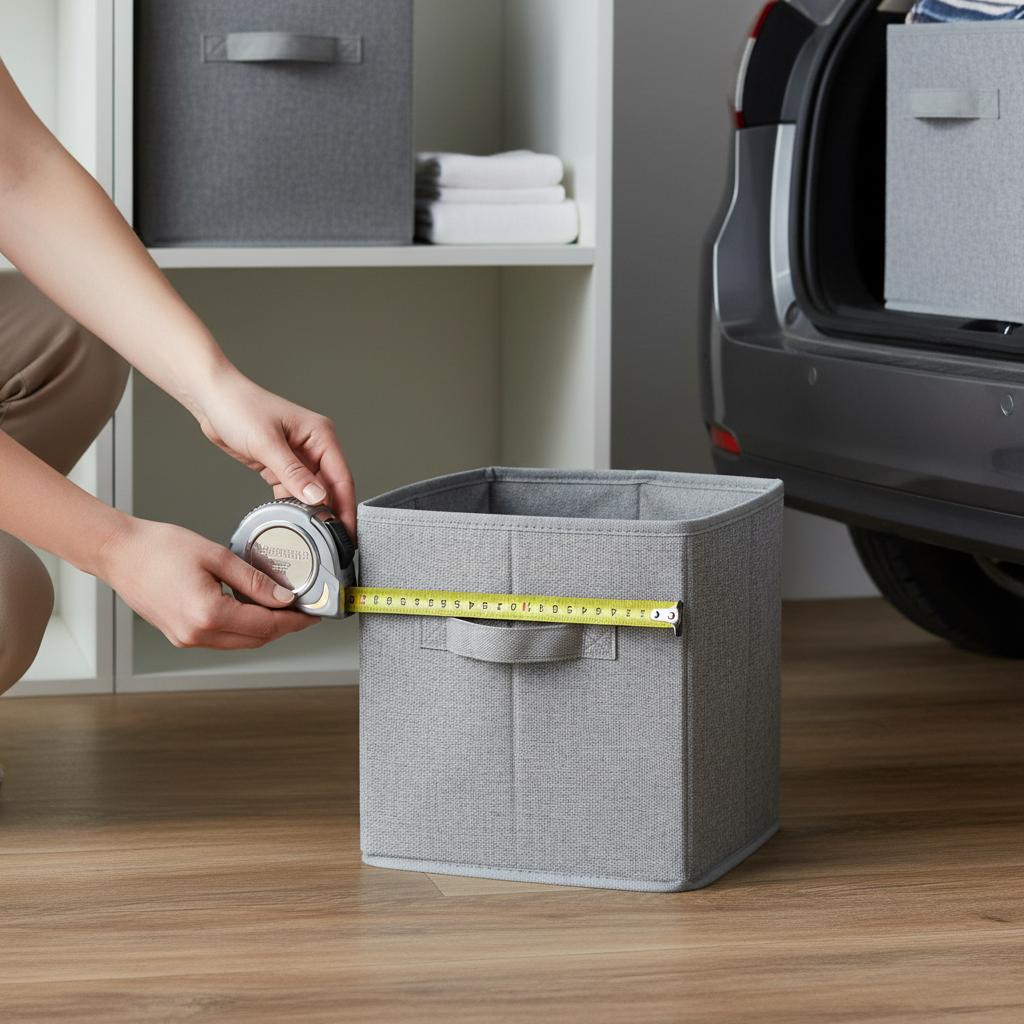
Key point: if you already own a 13-inch cube shelf, do not “guess” on dimensions, cubes often vary by a half inch, which is enough to snag and look sloppy.
Self-check: which type of cube should you buy?
If you want the best car storage cubes for closet use, you really want the best match for your routine. Use this to sort yourself quickly.
- You mainly want closet organization and occasional trunk use, choose structured fabric cubes with removable panels and a clean front pull tab
- You drive with gear daily, choose heavier-duty oxford cubes or a hybrid trunk bin with dividers, you will appreciate the stability
- You carry groceries often, choose cubes with a stiffer base, higher walls, and grippy bottom, soft cubes tend to tip
- You store dirty items like shoes or sports gear, choose wipeable lining and darker colors, felt and light canvas show marks quickly
- You need stacking in a closet or garage, pick cubes with side panels and boxy geometry, not “soft basket” shapes
Also, think about where the cube lives most days. A cube that stays in the trunk can be more rugged, a cube that lives in a bedroom closet should look calmer and feel nicer to handle.
How to set up cubes in your trunk so they do not become a safety problem
Loose storage is not just annoying, it can be risky. According to NHTSA (National Highway Traffic Safety Administration), unsecured items in a vehicle can become dangerous projectiles during sudden stops or crashes. That does not mean you need to panic, it means you should anchor and contain what you can.
- Use trunk anchors or cargo hooks if your vehicle has them, clip cubes via straps when possible
- Heaviest cube goes closest to the seatbacks, lighter cubes toward the hatch or opening
- Keep emergency gear in a dedicated cube so you do not dig around on the roadside
- Avoid stacking high if cubes can topple, low and wide wins in cars
If you routinely carry tools, batteries, or anything sharp, a hard-sided tote may be safer, fabric cubes can tear and expose edges.
Closet setup that looks tidy and stays that way
A closet looks organized when the cubes line up, labels make sense, and you can pull one without collapsing the rest. Sounds simple, the “stays that way” part is where many systems fail.
Practical closet steps
- Group by frequency, daily items at chest height, seasonal items higher or lower
- Limit each cube to one category, mixed cubes become junk drawers fast
- Use soft labels like tag loops or label pockets, adhesive labels often peel on fabric
- Leave 5–10% empty space, overstuffing bends walls and makes cubes hard to slide

If you share a closet, agree on labels that match how people think, not how you wish they think. “Car stuff” is vague, “jumper cables and inflator” stays clear.
Common mistakes that make cubes disappointing
Most complaints come from a few predictable mismatches between product and use.
- Buying felt because it looks premium, then using it for trunk dirt and expecting it to stay pristine
- Ignoring handle quality, then lifting heavy items by a weak cut-out and tearing the fabric
- Choosing dark cubes for the trunk without any labeling, then everything becomes a black hole
- Using cubes for loose liquids like detailing sprays without secondary containment, leaks happen, and fabric absorbs smells
- Overstacking in the car, it looks neat parked, it shifts the first time you brake
Another subtle one, some cubes “fold” but never return to a crisp shape, so closets look rumpled. If aesthetics matter, look for thicker panels and cleaner edge stitching.
When to consider alternatives (and when to ask for help)
Sometimes the right answer is not a cube. If your trunk use is heavy-duty, you may be happier with a trunk organizer that has a semi-rigid frame, or a hard bin that can be strapped down.
- Choose a trunk organizer when you need built-in dividers and anti-tip stability
- Choose hard totes for chemicals, sharp tools, or wet items
- Choose garment bags or hanging organizers if the real problem is clothing, not loose items
If you are dealing with mobility limits, back pain, or you need to carry heavy items regularly, it may be worth asking a professional organizer or an occupational therapist for safer setup ideas, especially around lifting and access height.
Conclusion: picking cubes you will still like in three months
The best car storage cubes for closet use tend to be structured, wipeable, and sized to your shelves, not just “close enough.” Get the dimensions right, insist on real reinforcement, and treat trunk stability as part of the buying decision, not an afterthought.
If you want a simple next step, measure the tightest closet shelf, pick one cube size, then buy a small set in a matching material. After a week of real use, add more only if the setup feels natural.
Key takeaways
- Structure beats softness when you stack or carry cubes often
- Wipeable fabrics handle trunk dust and spills better than felt in many cases
- Correct sizing prevents sagging, snagging, and messy-looking shelves
- Secure trunk loads when items could shift during braking
FAQ
What size is most compatible with cube shelves in the US?
Many cube organizers are built around 13-inch inserts, but brands vary a bit. If you already own a shelf, measure the interior opening rather than trusting the “13-inch” label.
Are foldable cubes strong enough for groceries in a trunk?
They can be, if the base is stiff and walls are reinforced. For heavy groceries like gallon jugs, a wider bin or a trunk organizer often feels more stable than tall cubes.
Do I need lids on storage cubes for trunk use?
Lids help keep items from popping out, and they reduce visual clutter. The tradeoff is slower access, so many people use lids only for rarely needed items like backup supplies.
How do I stop cubes from sliding around in the trunk?
Look for grippy bottoms, and use cargo hooks or straps if your vehicle has anchor points. In some cars, a rubber cargo mat also helps, just avoid stacking cubes high.
Is felt a bad material for car storage?
Not always, but it is less forgiving with dirt, pet hair, and abrasion. If your trunk gets rough use, oxford or coated polyester usually holds up better.
How many cubes should I start with?
Usually 2–4 is enough to test your categories, one for emergency items, one for daily gear, and one or two for “rotating” needs. Once you see what you actually use, scaling up is easier.
Can storage cubes be used for hazardous items like fuel containers?
It is safer to avoid fabric cubes for hazardous liquids or flammables. If you must transport regulated or hazardous materials, follow product labeling and local rules, and consider asking a qualified professional about safe transport practices.
If you are trying to keep a small closet tidy while also taming trunk chaos, a simple cube system can work well, but only when sizing and structure match your real routine, if you want a more hands-off setup, share your shelf dimensions and what you carry most days, and you can narrow choices without buying three rounds of “almost right” bins.