
Best car trunk organizer with cooler compartment shopping usually starts after one annoying moment: spilled groceries, rolling sports bottles, or a half-melted bag of ice on the trunk carpet. The right organizer fixes all three, but only if you match it to your car, your habits, and the kind of “cooling” you actually need.
This guide walks you through what matters in real use, what specs are marketing fluff, and how to pick a setup that keeps food cold without turning your trunk into a bulky storage bin you hate moving.
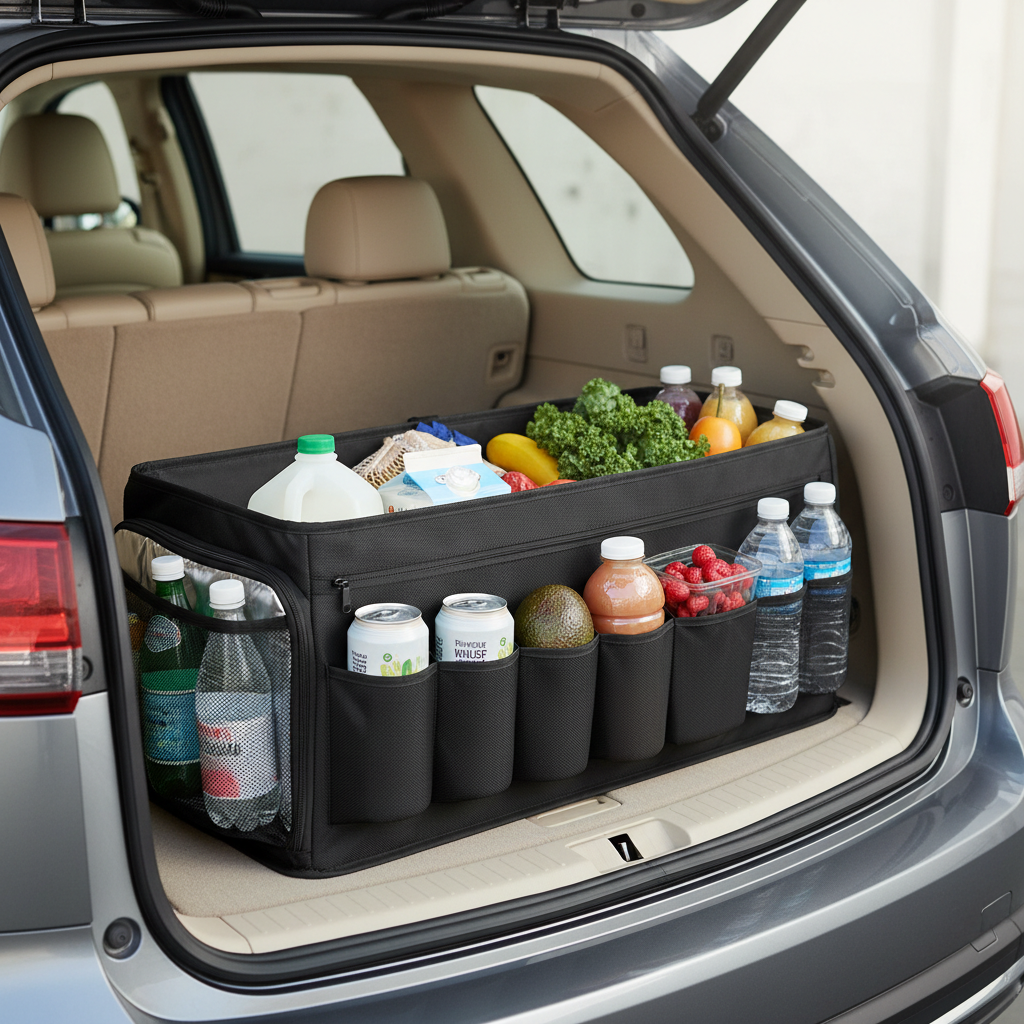
Quick expectation setting: a built-in cooler compartment is usually insulated storage, not a powered fridge. If you need true refrigeration for long drives or hot climates, you may be looking at a 12V portable fridge instead. For most errands, insulated is exactly the sweet spot.
What “cooler compartment” really means (and what it doesn’t)
Most trunk organizers that advertise a cooler section include an insulated pouch or fold-out insulated bin, meant to slow temperature change, not create cold air. In practice, it’s great for groceries, meal prep, baby bottles, and post-workout drinks, especially when paired with ice packs.
There are three common cooler styles:
- Integrated insulated cube: lives inside one organizer bay, quick access, usually smaller capacity.
- Detachable cooler bag: you can carry it into the store, often better insulation, easier cleanup.
- Fold-out insulated section: expands when needed, but zippers and seams become the weak point over time.
According to USDA, perishable foods should not sit above 40°F for more than 2 hours, and that window can shrink in hot conditions. An insulated compartment plus frozen gel packs helps, but it’s still smart to limit trunk time on summer days.
How to choose the best option for your car and routine
If you want the best car trunk organizer with cooler compartment for everyday use, start with fit and friction, the two things people regret most after purchase. “Fit” is size and layout, “friction” is how annoying it feels to load, unload, and clean.
Size and layout: match the organizer to what you actually carry
- Weekly groceries: prioritize a wider base, rigid sides, and a cooler section that fits milk cartons or meal kits.
- Kid + sports life: look for dividers, a lid to hide clutter, and side pockets for wipes, sunscreen, and tape.
- Work trunk: choose a lower-profile organizer that won’t block toolboxes or emergency gear.
A common miss: buying a huge organizer for “more storage,” then leaving it half-empty, sliding around, and stealing space from strollers or luggage.
Stability: why non-slip bottoms aren’t optional
Even a great cooler section is frustrating if the whole unit tips in corners. Look for a non-slip base, anchor straps, or hook-and-loop strips that grab trunk carpeting. If your cargo area is plastic or rubber, straps matter more.
Feature checklist: what to prioritize (and what to ignore)
Here’s a practical comparison table you can use while browsing listings. It’s not about “more features,” it’s about fewer headaches.
| Feature | Why it matters | Good sign | Watch out for |
|---|---|---|---|
| Insulation quality | Keeps food colder longer with ice packs | Thick walls, tight zipper, liner feels substantial | Thin “insulated” fabric, gaps around zipper |
| Leak-resistant liner | Prevents melted ice and spills from soaking the trunk | Sealed seams, wipe-clean interior | Stitching exposed inside cooler pouch |
| Rigid structure | Stops sagging when loaded with bottles | Hard panels, reinforced base | Floppy walls that cave inward |
| Anchoring | Reduces sliding, helps protect eggs and glass | Straps or strong hook-and-loop | “Non-slip” claim with no real grip |
| Foldability | Easier to store when you need trunk space | Folds flat without warping panels | Bulky folds, creases that weaken the cooler |
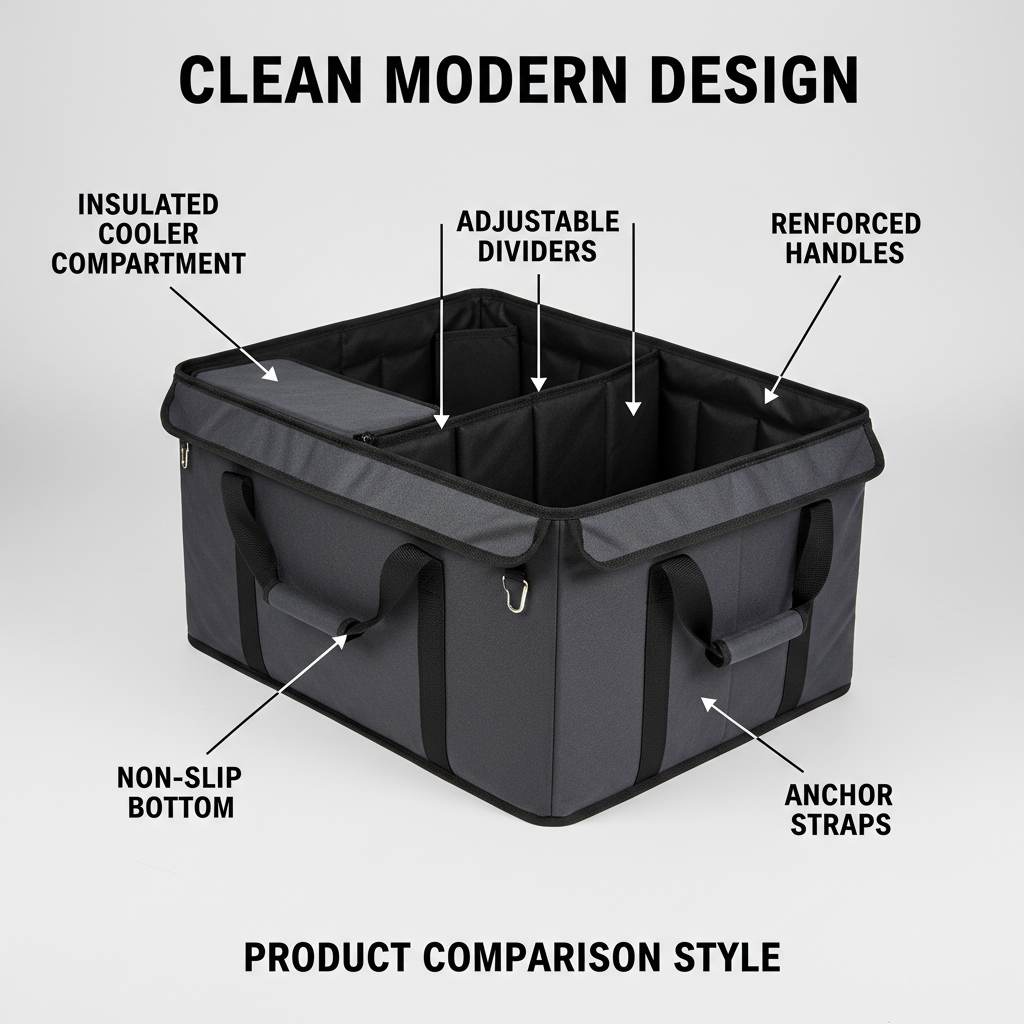
Extra features can be useful, but only when they match your routine. A removable lid sounds premium, for example, until you realize you never close it because you’re loading in a hurry.
Fast self-test: which type should you buy?
If you’re stuck between options, answer these quickly. Your “yes” answers point you to the right style.
- Do you carry perishables 2+ times per week? Choose a detachable cooler bag or a larger integrated cooler bay.
- Do you park in direct sun often? Prioritize better insulation and a leak-resistant liner, use gel packs by default.
- Do you switch between errands and road trips? Look for fold-flat design and adjustable dividers.
- Do items roll around today? Stability features beat extra pockets, choose anchoring over “more compartments.”
- Do you hate cleaning? Avoid fabric-only cooler pouches, pick wipe-clean liners and simple interiors.
If you checked most boxes, you’re exactly the person who benefits from the best car trunk organizer with cooler compartment, not just any organizer with a tiny insulated pocket.
Real-world setup: how to load it so it works (not just looks neat)
Organizers fail when you load them like a pantry. A trunk is a moving space, so treat it like one.
A simple loading rule that prevents tipping
- Put heavy, dense items (drinks, canned goods) in the lowest, most rigid section.
- Use the cooler compartment for temperature-sensitive items, not for “whatever fits.”
- Keep one bay intentionally empty for odd shapes, like a bouquet, takeout, or a last-minute bag.
For cooling, a practical combo is two medium gel packs, one on the bottom and one on the side. Loose ice works, but it’s messy unless the liner is truly leak resistant.
Small habit that keeps food safer
If your drive home is longer or you run multiple stops, treat the cooler bay like a mini “cold zone.” Open it less, zip it fully, and avoid leaving the car parked with perishables inside. If you’re unsure about food safety, it’s reasonable to err on the cautious side or consult a food safety professional.
Common mistakes that make people think the cooler “doesn’t work”
- Expecting insulation to create cold: it only slows warming, you still need cold items or ice packs.
- Buying a tall organizer with weak handles: carrying it becomes a two-hand struggle, so you stop using it.
- Ignoring trunk floor material: hook-and-loop is great on carpet, almost useless on plastic.
- Overpacking the cooler pocket: zippers strain, seams fail, then leaks start.
- Storing the organizer wet: odors happen fast, especially with fabric edges around the liner.
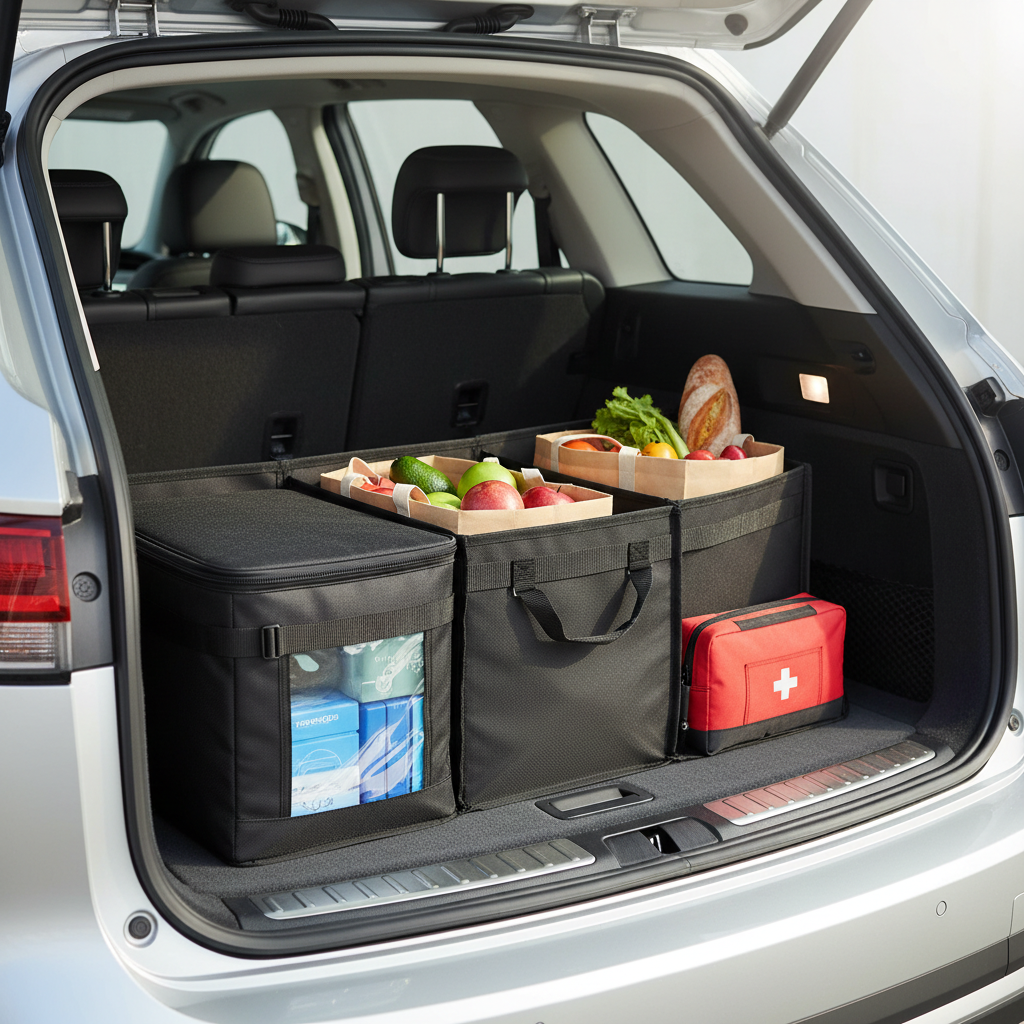
A good product won’t fix a bad setup, but a good setup can make a mid-range organizer feel premium. That’s why it’s worth spending two minutes dialing in dividers and anchor points.
When a trunk organizer isn’t enough (and what to do instead)
There are cases where the “cooler compartment” category isn’t the right tool.
- Long road trips in heat: consider a 12V compressor fridge, especially for medication or frequent perishables.
- Delivery driving: you may need separate soft coolers plus spill-proof totes for speed and hygiene.
- Medical or allergy-sensitive items: temperature control requirements vary, it’s worth asking a pharmacist or qualified professional about safe transport.
If you’re in the normal groceries-and-life zone, though, choosing the best car trunk organizer with cooler compartment is often the simplest upgrade that keeps the trunk calm and cleanup minimal.
Key takeaways before you buy
- Insulated usually means slower warming, not refrigeration, plan to use gel packs.
- Stability matters as much as storage, anchoring and non-slip bases prevent most frustrations.
- Pick capacity based on what you carry weekly, not what you might carry once a year.
- Leak-resistant liners and wipe-clean interiors save you time, especially in summer.
Conclusion: a practical way to pick your winner
If you want a cleaner trunk and fewer “why is everything rolling around” moments, focus on two things: a stable frame and an insulated section you’ll actually use. Then size it for your normal routine, not your ideal routine.
Your next step can be simple: measure your trunk floor, list the three items you carry most, then choose an organizer whose cooler bay fits those items without forcing the zipper. That’s the kind of decision you won’t regret later.
FAQ
- What makes the best car trunk organizer with cooler compartment different from a regular organizer?
It adds insulated storage designed to slow temperature changes, plus it often needs better structure and sealing so melted condensation doesn’t become a trunk mess. - Will an insulated cooler compartment keep ice frozen all day?
Usually not. Many factors change results, including insulation thickness, how often you open it, and trunk temperature. For longer holds, add gel packs and reduce opening time. - Is a detachable cooler bag better than an integrated cooler pocket?
For many people, yes, because you can carry it into the store and clean it separately. Integrated pockets feel simpler day to day, but they’re often smaller. - How do I stop a trunk organizer from sliding around?
Start with hook-and-loop if your trunk is carpeted, then add anchor straps if the floor is smooth. Keeping heavier items low also reduces tipping. - What size organizer should I buy for a sedan vs SUV?
Sedans often work better with a lower-profile organizer that still opens fully under the trunk lid. SUVs can handle wider bases, but you still want it to fold flat for road trips. - Can I store cleaning chemicals next to food in the organizer?
It’s safer to separate them. Many people use a side pocket or a separate bin for chemicals to avoid odors or accidental leaks near groceries. - Do cooler compartments cause condensation or odors?
They can, especially if you store the liner wet or leave food residue. Wipe it dry after use and air it out at home when possible.
If you’re shopping and keep bouncing between “nice features” and “will I actually use this,” narrow it to a stable organizer plus an insulated section that fits your real grocery run, if you need a more hands-off approach, pick a model with a detachable cooler bag and a wipe-clean liner so maintenance stays easy.