
how to clean car leather steering wheel properly comes down to two goals: lift body oils and grime without stripping the finish, then add light protection so it stays easier to maintain.
If your wheel feels shiny, slick, or slightly sticky, that’s usually built-up oils, sweat, and product residue rather than “nice leather.” Besides looking worn, a greasy wheel can reduce grip, which matters every time you drive.
This guide walks you through a safe, repeatable process, plus a quick checklist to choose the right cleaner, how to handle perforated leather, and what to do when the shine won’t quit.
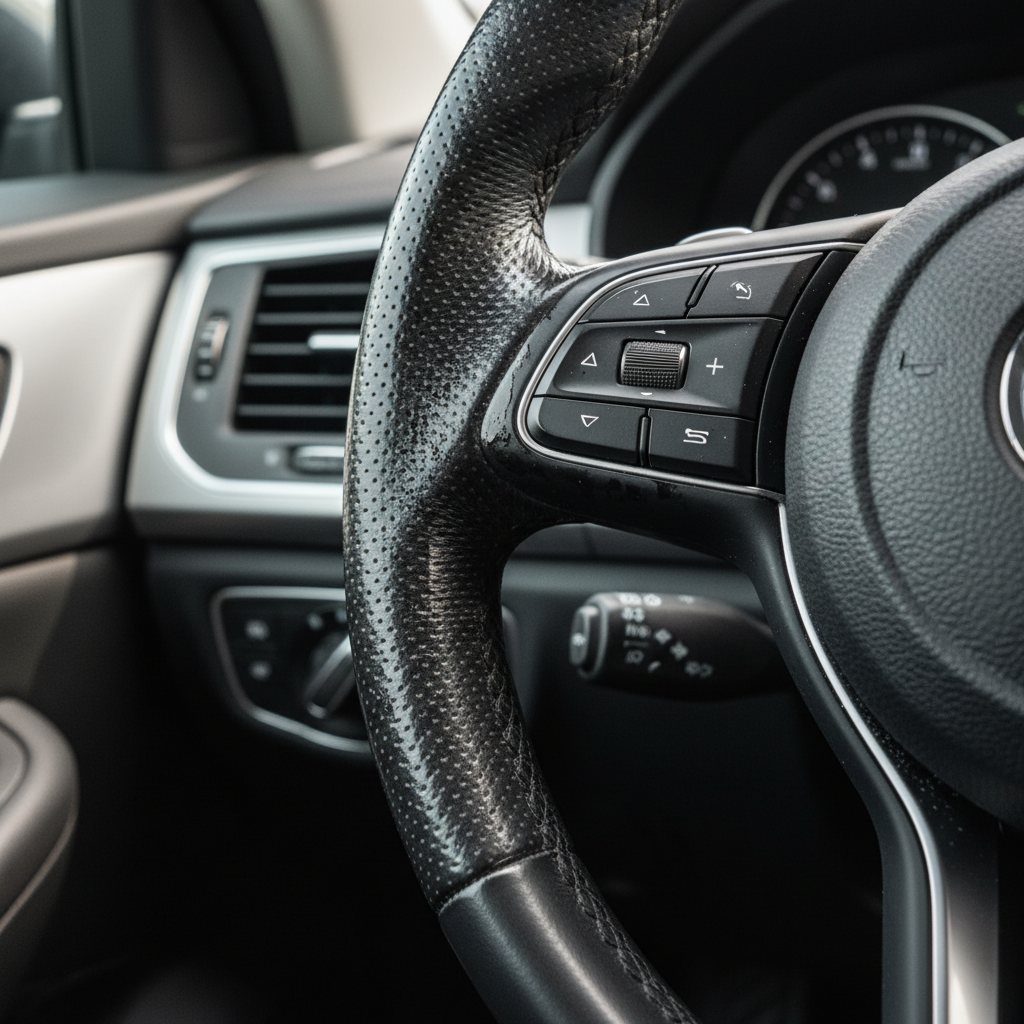
What makes leather steering wheels get dirty so fast
Steering wheels are basically “high-touch” surfaces, and leather is porous enough to hold onto what your hands leave behind. The result is often a darkened, glossy look where you grip the wheel most.
- Body oils and sweat soak into the top layer and turn matte leather shiny.
- Hand sanitizer and lotion can leave sticky residue that attracts more dirt.
- Sunscreen is a big one in summer, it transfers easily and builds film.
- Dust + cabin heat bake grime into the texture, especially if the car sits outside.
- Wrong products like harsh degreasers or “all-purpose” cleaners may dull or weaken the finish.
According to the U.S. Environmental Protection Agency (EPA), cleaning products should be used according to label directions to reduce unnecessary exposure and avoid misuse, which is a helpful mindset for interior chemicals too.
Before you start: a quick self-check to avoid damage
Most problems happen because people scrub too hard or pick a cleaner that’s too aggressive. Take 60 seconds and you’ll usually avoid both.
Identify what you’re working with
- Coated/finished leather (most modern cars): has a protective topcoat; cleans best with gentle leather cleaner and minimal moisture.
- Perforated leather: tiny holes can trap liquid; you’ll use less product and more towel work.
- Severely worn areas: if color is rubbing off or you see cracking, cleaning must be gentler and you may need repair, not “more scrubbing.”
Do a quick “towel test”
- Wipe a small area with a slightly damp microfiber towel.
- If the towel turns dark brown/black quickly, you have surface grime and oils that will respond well to proper cleaning.
- If color transfers (matching the wheel color), stop and switch to very mild cleaning, the coating or dye may be compromised.
Tools and products that usually work (and what to skip)
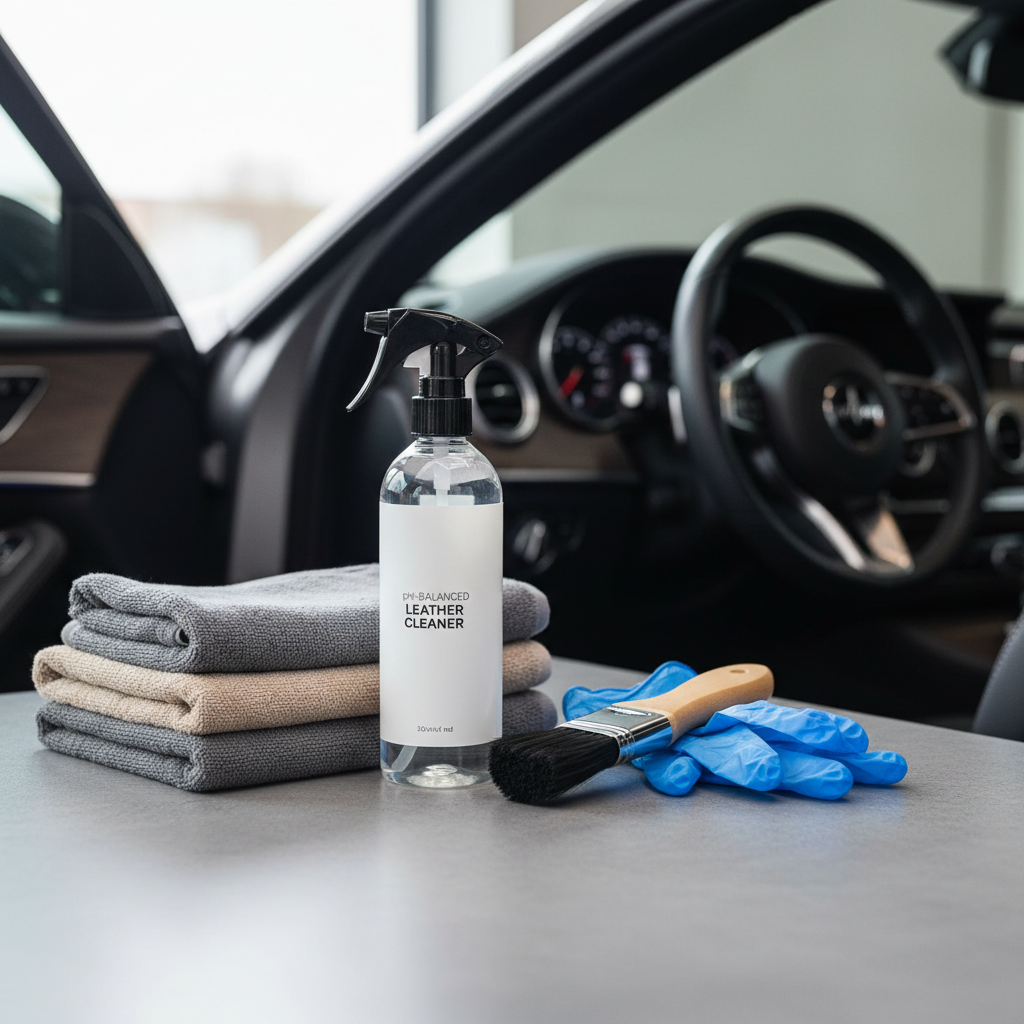
You don’t need a cabinet full of detailing bottles, but you do need the right contact points: safe chemistry, soft agitation, and clean towels.
| Item | Why it helps | Notes |
|---|---|---|
| pH-balanced leather cleaner | Breaks down oils without stripping topcoat | Choose one labeled for automotive leather |
| Microfiber towels (3–6) | Lifts grime; reduces scratching risk | Use separate towels for clean vs. dirty wiping |
| Soft interior brush or leather brush | Agitates texture and stitching | Soft bristles only, especially on coated leather |
| Leather protectant (matte/satin) | Adds light barrier to slow re-soiling | Avoid glossy dressings for steering wheels |
| Optional: mild APC diluted | Can cut stubborn grime on coated leather | Only if leather-safe and properly diluted; spot test |
What to skip in many cases: magic erasers (can abrade the topcoat), strong degreasers, alcohol-heavy wipes, and oily “conditioners” that leave a slick finish. A wheel should feel grippy, not greasy.
Step-by-step: how to clean a car leather steering wheel properly
This method aims for “clean and matte.” If you finish and it still looks shiny, that’s usually remaining oil film, not a need for conditioner.
1) Prep the area
- Park in shade and let the cabin cool down; hot leather can flash-dry product and leave streaks.
- Wash your hands or wear nitrile gloves if you’re sensitive to cleaners.
- Turn the wheel 90 degrees so you can work one section at a time without twisting your wrist.
2) Dry wipe first
- Use a dry microfiber towel to remove loose dust.
- Pay attention to seams and stitching where grit likes to sit.
3) Apply cleaner to the towel or brush, not the wheel
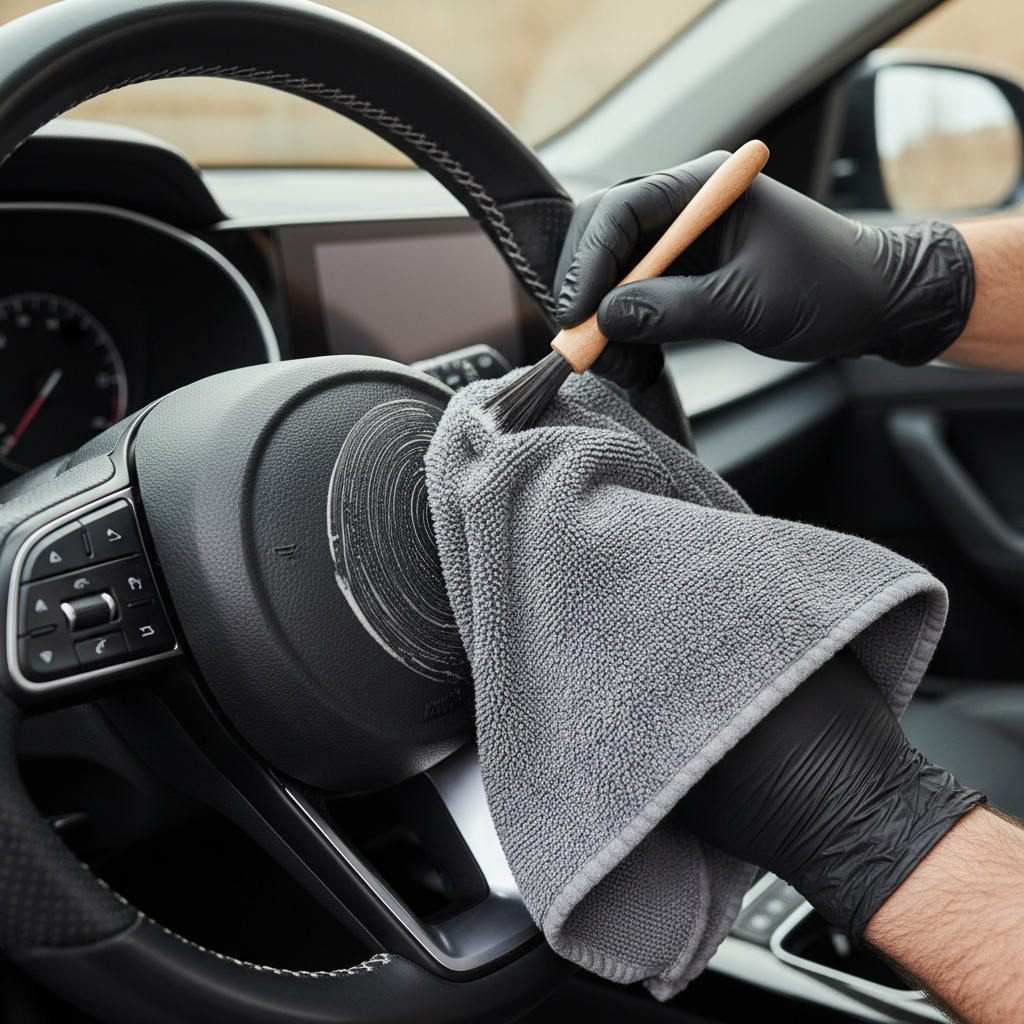
- Spray the cleaner onto a microfiber towel or lightly onto your soft brush.
- Avoid soaking the wheel, especially if it’s perforated leather.
4) Gentle agitation, small sections
- Work a 6–8 inch section with light pressure.
- Use short, controlled strokes along the grain; focus on the “10 and 2” grip zones.
- For stitching, brush lightly across the seam, then wipe immediately.
5) Wipe off thoroughly (this is where results come from)
- Immediately wipe with a clean, slightly damp microfiber towel to pick up suspended grime.
- Follow with a dry microfiber towel to remove remaining moisture and residue.
- Swap towels as they load up; a saturated towel just smears oils back around.
6) Evaluate and repeat only where needed
If the leather still looks glossy in the high-touch spots, repeat one more pass in those areas. Many wheels need two light passes rather than one aggressive scrub.
Stubborn shine, sticky feel, or dark buildup: what to do next
Sometimes “dirty” is really layered residue. The fix is usually technique, not stronger chemicals right away.
- Persistent shine after cleaning: try a second cleaning pass with fresh towels; avoid adding conditioner, it often adds more sheen.
- Sticky steering wheel: residue from dressings or hand products is common; wipe with a damp microfiber after cleaning to ensure no cleaner film remains.
- Dark rings at grip points: slow buildup can require multiple gentle sessions across a week rather than one heavy attack.
- Perforated leather: use less liquid, more towel wiping; keep product on the towel/brush, not sprayed directly.
According to the National Highway Traffic Safety Administration (NHTSA), keeping full control of your vehicle is essential for safety; a slippery wheel isn’t something to ignore, even if the car “looks clean.”
Protection and maintenance: keep the wheel grippy, not glossy
Once the wheel is clean, a light protectant can slow re-soiling and reduce that quick “hand oil shine.” The key is choosing a finish that stays matte or satin.
How to apply protectant without making it slippery
- Use a product labeled as a leather protectant (not an oily conditioner) and aimed at a natural look.
- Apply a small amount to a microfiber applicator or towel, then wipe a thin coat.
- Buff gently with a dry towel until the surface feels dry to the touch.
- Let it cure per label directions before driving, especially if the product recommends a set time.
Simple maintenance schedule
- Weekly or biweekly: quick wipe with a slightly damp microfiber, then dry wipe.
- Monthly: light clean with leather cleaner in high-touch spots.
- Seasonally: reapply protectant if the wheel starts absorbing oils faster.
Mistakes that quietly ruin leather steering wheels
A steering wheel is small, so people tend to “go harder” thinking it will be faster. That’s usually how the finish gets dulled or the leather starts looking patchy.
- Over-wetting the leather: can push dirt deeper and stress seams, especially around stitching and perforations.
- Using abrasive tools: rough brushes or melamine sponges can scuff the protective coating.
- Chasing a brand-new shine: most factory leather wheels are closer to matte; high gloss often signals oil buildup or dressing.
- Skipping the final wipe: leftover cleaner film can attract dust and feel tacky.
- Using heavy “conditioner” on coated leather: many modern wheels don’t absorb it, so it sits on top and turns slick.
When it’s time to call a pro (or consider repair)
Cleaning helps a lot, but it can’t reverse damage to the coating or dye. If any of the below sounds familiar, a detailer who does interior repair, or an upholstery specialist, might be the better next step.
- Color rub-off on towels during gentle cleaning, especially if it’s getting worse.
- Cracking, peeling, or “bald” spots where the top layer looks missing.
- Deep, dark discoloration that doesn’t improve after a couple careful cleanings.
- Strong chemical odor or skin irritation; in that case, consider a different product and you may want to consult a professional.
Key takeaways and a practical next step
If you want the quick version: clean in small sections, keep liquids controlled, wipe more than you think you need, and aim for a clean matte finish rather than a dressed shine.
Your next step is simple: do one careful cleaning pass today, then reassess tomorrow in daylight. If it still feels slick, repeat a lighter second pass instead of escalating to harsher chemicals.
FAQ
How often should I clean a leather steering wheel?
Many drivers do best with a light clean every 3–6 weeks, plus quick damp wipes in between. If you use sunscreen or hand lotion often, you may need to clean more frequently.
Can I use Dawn dish soap to clean my leather steering wheel?
In a pinch, a very diluted drop can remove oils on coated leather, but it’s easy to overdo and leave residue. A pH-balanced leather cleaner is usually the safer, more repeatable choice.
What’s the safest way to clean perforated leather on the wheel?
Keep product on the towel or brush, not sprayed directly, and work with minimal moisture. The goal is to lift grime without pushing liquid into the holes.
Why does my steering wheel look shiny after I clean it?
Most of the time, shine means there’s still oil film or leftover product. Try a second gentle pass with fresh towels and spend extra time on the final wipe and dry buff.
Is it okay to use alcohol wipes on a leather steering wheel?
Occasional use might not destroy it immediately, but frequent alcohol can dry or dull the topcoat on many modern leather finishes. If you need disinfecting, consider products labeled safe for leather and follow directions, or ask a detailing professional.
Should I condition my leather steering wheel?
Many modern wheels are coated leather, so heavy conditioning often sits on top and can feel slippery. A light protectant designed for automotive leather usually makes more sense than an oily conditioner.
How do I stop the steering wheel from getting sticky again?
Sticky usually comes from residue: dressings, lotions, or cleaner not fully wiped off. Clean gently, do a damp wipe to pick up leftover film, then dry buff, and avoid glossy interior dressings on the wheel.
If you’re trying to keep your cabin looking “driver-clean” without spending your weekend scrubbing, a simple leather cleaner + microfiber system, plus a matte protectant, is often the most low-drama setup, and if your wheel already has wear spots, getting a pro opinion can save you from chasing a finish that cleaning alone won’t restore.